
Thailand Makes its Mark on Global Aviation with Landmark Slot Conference
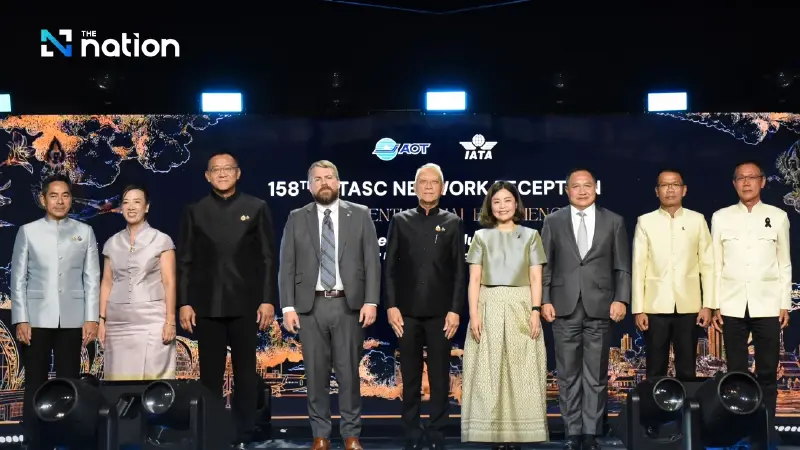


Thailand's airports operator AOT co-hosted the 158th IATA Slot Conference in Bangkok, offering airlines incentives to expand routes and frequencies into the country
- Thailand hosted the major IATA Slot Conference for the first time, a landmark event aimed at establishing the country as a regional aviation hub.
- The conference brought together over 1,300 delegates from more than 250 airlines and 300 airports, signaling Thailand's readiness to the global aviation industry.
- Thailand's airport operator used the event to strategically offer incentives to airlines, encouraging them to increase flight frequencies and add new routes into the country.
Thailand's airports operator AOT co-hosted the 158th IATA Slot Conference in Bangkok, offering airlines incentives to expand routes and frequencies into the country.
Thailand has hosted the world's premier airline scheduling summit for the first time, as Airports of Thailand (AOT) co-organised the 158th IATA Slot Conference in Bangkok from 9 to 11 June — a move the government says advances its ambition to make the country a regional aviation hub.
The three-day conference, held at the Centara Grand and Bangkok Convention Centre at CentralWorld, brought together more than 1,300 delegates from over 300 airports, 250 airlines, and 90 exhibitors worldwide.
The twice-yearly event, which dates back to 1948, is one of the International Air Transport Association's (IATA) largest gatherings, serving as the primary forum for airlines to negotiate and secure take-off and landing slots at the world's most congested airports ahead of each season.
Why it matters
Being selected as host nation for the first time is significant for Thailand. The IATA Slot Conference rotates globally, and securing the event signals to the wider aviation industry that the country has the infrastructure, institutional capability, and service standards to attract serious players.
AOT used the platform strategically, presenting an exhibition of its six airports alongside a package of aviation incentive schemes designed to encourage attending airlines to either increase existing flight frequencies or launch entirely new routes to Thailand. In doing so, AOT turned a scheduling meeting into a direct sales opportunity.

Deputy Prime Minister and Transport Minister Phiphat Ratchakitprakarn, who presided over the welcome reception, pledged to upgrade Thailand's aviation infrastructure and ecosystem to meet growing industry demand.
He also highlighted the country's commitment to adopting new technology — including artificial intelligence — and to supporting sustainable aviation fuel (SAF) as part of broader decarbonisation goals.

The business case
AOT president Paweena Jariyathitipong framed the conference squarely within the government's stated policy goal: positioning Suvarnabhumi Airport as the aviation hub of Southeast Asia.
"The conference is one of the aviation industry's most important business events and marks the first time Thailand has been selected as a host country," she said, adding that it reflected AOT's readiness in airport management, technology, and internationally recognised service standards — qualities she described as key to attracting airlines, partners, and investors.
The slot conference mechanism itself is critical to how international aviation works. At capacity-constrained airports — where demand exceeds available runway or terminal time — airlines cannot simply schedule flights at will.
Instead, a neutral slot coordinator allocates available capacity according to IATA's Worldwide Airport Slot Guidelines (WASG), which prioritise fairness, transparency, and efficient use of infrastructure.

Airlines attend the conference to retain historical slots, swap timings with competitors, or bid for newly available capacity. The outcome directly shapes which routes operate, at what times, and how frequently — decisions with significant consequences for trade, tourism, and regional connectivity.

The broader picture
Thailand's aviation sector has recovered strongly following the pandemic, and Suvarnabhumi remains one of the busiest airports in Asia. However, with rival hubs such as Singapore's Changi, Kuala Lumpur International, and Hong Kong all vying for connecting traffic, Bangkok faces stiff competition.
Hosting the IATA Slot Conference and pairing it with a coordinated pitch to airlines is part of a deliberate effort to sharpen Thailand's competitive position – not merely by building runways, but by ensuring that when the world's airlines sit down to plan their networks, Thailand is front of mind.
