
Asia's Chronic Disease Crisis Starts in Childhood. Can Schools Help Fix It?


Non-communicable diseases already account for the vast majority of deaths across the Asia-Pacific region. AIA argues the fight against that burden must start in the classroom — and its Healthiest Schools programme is now four years into testing that theory
- Non-communicable diseases (NCDs), such as diabetes and heart disease, are the leading cause of death in the Asia-Pacific region, driven by lifestyle habits often established in childhood.
- Insurance company AIA is testing the theory that schools can help combat this crisis through its "Healthiest Schools" programme, an initiative aimed at instilling healthy habits in students.
- The programme operates as a competition across ten Asia-Pacific markets, encouraging schools to develop creative projects focused on four pillars: healthy eating, active lifestyles, mental wellbeing, and sustainability.
- AIA frames the initiative not as a commercial venture but as a long-term investment in public health and the region's future workforce, partnering with local education ministries to scale its reach.
Non-communicable diseases already account for the vast majority of deaths across the Asia-Pacific region. AIA argues the fight against that burden must start in the classroom — and its Healthiest Schools programme is now four years into testing that theory.
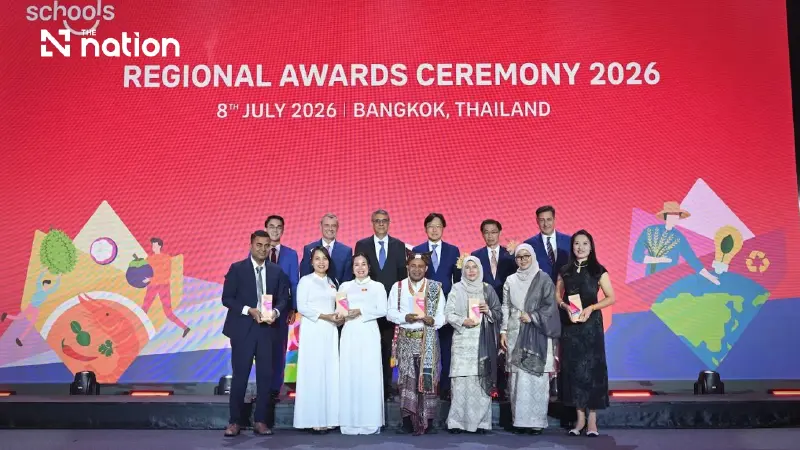
Long before cardiovascular disease, diabetes, or cancer show up on a medical chart, the habits that drive them are often set in childhood. That is the problem AIA's leadership put at the centre of a press conference in Bangkok this week, held to announce the winners of the fourth annual AIA Healthiest Schools Competition.
Stuart A. Spencer, AIA Group's chief marketing officer and head of the competition's judging panel, told journalists that even in Thailand, 77 per cent of all diseases are lifestyle-related — non-communicable and, in his framing, preventable.
Stroke, diabetes, cancer, and hypertension, he said, are driven by a combination of lack of exercise, poor diet, stress, depression, pollution, and, later in life, smoking and alcohol consumption.
Independent data backs the scale of the problem. The World Health Organization's (WHO) Western Pacific office states that non-communicable diseases (NCDs) are the region's biggest killers, responsible for 86 per cent of deaths.
Unlike infectious illnesses, NCDs build up over decades — which is precisely why AIA argues that prevention must begin years before symptoms appear.
"This is not a commercial, revenue-generating initiative at all. This is about doing the right thing," Spencer said, framing the programme as core to AIA's purpose of helping people live healthier, longer, better lives.

As the region's largest pan-Asian life and health insurer, covering more than 40 million people, AIA has "a strong interest" in ensuring its current and future customers stay healthy.
A long-term bet on human capital
Spencer made the case that the AIA Healthiest Schools (AHS) programme is an investment in the region's future workforce rather than a standard corporate social responsibility exercise.
"A country's long-term potential rests in the health and wellness, the productivity and happiness of its people," he said, arguing that cultivating healthy habits in children early creates a resilient next generation to drive economic prosperity.
He drew a straight line from classroom habits to GDP, noting that healthier adults are more productive and carry a lighter burden of lifestyle diseases.
It is a long horizon for a school's competition to be measured against, and the causal chain is difficult for a single initiative to prove on its own.
AIA's current evidence for impact rests mainly on its internal surveys, which show more than 90 per cent of participating students reporting changed mindsets or habits. While these are self-reported figures rather than independently verified outcome data, they run alongside established external evidence regarding the region's NCD burden.
An ecosystem, not a solo effort
AIA is candid that it cannot run a programme of this scale alone. Chalida Nakornchai, Chief Marketing Officer of AIA Thailand, explained that the initiative depends on partnerships with Thailand's Ministry of Education, the Office of the Basic Education Commission (OBEC), and other state agencies that certify the curriculum and support teachers.

In Thailand alone, participation has grown from just over 100 schools in the early years to more than 1,500 in the most recent cycle. Chalida highlighted a "Buddy Bench" initiative — a designated seat where a child can sit if they are struggling emotionally, prompting classmates to reach out — as a low-cost mental wellbeing initiative.
She stressed that sustainability, not brand credit, is the ultimate goal.
"We don't even care if, one day, schools carry this forward under a different name," she said, adding that AIA sees itself less as an insurer that pays claims and more as a long-term health partner.
Four years of scaling up
Launched in 2022, AHS has grown into a region-wide initiative spanning ten Asia-Pacific markets, aimed at students aged five to 16. It is organised around four pillars: healthy eating, active lifestyles, mental wellbeing, and health and sustainability.
Fiona Travers, associate director of AIA Group Brand, noted that student mental health has emerged as a fast-growing theme since the pandemic. She linked the trend partly to technology, noting that rising smartphone and social media use has contributed to children spending less unstructured time together outside school.
AIA executives described the 2025/26 cycle as the most competitive yet. Schools were assessed on overall impact, creativity, and community engagement, with a focus on measurable data over vague submissions.

The 2025/26 winners
The competition's top honour — Regional Winner — went to SMP IL Kapten Fatubaa in Indonesia, a school in a remote border village where students turn banana-peel waste into ice cream, compost, and liquid fertiliser, blending science education with entrepreneurship.
Four category prizes were also awarded:
Health & Sustainability: Angchum Secondary School, Cambodia, for student-led campaigns on plastic reduction and hygiene.
Mental Wellbeing: Chongqing Nan'an District Shanhu Puhui Experimental Primary School, China, for its "Emotion Eco-Park" designed to build emotional awareness.
Active Lifestyles: Sekolah Kebangsaan Manir, Malaysia, which uses digital tracking to improve hydration and fitness awareness.
Healthy Eating: Chu Van An Primary School, Vietnam, whose "Happy Meal" project combines nutrition education with organic gardening.

AIA has confirmed that the 2026/27 edition will expand further, adding Myanmar and New Zealand to its footprint. For a programme framed as a long-term human capital play, this continued expansion and consistent engagement may prove the most telling measure of success.
