
J&J proposes US$5.5bn settlement for ovarian talc claims
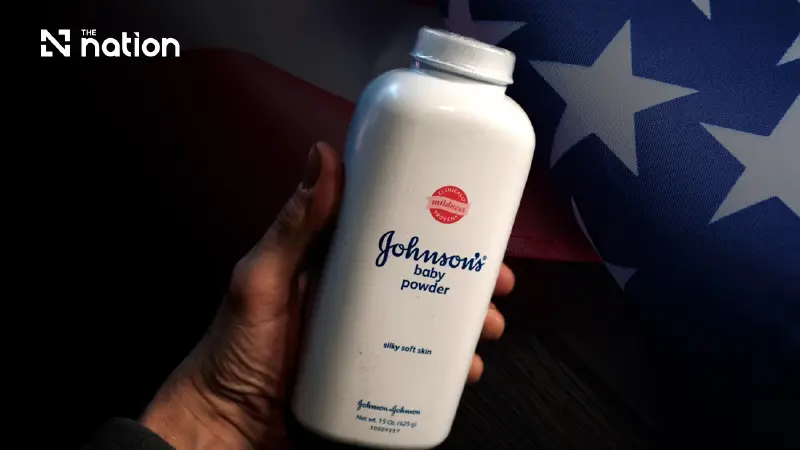


Johnson & Johnson’s proposed US$5.5 billion deal would cover about 76,000 ovarian cancer claims if at least 95% participate.
Johnson & Johnson has reached an agreement with leading plaintiffs’ firms on a proposed US$5.5 billion settlement covering about 76,000 existing lawsuits alleging that its talc-based products caused ovarian cancer.
The proposed resolution would include claims consolidated in federal multidistrict litigation in New Jersey and related cases in state courts. It will take effect only if claimants representing at least 95% of the remaining ovarian cancer claims participate.
The company said payments would be calculated for each qualifying claim. Its first payment would be no more than US$3 billion in 2027, with no further payments due before 2028.
Chris Seeger, a lawyer who helped negotiate the agreement and represents about 2,500 claimants, said the total was not capped and could rise to US$7 billion or more depending on participation. He added that the latest structure would allow existing claimants to receive payment more quickly than under J&J’s earlier bankruptcy proposals.
Unlike those bankruptcy plans, the new settlement applies only to existing claims and does not cover lawsuits that may be filed in the future.
J&J continues to deny allegations that its cosmetic talc contained asbestos or caused cancer. Erik Haas, the company’s worldwide vice-president of litigation, maintained that J&J would ultimately have prevailed but described the agreement as a way to end the long-running legal dispute.
Court questions evidence linking talc to individual cancers
The proposed settlement follows a July 22 order by US Magistrate Judge Rukhsanah Singh concerning approximately 69,000 claims in the federal multidistrict litigation.
Singh questioned whether the plaintiffs could present admissible expert evidence showing that talcum-powder use had specifically caused each claimant’s ovarian cancer. The issue is known as specific causation and is distinct from the broader question of whether talc is capable of causing the disease.
The order followed testimony involving two plaintiffs’ experts during preparations for six bellwether, or test, trials. The experts said they could not completely exclude other possible causes of the women’s cancers.
Singh ordered the plaintiffs to explain by November 19 why their cases should not be dismissed for lack of admissible specific-causation evidence. She made clear, however, that the order did not amount to an immediate dismissal of the consolidated claims.
J&J characterised the order as a major victory supporting its position that the claims lacked scientific merit. Its trial record has nevertheless been mixed: the company has won a number of cases, while plaintiffs have also secured large jury awards, some of which were later reduced or reversed on appeal.
Three bankruptcy attempts ended in dismissal
The latest agreement replaces J&J’s unsuccessful efforts to resolve the litigation through Chapter 11 bankruptcy proceedings involving subsidiaries created to hold its talc liabilities.
Beginning in 2021, the company reorganised the liabilities into entities that eventually became Red River Talc LLC, which held ovarian and other gynaecological cancer claims, and Pecos River Talc LLC, which held mesothelioma, government and certain other claims. J&J filed three bankruptcy cases through the restructured entities, but each was dismissed.
Red River filed the third case in September 2024 after J&J reported that approximately 83% of current claimants supported a plan offering about US$8 billion in present value over 25 years.
Although the reported support exceeded the 75% voting threshold cited by the company, the plan still required court confirmation. On March 31, 2025, the US Bankruptcy Court for the Southern District of Texas refused to confirm it and ordered the case dismissed.
J&J then returned to defending the claims through the civil court system and reversed approximately US$7 billion previously reserved for the bankruptcy resolution. Litigation resumed after being suspended during much of the bankruptcy process.
The failed bankruptcy proposal sought to resolve both current and future ovarian cancer claims. By contrast, the new agreement is limited to existing claims but offers a faster payment timetable.
Mesothelioma cases handled separately
The talc litigation involves different types of claims.
Most of the remaining cases allege that long-term personal-hygiene use of talcum powder caused ovarian cancer. Separate mesothelioma cases generally allege that users were exposed to asbestos contaminating the talc.
J&J said it had already settled about 95% of filed mesothelioma lawsuits through agreements outside the proposed ovarian cancer settlement. The company continues to reject allegations that its talc contained asbestos.
The company has obtained defence verdicts in some talc trials but has also faced adverse verdicts. In a filing covering the period to March 29, 2026, J&J acknowledged that it had settled cases in certain circumstances despite maintaining confidence in the safety of its products.
US states reached separate US$700m agreement
J&J also reached a separate US$700 million settlement in 2024 with a coalition of 43 state attorneys general, including the District of Columbia.
That case concerned consumer-protection allegations rather than compensation for personal injuries. The states accused J&J of misleading consumers through advertising about the safety and purity of talc-based baby and body powders.
Under the consent judgment, J&J agreed to permanently stop manufacturing, marketing, promoting, selling and distributing covered talc-based baby and body powder products in the United States.
The multistate settlement did not resolve the private ovarian cancer and mesothelioma lawsuits. J&J said in July 2026 that all state consumer-protection claims had since been concluded.
Talc-based baby powder phased out globally
J&J stopped selling talc-based Johnson’s Baby Powder in the United States and Canada in 2020 as it moved towards a cornstarch-based product in those markets.
In 2022, the company announced that it would discontinue talc-based baby powder worldwide during 2023 and move its entire global baby-powder portfolio to cornstarch. It said the decision followed a worldwide portfolio assessment and maintained that its position on the product’s safety had not changed.
J&J retained talc-related liabilities in the United States and Canada when its consumer-health business, Kenvue, was separated in 2023.
The proposed US$5.5 billion settlement will not become final unless the required 95% participation threshold is met, and it will not resolve any future claims.
Sources: Reuters, Johnson & Johnson Investor news
