
Thai and Chinese leaders sign 14 cooperation agreements
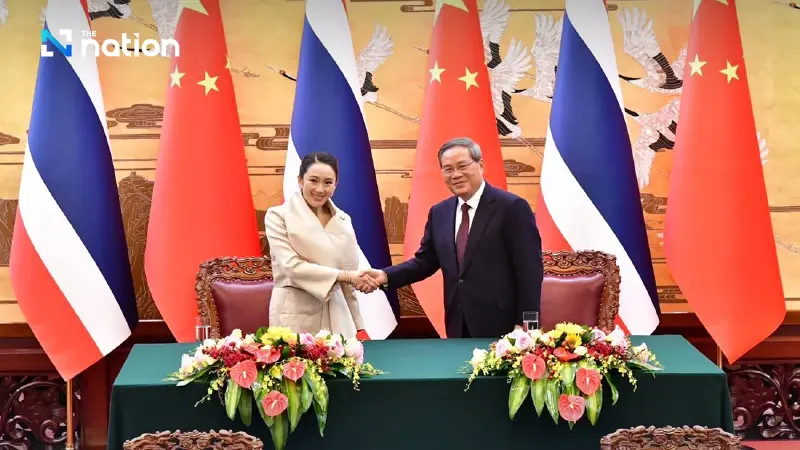


MOUs covering economic cooperation, technology advancements and collaboration in space technology to draw the two countries closer together
Thailand and China strengthened bilateral relations on Thursday (February 7) with the signing of 14 memoranda of understanding (MOUs) at an event presided over by Thai Prime Minister Paetongtarn Shinawatra and Chinese Premier Li Qiang .
The ceremony, which took place at 5.45pm local time in the North Hall of Beijing’s Great Hall of the People, covered a variety of sectors, from cutting-edge technology to economic development.
Thai government spokesperson Jirayu Huangsap spoke later about the comprehensive nature of the agreements, which include collaboration in artificial intelligence, green development and space exploration.
Among the most noteworthy agreements is a joint initiative for lunar exploration, linking Thailand's space ambitions with China’s Chang’e-7 mission. The partnership extends into the realm of artificial intelligence, with both nations committing to establish joint research laboratories.

Economic matters feature prominently in the agreements, with several MOUs focusing on digital economy investment, particularly in Thailand’s Eastern Economic Corridor.
Trade facilitation measures were also addressed through a new framework agreement on electronic data exchange systems between the two countries’ customs departments.
In the technological domain, the agreements cover peaceful nuclear technology cooperation and the enhancement of postal services. Media cooperation also received attention, with Thailand's Public Relations Department establishing formal ties with China's Xinhua News Agency, whilst the Thai Public Broadcasting Service forged a partnership with China Media Group.

The comprehensive package of agreements underscores a deepening of the Thai-Chinese strategic partnership, with both nations emphasising a forward-looking, people-centred approach to bilateral relations.
These developments point to a significant strengthening of ties between Bangkok and Beijing, potentially shaping regional cooperation in the years to come.
China’s continuing engagement with Southeast Asian nations and Thailand’s strategic positioning in regional affairs were also under the spotlight, with the agreements expected to facilitate increased technological, economic, and cultural exchange between the two countries.
