
Anutin government plans swift economic boost with “Let’s Go Halves” scheme revival
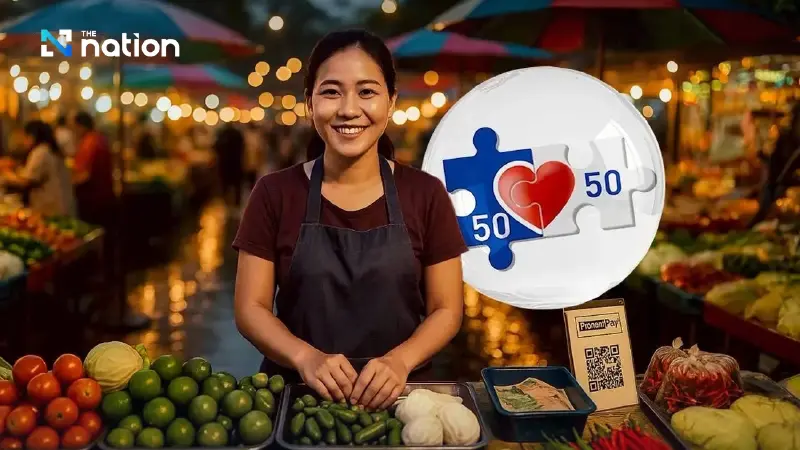


New Anutin administration to relaunch “Let’s Go Halves” to boost spending, support local incomes, and ease living costs for Thais.
The Anutin Charnvirakul government has unveiled urgent economic measures aimed at stimulating spending, increasing local incomes, and reducing living costs, alongside addressing farmers’ debt issues. Central to these plans is the revival of the “Khon La Khrueng” (Let’s Go Halves) shopping subsidy scheme, which was previously successful under Prime Minister Gen Prayut Chan-o-cha’s administration. The Ministry of Finance has confirmed its readiness to implement the programme.
Under the previous scheme, the government conducted five phases between 2020 and 2022, with a total budget of 234.5 billion baht, helping to alleviate living costs during the COVID-19 pandemic.
Lavaron Sangsnit, Permanent Secretary of the Finance Ministry, said the ministry is fully prepared to roll out a new phase if the Bhumjaithai-led government formalises the policy. Technically, the system is ready through the “Pao Tang” app, which managed the previous programme.
The budget for the scheme, if launched after October 1, 2025, will come from the 25-billion-baht central economic stimulus fund for 2026, with the flexibility to reallocate additional funds if necessary. Lavaron noted that implementation can proceed quickly, as previously registered merchants who still have the app installed can continue immediately after new registration opens. Specific details, such as target groups or co-payment ratios, will follow government policy, which the platform can accommodate in full.
Experts note that while the exact economic impact is still difficult to predict, the technical and financial infrastructure is ready to support the scheme.
Time is of the essence
According to Assoc Prof Dr Athiphat Muthitacharoen, Faculty of Economics, Chulalongkorn University, the new government faces a four-month window to address urgent economic challenges. Key priorities include:
- Reviving the weak economy, particularly consumer spending affected by lower tourism revenue and cautious public spending.
- Implementing tax measures to accommodate US import duties.
- Ensuring fiscal efficiency and long-term sustainability, particularly after Moody’s downgraded Thailand’s credit outlook.
Athiphat stressed that the short four-month timeframe is both a limitation and an advantage. While the government cannot enact policies requiring lengthy legal procedures, it forces prioritisation of initiatives that can deliver rapid, tangible results, such as the successful Let’s Go Halves programme.
However, current conditions differ significantly from the COVID-19 period. The government’s fiscal capacity is limited, with remaining budget under 5 billion baht, requiring careful reallocation and strategic planning to ensure Let’s Go Halves 2.0 effectively stimulates the economy under tight financial constraints.
Proposal to add minimum spending conditions
When comparing the Let’s Go Halves scheme with digital cash handout, it is observed that giving 10,000 baht per person may result in significant leakage of funds and may not sufficiently reach grassroots communities, as much of the money could be spent on imported goods. In contrast, the Let’s Go Halves scheme has mechanisms that limit spending to small local businesses, providing clearer support to local merchants.
Moreover, adjusting the conditions to improve effectiveness is suggested. Past studies of the Let’s Go Halves programme indicate a marginal propensity to consume (MPC) of 0.4, meaning that for every 1 baht given by the government, people spend only 40 satang. This is relatively low compared with China’s programme, which had an MPC of up to 3.0. The Chinese approach used minimum spending conditions and coupon expiry dates to encourage faster consumer spending.
Therefore, the new government should review and refine the conditions of the Let’s Go Halves scheme, for example:
- Introduce minimum spending requirements, such as requiring a minimum of 100 baht per transaction to qualify for the discount.
- Set expiry dates for discounts, to stimulate prompt consumer spending.
Government must define clear objectives
Athiphat stated that the government needs to ask itself what the Let’s Go Halves scheme is meant to achieve most effectively, for instance:
- Supporting small merchants – if this is the primary goal, the original conditions that focus on small, unregistered businesses remain a strength and should be maintained.
- Stimulating consumption – if this is the target, the government should adjust spending conditions to enhance effectiveness and communicate these changes clearly to the public.
Athiphat added:
"Maintaining fiscal stability is crucial, and the government must prioritise this and communicate seriously with international stakeholders to build confidence and avoid another credit rating downgrade."
Experts call for higher spending limits
Uppatham Nisitsuksacharoen, President of the Business of Creative and Event Management Association, said that following the formation of the new government, the business sector is keen to see measures that stimulate the economy, particularly the revival of Let’s Go Halves scheme.
He noted that this is the only effective way to support Thailand’s struggling economy, but stressed that spending limits should be slightly increased. The programme should be implemented quickly and cover a wide range of businesses, not just restaurants, extending to tourism, hotels, and other sectors.
Milin Veeraratnaroj, Chairman and Managing Director of Tang Ngee Soon Superstore, a major wholesale and retail operator in Udon Thani, echoed support for reviving the scheme, calling it a proven economic tool from the previous government of Gen Prayut Chan-o-cha that is well-designed and should retain the existing “Pao Tang” app rather than switching to a new app.
He added that the scheme has been shown to generate immediate circulation of money in the economy and has a direct impact on the grassroots economy.
“Let’s Go Halves should be implemented as quickly as possible. If the government acts now, it will win public support. It’s like the new Prime Minister’s announcement about the coming month—people get excited. If we liken the economy to a sick person, consumers’ purchasing power is like someone with a headache. The programme is like paracetamol—it doesn’t cure the illness, but it alleviates the symptoms,” Milin said.
Making the programme more inclusive
Kitti Satjawattana, Director of the Program Management Unit on Area Based Development (PMUA), said that past evidence shows the scheme effectively stimulates the economy and can help bring the informal sector into the formal economy, improving the country’s tax system.
He added that the policy also promotes benefit-sharing between businesses and the government and simultaneously boosts household purchasing power.
However, he emphasised that if the scheme is reintroduced, it should be adjusted to reach a broader population, particularly local communities across the country. Policy conditions should also be clarified, such as support for vulnerable households and alignment with other government initiatives like the welfare card programme.
“If the scheme is improved and additional policy conditions are added, it can simultaneously stimulate the economy and elevate grassroots economic development, while avoiding concentration of benefits in limited areas,” Kitti said.
