
Thailand's 'Mouse' Deputy PM Vows to Fix Every Economic Hole
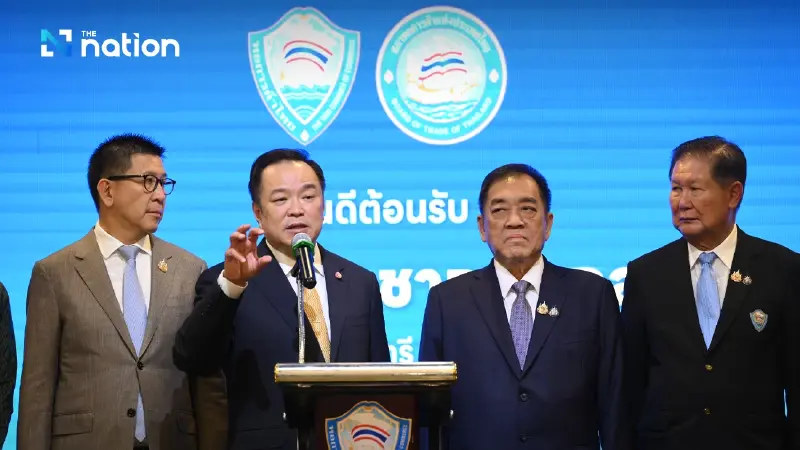


Anutin promises collaborative approach to tackle SME debt crisis and boost trade as business leaders present rescue plan
- Thailand's Deputy Prime Minister Anutin Charnvirakul met with the Thai Chamber of Commerce, vowing to address urgent economic issues, including dismantling trade barriers and easing financial pressures on small and medium enterprises (SMEs).
- He outlined plans to enhance business flexibility across finance, debt management, energy, and labour, in response to a seven-pillar economic recovery plan proposed by the business community.
- Key proposals under consideration include stimulating domestic consumption, managing the baht's value to support exporters, and creating a 10 billion baht fund to address the significant debt burden facing SMEs.
- Anutin played on his nickname "Nhu" (mouse), stating, "Where there's a hole, there's a mouse," to signify his commitment to finding and providing solutions for any economic problem.
Thailand's Deputy Prime Minister Anutin Charnvirakul has met with representatives from the Thai Chamber of Commerce to discuss urgent economic reforms, promising to dismantle trade barriers and address mounting financial pressures on small and medium enterprises.
During Thursday's meeting at the Thai Chamber of Commerce headquarters, Anutin emphasised the government's commitment to supporting businesses and workers whilst awaiting royal endorsement of the new administration.
The discussions followed similar consultations with the Federation of Thai Industries, as the government seeks input from key economic stakeholders.

"We are listening to the real sector's problems, concerns, and recommendations," Anutin stated, outlining plans to enhance business flexibility across multiple areas including finance, interest rates, debt management, energy, logistics, and labour.
The Thai Chamber of Commerce presented a comprehensive seven-pillar economic recovery plan, dubbed "7 Pillars to Restore the Thai Economy," addressing what Chairman Dr Poj Aramwattananont described as significant challenges from global economic volatility, falling agricultural prices, declining exports, and rising energy costs.
The chamber's proposal includes rebuilding investor confidence, boosting liquidity for SMEs and households, lowering living costs, promoting seamless trade, improving safety and security measures, preparing for trade wars, and stimulating domestic demand and tourism.
For immediate implementation, the chamber urged the government to accelerate US trade negotiations whilst exploring new markets in China, Africa, and the Middle East.
They recommended the Bank of Thailand maintain the baht at 34-35 to the dollar to support exporters' competitiveness.

To stimulate domestic consumption, the chamber proposed continuing popular schemes such as "Khon La Khrueng" (Co-Payment scheme) and "Easy E-Receipts," alongside a "Use Thai Products, Revive SMEs" campaign. They also called for faster budget disbursement and enhanced tourist safety measures, particularly for Chinese visitors.
A significant concern raised was the debt burden facing small and medium enterprises. The chamber proposed a 10 billion baht fund to address non-performing loans, alongside interest rate reductions for prime customers and halving land and building taxes for one year.
When asked about currency concerns, Anutin delegated the response to prospective Finance Minister Ekniti Nitithanprapas, who stressed the importance of economic stability and confirmed preliminary discussions with the Bank of Thailand governor regarding response strategies.
"Finance and commerce must work closely together to ensure economic flexibility in both monetary and trade matters," Anutin added, emphasising that trade promotion should focus not only on international markets but also on maximising domestic trade efficiency.
The Deputy Prime Minister expressed particular concern about SME and small-medium loan debt problems affecting the production sector, pledging to eliminate bottlenecks despite time constraints.
Under the four-month parliamentary dissolution agreement, he assured that government policies would prevent economic regression.
Addressing border security issues, Anutin deferred to military authorities' decisions regarding areas under martial law, stating that border crossings remain closed whilst Thai citizens' safety takes priority. He acknowledged Cambodia's need to protect its national interests whilst emphasising security cooperation.
On personal legal matters concerning Khao Kradong land issues, Anutin expressed no concerns, stating he had submitted clarifications whilst serving as Deputy Interior Minister and had operated within constitutional requirements drafted by Borwornsak Uwanno in 2015.
The government plans continued engagement with private sector representatives, including upcoming meetings with the Thai Bankers' Association, as part of its comprehensive economic consultation process.
The chamber's mid-term proposals include accelerating VAT and export duty refunds to improve exporter liquidity and addressing both formal and informal debt through restructuring and low-interest loan programmes.

In a notable display of political pragmatism, Anutin emphasised his willingness to support any beneficial policies regardless of their origin.
"I don't mind whose policy gets implemented, as long as it benefits the country and the people. I'm ready to push it forward because if it succeeds, it's credit to the person who thought of it and credit to me as the one who pushed it through. It's win-win for both sides, not a situation where one must win and one must lose, causing everything to collapse," he stated.
Playing on his nickname "Nhu" (mouse), Anutin quipped: "Where there's a hole, there's a mouse," suggesting that wherever problems exist, he would provide solutions—a playful reference that resonated with his reputation as a problem-solver in Thai politics.
Dr Poj emphasised that the proposals represent sustainable economic restoration rather than short-term fixes, expressing confidence that collaboration between government, private sector, and public will restore Thailand's economic strength.
