
Thai Industry Demands Government Make Plastic Recycling a National Priority
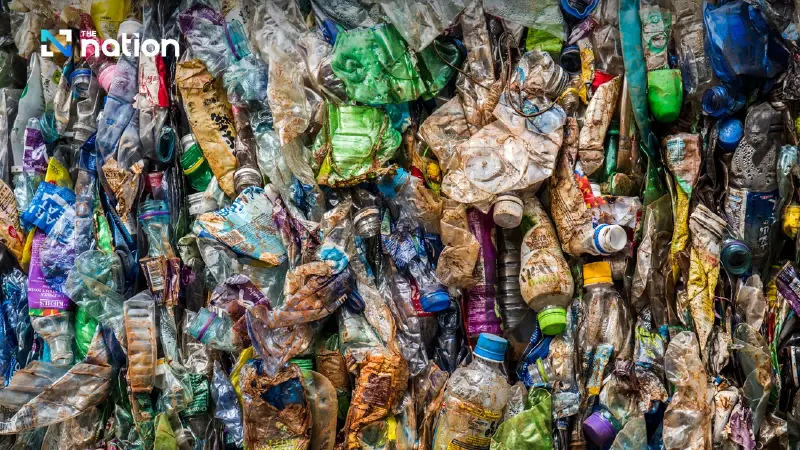


Federation of Thai Industries warns that without a national agenda to tackle waste, the country will not overcome the crisis, despite recycling rates improving
- The Federation of Thai Industries (FTI) is urging the Thai government to make plastic recycling a national agenda item to solve the country's escalating plastic waste crisis.
- A key demand is for government support to develop more efficient recycling technology, as the current high cost of recycling is a major barrier compared to producing new plastic.
- The industry calls for the government to establish an effective national recycling infrastructure and promote proper waste separation among the public to build a circular economy.
The Federation of Thai Industries (FTI) is urging the Thai government to elevate the plastic recycling issue to a national agenda item, arguing it is the only way to effectively solve the country's escalating plastic waste crisis.
Thailand is struggling with an annual surge in plastic debris, especially from the manufacturing sector, which has serious repercussions for both the environment and the national economy.
Industry leaders warn that without an efficient waste management process, plastic pollution will cause lasting damage.
Thititham Pongpanangam, chairman of the FTI's Plastics Industry Club, explained that while manufacturers are adapting to external pressures—such as US tariff policies forcing a pivot towards growing ASEAN markets—the internal failure to manage waste remains the most critical barrier.
He stressed that plastic recycling is central to the sustainable future of the entire industry.

The Cost Barrier to Circularity
Plastics are essential across various sectors, accounting for 40% of packaging alongside use in electronics and construction.
Thailand has shown modest improvement in recovering this material: the recycling rate has recently risen to 22%, up from 18% in 2022, resulting in the recirculation of some 700,000 tonnes of plastic waste back into production.
However, the industry faces a critical economic hurdle: the cost of recycling is higher than that of producing new plastic from virgin raw materials.
“Unless the government supports the development of more efficient recycling technology and processes, these high costs will persist, and we won’t be able to genuinely reduce plastic waste volumes,” Thititham cautioned.
A Turnaround from the Oceans
Veera Kwanloetchit, Director of the PPP Plastics Association Office, highlighted the severity of the problem by recalling that Thailand was once ranked the sixth-largest contributor of plastic waste into the ocean globally (2016–2017).
While Thailand has pledged to recycle 50,000 tonnes of plastic materials annually and has local projects underway in areas like Nong Khaem and the Eastern Economic Corridor (EEC), further governmental action is vital.
Veera praised the 2021 decision to ban the import of plastic waste, given the enormous domestic volume already present.
He now insists the focus must shift to supporting proper waste separation among the public and establishing an effective national recycling infrastructure.

Collaboration is Key
FTI representatives concluded that a sustainable plastics industry hinges on universal participation.
"Plastic waste management and recycling cannot happen without cooperation from all sectors—the government, the private sector, and the public," the FTI stated. "If all parties collaborate to promote the use of recycled plastic and reduce the unnecessary use of new plastic, we can move in a better direction."
Ultimately, the government's role is deemed crucial in fostering efficient waste technology development, effectively turning plastic from an environmental liability back into a valuable national resource and building a lasting circular economy.
