
SMBC Group hosts Thai Economy Forum to boost Japan–Thailand partnership
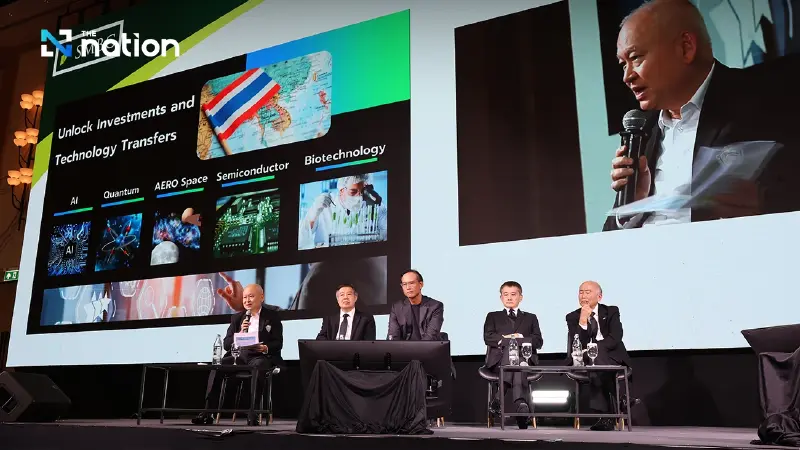


SMBC Group gathered over 600 business leaders at the Thai Economy Forum in Bangkok to discuss sustainable growth, digital innovation, and Japan–Thailand economic collaboration.
Bangkok, November 12 – As Thailand navigates economic transformation and digital innovation, SMBC Group convened over 600 leaders at their flagship Thai Economy Forum to explore strategies for sustainable growth and regional opportunities.
Reflecting on the longstanding economic partnership between Thailand and Japan and their shared vision toward sustainable development and technological advancement, the solid foundation makes it a cornerstone for future prosperity for both nations and their neighbors. With over 70 years of presence in Thailand, SMBC is proud to be the Japanese bank with the longest history in Thailand, uniquely positioned to contribute to its continued growth and prosperity.

Koichiro Yui, Country Head of SMBC Thailand, said the forum focused on two key themes.
- The first session focused on the overall landscape of AI trends, exploring the latest developments in artificial intelligence and how these technologies can be practically applied to business. Distinguished speakers and panellists shared their insights through real-world examples and forward-looking discussions.
- The second session provided an overview of the Thai economy, examining how the country could continue to advance amid global uncertainties. Speakers from diverse backgrounds exchanged constructive views on the challenges and opportunities that lie ahead.
“There are opportunities to unlock economic potential as Thailand strives to secure a dynamic, resilient and competitive economy in the region and globally," said Koichiro Yui, Country Head of Thailand, SMBC.

Kalin Sarasin, President of the Thai–Japanese Association, warned that the world is undergoing rapid transformation across technology, supply chains, geopolitics, climate change, and demographics.
He highlighted key global pressures — from economic fragmentation and labour-skill shortages to sustainability demands, ageing populations, and the disruptive rise of artificial intelligence — all of which require swift adaptation from governments and businesses.
Despite these challenges, Kalin said Thailand has significant opportunities through deeper partnership with Japan. By combining Japanese technology, investment strength, and robotics expertise with Thailand’s manufacturing base and strategic location, the two countries can strengthen regional supply-chain resilience.
Joint advances in automation, AI, renewable energy, hydrogen, and low-carbon production can lower costs, raise quality, and support both nations’ net-zero ambitions. Collaboration in tourism, services, logistics, lifestyle industries, and corporate–startup innovation also offers strong potential, as does applying Japanese experience in homecare robotics, telemedicine, and healthcare finance to support Thailand’s ageing society.
Kalin urged Thai businesses to adopt a new mindset focused on agility and cooperation rather than size. Global shifts, he said, should be viewed not as barriers but as openings.
“Challenges are not obstacles — they are doors,” Kalin noted. “When Thailand and Japan walk through these doors together, we will not only survive the future — we will build it.”

Japan’s Ambassador to Thailand, Masato Otaka, said artificial intelligence has become a defining force in the next phase of Thailand–Japan economic cooperation. While global conversations about AI have been ongoing for years, its real impact has only recently become evident, shifting from theory to everyday use — from language tools and medical diagnostics to Japan’s smart surveillance systems.
He noted that AI-driven consultancy services and corporate platforms are improving efficiency, strengthening supply chains, and supporting global partnerships. As the automotive sector continues to anchor the economic relationship between the two countries, both Thailand and Japan must adapt quickly to the rise of electric vehicles and AI-powered industries to remain competitive.
Otaka said the future of the Thailand–Japan partnership spans far beyond AI alone, but AI offers a vital entry point for deeper dialogue. He expressed confidence that SMBC will play a key role in advancing these discussions and bringing more stakeholders into the conversation.
“There is much to discuss about the future of Thailand and Japan as partners,” Otaka said. “AI is an important starting point, but there are many other areas to explore. I am confident that SMBC will continue to serve as an excellent facilitator, bringing more people into this important discussion.”

At the forum, industry experts and government agencies joined SMBC subject matter experts in deep diving into current and trending issues with a forward-looking perspective:
As AI redefines the DNA of modern enterprises, the way we operate, innovate and create value across industries is transforming. On the ‘Next Generation Business Utilising Artificial Intelligence (AI)’ keynote address delivered by Ahmed Mazhari, Groupwide AI Transformation advisor, SMBC Group, he offered a compelling vision of how emerging technologies are reshaping the global business ecosystem.
“AI is not just a tool for efficiency – it is a catalyst for reinvention” he emphasised, underscoring SMBC Group’s commitment to harnessing the transformative power of AI to reimagine its core business and pioneer the next generation of growth.
At the panel discussion on "The Overall Landscape of AI Trends," industry experts highlighted the significant opportunities AI presents across various sectors, including healthcare and banking.
Mazhari noted, "AI is actually a general-purpose technology like electricity or a computer and has the potential to impact many industries." He emphasised AI’s transformative role, particularly in drug discovery, where advancements in protein structure research could revolutionise healthcare.
While AI’s potential is vast, Mazhari stressed that AI should augment human roles rather than replace them, creating a "dual engine" effect where both AI and humans improve together.
Dhanawat Suthumpun, Managing Director at Microsoft Thailand, shared similar insights, stating, "AI is not just about the change, but it’s about transforming how we operate." He described AI as a massive opportunity for businesses of all sizes, urging organisations to integrate AI into their strategies.
He encouraged companies to start by identifying the most cost-consuming and time-intensive areas of their operations, exploring how AI can accelerate and improve processes.
Rehan Ahmed, CEO of Marketnode, discussed AI’s potential in the financial sector, specifically in transforming high-volume operations. He shared how AI has helped reduce exceptions in fund settlements, a complex process previously reliant on human intervention.
"AI, blockchain, and digital money will bring a new business model together," Ahmed concluded, envisioning a future where AI reshapes financial services globally.
Kasama Kongsmak, Acting Senior Executive Vice President of the Digital Economy Promotion Agency (depa), emphasised the importance of AI adoption across all sectors in Thailand. AI is for everyone, she said, explaining that its applications range from farmers predicting crop yields to content creators enhancing their work.
Kasama highlighted depa’s efforts to push for digital transformation, aiming to make Thailand’s businesses AI-ready by 2027.
These speakers underlined the critical role AI will play in shaping future industries, urging businesses and governments to strategically integrate AI for sustainable growth and innovation.

‘Thailand’s Economic Outlook and Opportunities in ASEAN’ are vast, as highlighted in a panel discussion exploring Thailand’s current economic trends, investment opportunities, and its strategic role within the ASEAN region. Attendees also heard from Dr Supavud Saicheua, Chairman of NESDC, whose keynote presentation provided an in-depth overview of Thailand’s macroeconomic landscape and future prospects.
Korn Chatikavanij, Former Finance Minister, outlined Thailand's structural challenges and the hurdles that are slowing its growth. He pointed to demographic issues and high household debt as key factors undermining the country’s economic potential.
Korn highlighted the shrinking workforce, noting that Thailand is facing a demographic decline, while neighbouring countries such as Vietnam and the Philippines continue to experience a growing working-age population. Furthermore, the high level of household debt is curbing domestic consumption.
Korn also addressed the impact of US tariffs on Thailand’s trade, acknowledging that while the tariffs affect Thailand and its ASEAN neighbours equally, they still pose significant challenges.
“The good news is that the rate we're facing is the same as our neighbouring countries, but we all have to adjust to this new normal of higher tariff rates and higher friction in international trade,” he said.
He stressed that Thailand’s economic growth relies on comprehensive reform, noting that fiscal or monetary measures alone will not achieve the desired results.
Dr Supavud, while acknowledging the challenges, remained optimistic about Thailand’s prospects for recovery. He highlighted the need to improve the supply side of the economy, advocating for smarter labour and better energy solutions, particularly in solar power.
“Debt is the past. We should focus on assets that will generate returns for the future,” he said.
Supavud called for long-term investments in areas like solar energy and human capital development, asserting that embracing technological and energy solutions would enhance Thailand’s competitiveness.
Chanintr Chalisarapong, Vice Chairman of the Thai Chamber of Commerce, identified government transparency and regulatory inefficiencies as major obstacles to economic growth.
He argued that excessive regulations and slow digitalisation are deterring foreign direct investment (FDI).
We need external push through trade liberalisation to unlock investment and innovation in Thailand, he stated, advocating for free trade agreements (FTAs) to drive growth and calling for improved governance to reduce regulatory burdens.

Mitsuhiro Furusawa, President of the Institute for Global Financial Affairs at SMBC, acknowledged that global growth had outperformed expectations but cautioned that Thailand’s long-standing structural weaknesses, such as an aging population and high household debt, continue to hinder progress.
He called for strategic reforms to strengthen the country’s resilience and promote regional trade integration.
“Given the persistent global economic uncertainties and the impact of US tariff policies, ASEAN and Thailand stand at a critical juncture to deepen regional integration and catalyse innovative, sustainable growth trajectories that enhance economic resilience and long-term development prospects,” said Mitsuhiro Furusawa, President of Institute for Global Financial Affairs, SMBC.
On a more optimistic note, Koichiro Yui, Country Head of SMBC Thailand, highlighted significant growth opportunities for Thailand, despite the challenges it faces. He pointed to strong indicators such as high foreign exchange reserves, robust FDI, and a narrowing income gap.
He also emphasised the strength of Thailand’s manufacturing base and the growing digital economy and tourism sectors.
“Thailand may face many difficulties, but I still believe we have a lot to grow. With the right strategies in place, we can achieve significant growth,” Yui said, encouraging businesses to focus on market segmentation and differentiation, rather than solely on GDP growth.

Dr Narongchai Akrasanee, a founding member of the Thailand Development Research Institute (TDRI), closed the forum by reflecting on Thailand’s long-term challenges and the global shifts that have reshaped the country since earlier forecasts were made in 2016.
Those projections — slower growth, limited structural transformation, an ageing population, accelerated urbanisation, and the rising influence of digital technology — proved largely accurate as Thailand entered a turbulent period marked by major external shocks.
Between 2017 and 2025, Thailand had to navigate a series of disruptive global events: Donald Trump’s presidency signalled a retreat from multilateralism, the Covid-19 pandemic brought unprecedented worldwide upheaval, and the Russia–Ukraine war reignited geopolitical tensions described as the “Revenge of Geography” and “Revenge of History.”
Meanwhile, the emergence of ChatGPT in late 2022 accelerated AI adoption, and Thailand itself struggled to balance traditional politics with growing demands for representation, even as its corporate and financial sectors maintained stability.
Narongchai concluded that Thailand must focus on three strategies to remain resilient: restructuring its economy to manage increasing global disorder, integrating artificial intelligence across economic and administrative systems with strong governance, and placing ASEAN at the centre of its economic and diplomatic agenda to secure stability in an unpredictable world.
“Collaboration and knowledge sharing are critical elements in driving sustainable economic growth and regional integration,” said Dr Narongchai Akrasanee, TDRI Council of Trustees, Former Minister of Energy in the closing remarks.
Organised by SMBC, the forum marked the start of meaningful discussions and partnerships to strengthen the business ecosystem fostering potential collaborations between Thai and Japanese enterprises, and advancing shared innovation goals.
Through this event, SMBC Group reaffirmed its dedication to supporting business development, innovation, and strong partnerships between Thailand and Japan, while contributing to sustainable economic progress across ASEAN and beyond. Building on more than seven decades of deep-rooted presence in Thailand, SMBC continues to work alongside stakeholders to advance with new-age technologies and evolving market opportunities – staying true to what makes SMBC the trusted global solution provider.
