
EU CBAM carbon levy may hit Thai steel exports by 28bn baht in 2026
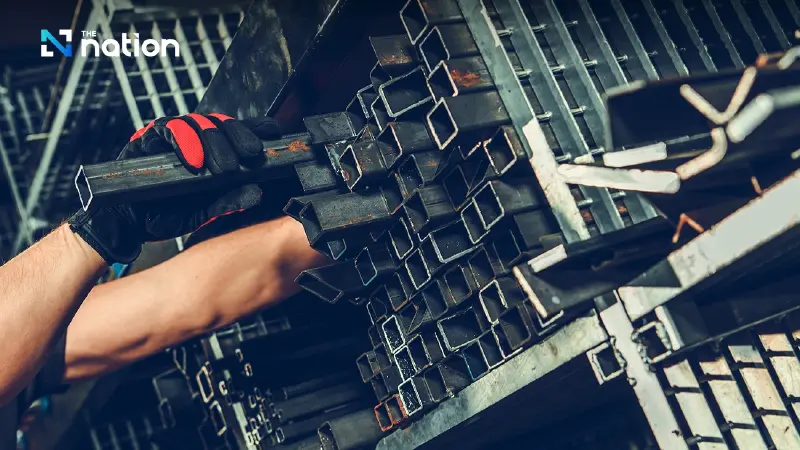


EU’s CBAM enters its charging phase in 2026, with Thai export costs seen rising by about 28bn baht—mainly for steel and aluminium.
Thailand’s steel industry is bracing for a sharp rise in export costs when the European Union’s Carbon Border Adjustment Mechanism (CBAM) moves from reporting to paid compliance on January 1, 2026, potentially reshaping global competition in the sector.
Bantoon Juicharern, chairman of the Steel Industry Group at the Federation of Thai Industries (FTI), said CBAM is becoming a key variable that could alter the structure of competition in the global steel market.
The EU has been in a transitional phase since October 1, 2023, during which importers must report the “specific embodied carbon” in selected goods. From 2026, importers will be required to buy and surrender CBAM certificates based on the embedded emissions in those products, with prices linked to the EU Emissions Trading System (EU ETS).
“January 1, 2026 will mark a turning point—from reporting to real costs,” Bantoon said. “Carbon will no longer be only an environmental issue. It will become an unavoidable trade cost.”
What CBAM covers—and what may come next
The CBAM transitional period runs from October 1, 2023 to December 31, 2025, giving exporters time to build reporting systems and calculate product-level embedded emissions before the mechanism is applied in full.
In its initial phase, CBAM covers six groups of goods: iron and steel, cement, fertilisers, aluminium, electricity and hydrogen—sectors seen as emissions-intensive and at higher risk of carbon leakage.
For steel, CBAM-covered items span a wide range, from hot-rolled and cold-rolled steel, rebar and steel pipes to semi-finished products such as slabs and billets, identified using EU customs classification (CN codes) and sector-specific guidance from the European Commission.
Bantoon said the industry is closely watching a late-2025 European Commission proposal to extend CBAM to downstream products that rely heavily on steel and aluminium, with a target start date of January 1, 2028. The proposal also points to tougher requirements on traceability and measures to counter circumvention.
“Expanding CBAM to downstream products means the impact will not be limited to upstream steelmakers,” he said. “It could spread to manufacturers of industrial parts, electrical appliances, and consumer goods that use steel and aluminium as core inputs in the coming years.”
Estimated impact: 3.8% of exports to the EU
Research by Kasikorn Research Centre estimates that once CBAM moves into its paid phase in 2026, the initial impact could equal about 3.8% of Thailand’s exports to the EU, or roughly 28 billion baht.
The biggest hit is expected to fall on steel and aluminium, while the impact on cement and fertilisers is expected to be limited because Thailand exports relatively small volumes of those products to the EU.
In practice, exporters may also face additional burdens beyond the carbon price itself—especially the costs of collecting, calculating and verifying product-level emissions data under Measurement, Reporting and Verification (MRV) requirements, and coordinating with EU importers to ensure CBAM certificates are purchased and surrendered in line with the rules.
Risk—and opportunity—for low-carbon steel
Bantoon said CBAM is not only a threat but also a potential opportunity for Thai producers with low embedded carbon, particularly firms using electric arc furnace (EAF) technology and recycled scrap as feedstock.
FTI data for January–October 2025 show Thailand’s exports of iron and steel products to the EU rose by more than 250% year on year. Part of the increase, he said, reflects growing EU demand for lower-carbon steel as importers prepare supply chains ahead of CBAM’s full application.
“Thai EAF steel can help reduce a buyer’s carbon-related costs in the EU by 5–10% of the product’s value,” he said, adding that the advantage could widen over time and potentially reach around 20% within a few years.

What the industry wants
To respond, Bantoon said Thai steel producers need to accelerate factory- and product-level MRV systems, increase the use of renewable electricity through power purchase agreements (PPAs) or onsite solar, and strengthen traceability across supply chains.
He added that the sector is also seeking government support, including efforts to have the EU recognise accredited verifiers in Thailand, progress on a Climate Change Act and an emissions trading system (ETS), and policies to prioritise domestic use of scrap steel and scrap aluminium to help build higher-value low-carbon products.
“CBAM is a mechanism that is effectively sorting winners from losers in the global steel industry,” Bantoon said. “If Thailand adapts in time, it can not only defend existing markets but also use low carbon as an advantage to expand exports over the long term.”
