
Thailand ramps up ‘community marinas’ to attract global billionaires
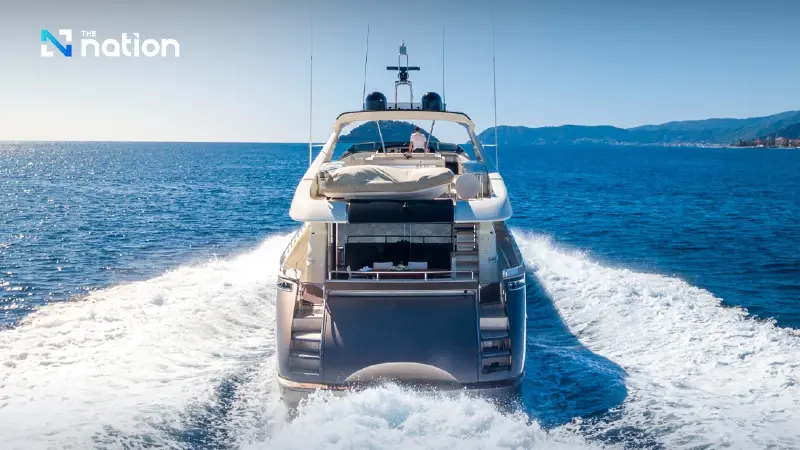


Luxury yacht market 2026: Chinese, Indian, and Vietnamese billionaires invest in 'experiential assets'—Thailand accelerates 'community marinas' development
Amidst a continuing economic slowdown, with little opportunity for recovery due to various challenges such as geopolitical risks, trade wars, and environmental changes, a select group of individuals are continuing to drive the economy through luxury travel options like yachts, despite the many challenges.
According to data from ResearchAndMarkets.com, the "luxury yacht market" is expected to grow in value from USD 10.12 billion in 2025 to USD 10.76 billion in 2026, and reach USD 14.61 billion by 2031, with a compound annual growth rate (CAGR) of 6.31%. This growth is driven by an increasing number of Ultra High Net-Worth Individuals (UHNWIs), a group that is pushing forward new tourism and investment trends, such as “experiential assets.”
Recently, the Transport Policy and Planning Office (TPPO) held a meeting with the technical steering committee of a consultancy project for the development of a master plan for the southern Andaman coastal region, aimed at positioning it as a maritime tourism and transport hub. The project also focuses on the development of community marinas in the provinces of Ranong, Phang Nga, Phuket, Krabi, Trang, and Satun.
The meeting discussed the draft environmental impact assessment (IEE) report for a proposed cruise and sports marina project, with members providing feedback and suggestions. The consultants have been tasked with revising the report to ensure it aligns with sustainable development practices.

The project, which has been in development since a 2015 Cabinet resolution, aims to establish Thailand as the region's maritime tourism hub. The growth of the maritime tourism market, including luxury yachts, is expected to significantly contribute to the national and local economy.
ResearchAndMarkets.com also notes that the yacht tourism sector, like other transport industries, is experiencing a transition, with hybrid and electric systems gaining popularity. Yacht manufacturers are striving to meet the International Maritime Organization's (IMO) greenhouse gas regulations, which are expected to tighten in the future.
“Exploration-style yachts are expanding their cruising grounds beyond the Mediterranean. Mergers in the market between yacht builders and marina operators are intensifying, with private equity funds investing in marina infrastructure to ensure their readiness,” the report states.
By 2030, yacht tourism is expected to contribute 26% of the maritime economy. Yachting tourists spend approximately USD 287 per day, nearly double the spending of average tourists. In addition, there is increasing investment in large, luxurious cruise ships to cater to premium-level spending, and yacht cruise programmes are becoming more popular among tourists.

The emergence of new markets for billionaires in countries like Vietnam, India, and Mauritius is expanding. These individuals view yachts not just as investments, but as symbols of passion, privacy, and lifestyle benefits, with an increasing focus on sustainability. This trend has resulted in a rising demand for hybrid and electric yachts.
However, owning and maintaining yachts remains a challenge, with rising operational costs affecting the industry. Princess Yachts reported a £61 million loss in 2022 due to higher costs and global market challenges. Premium marina fees are also rising, compounded by increasing interest rates and higher insurance premiums. To mitigate these challenges, yacht owners are turning to shared ownership and chartering.
Market Share Analysis
In 2025, motor yachts are expected to dominate the market with a 66.68% share, driven by consumer demand for spaciousness and long-range capabilities. Hybrid/electric yachts are expected to grow the fastest, with a CAGR of 10.09% through 2031. Yachts in the 20 to 40-meter range will capture the largest market share (43.62%) in 2025, while yachts over 80 meters are forecast to grow the fastest (11.74% CAGR).
The push towards electric power is accelerating, as manufacturers integrate hybrid systems that offer benefits such as reduced noise and better fuel efficiency. Ferretti Group recently launched the Riva El-Iseo, a fully electric yacht combining traditional design with modern electric technology.
Global Competition
Europe, led by strong shipbuilding industries in Italy, the Netherlands, and Germany, is expected to dominate the luxury yacht market with a 42.62% share by 2025. Meanwhile, the Asia-Pacific region is growing the fastest, driven by expanding marinas and increased yacht registrations in China, despite bureaucratic obstacles. India is also modernizing its coastline to attract more yacht tourism.
Thailand, despite having ample maritime resources for tourism, faces stiff competition from itself in executing its development plans. The country must continue to overcome internal challenges to make its maritime tourism hub vision a reality.
