
Conveyor-belt sushi market hits THB 8bn, shaking up Japan dining in Thailand
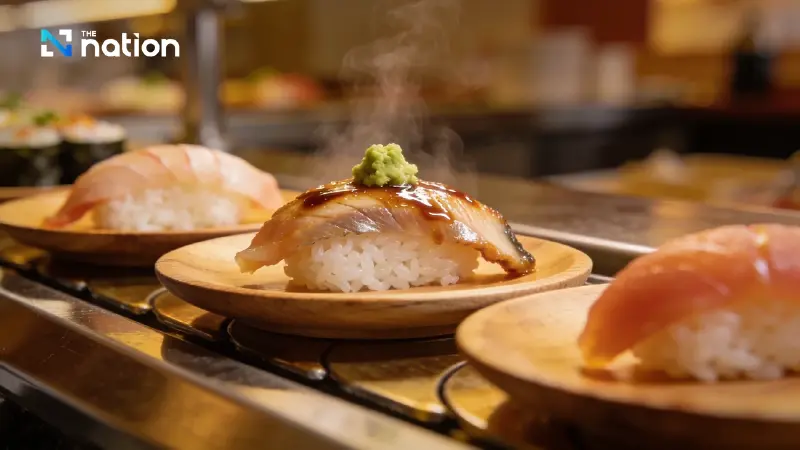


Thailand’s conveyor-belt sushi market has surged from under THB1bn to around THB8bn, even as the overall Japanese restaurant sector shows its first decline since 2007.
In early 2026, the Japan External Trade Organisation (JETRO) Bangkok published its 2025 survey of Japanese restaurants in Thailand, finding a total of 5,781 outlets—down 135 from the previous survey.
While the drop is not large, it marks the first decline since the survey began in 2007, raising questions over whether the market is nearing saturation.

Jakkrit Saisomboon, CEO and co-founder of Maguro Group, told Post Today that the industry is entering a major transition—likened to a “leaf-shedding” phase—where old formats are replaced by new ones as consumer lifestyles evolve.
He said the JETRO survey showed closures outnumbered new openings last year, particularly among restaurants located in shopping centres. Key pressures include:
- Fiercer competition: Thailand has around 5,700 Japanese restaurants, making it harder for new entrants. Consumers are also looking for greater variety and new lifestyle trends, forcing brands to differentiate more clearly to survive. He added that tea and matcha brands have been reporting growth as high as 100%.
- A decline in traditional sushi shops: Conventional sushi outlets are gradually declining, as the conveyor-belt sushi (Kaiten sushi) business model increasingly replaces them.
- Cost pressures on all sides: Many restaurants struggle to keep costs under control, particularly rising rents. Each time lease contracts expire and are renewed, rents often increase, driving the pattern of closures followed by new openings—not only among Japanese restaurants. Annual minimum-wage increases and volatile ingredient prices, affected by inflation and war, have also squeezed margins and, in some cases, forced operators to shut.

Conveyor-belt sushi surges to THB8 billion
While traditional Japanese restaurant formats face tougher conditions, conveyor-belt sushi is on the rise. Jakkrit said the market has grown sharply from less than 1 billion baht—possibly even under 500 million baht—six years ago to about 8 billion baht today, expanding by nearly 100% a year over the past four to five years.
He attributed the uptrend to “budget control”: customers can choose exactly how much to spend, whether it is a few pieces for a few hundred baht or a full meal.
Another driver is the influence of children—those under 10 often enjoy the conveyor-belt experience—encouraging families to shift from neighbourhood restaurants to shopping centres for conveyor-belt sushi.

Five major conveyor-belt sushi brands in Thailand
The Thai conveyor-belt sushi market has become increasingly competitive, led by five major players:
- Sushiro – Japan’s top conveyor-belt sushi chain with more than 800 outlets worldwide. It entered Thailand through Sushiro GH (Thailand), opening its first branch in March 2021. It has since expanded to more than 40 branches, mainly in Bangkok and surrounding areas, and is currently seen as the market leader.
- Katsu Midori – A well-known Tokyo conveyor-belt sushi brand brought to Thailand by The Food Selection Group, owner of Shinkanzen Sushi. It opened its first Thai branch in December 2024 at CentralWorld and now has four branches, positioning itself around premium ingredients at accessible prices.
- Hama Sushi – Part of Zensho Holdings, the Japanese restaurant giant behind brands such as Sukiya and Nakau. Hama Sushi has more than 700 branches in Japan and across Asia. In Thailand, it opened its first branch at Central Pinklao in November 2025.
- Genki Sushi – A Japanese brand that differentiates itself by delivering freshly made sushi via a “high-speed train” system from the kitchen directly to customers’ tables. It operates in Thailand on the 5th floor of CentralWorld.
- Kaiten Sushi Ginza Onodera – Set to be launched by Maguro Group, this premium kaiten sushi brand comes from the Onodera Group, a global Japanese dining operator known among food lovers as a “must-visit” destination in Japan. It is expected to open in Q3 2026 at CentralWorld, positioned as the first branch in Southeast Asia and the largest flagship store in Asia.
Overall, the picture suggests Thailand’s conveyor-belt sushi segment is heating up fast, with major Japanese chains and Thai operators competing for share in a Japanese dining market that continues to evolve.
