
Ranong Port: Gateway To BIMSTEC Economy Worth US$3.5 Trillion
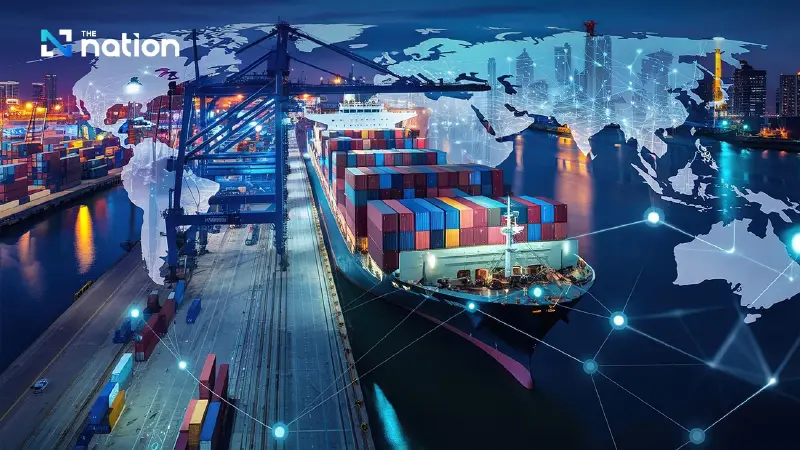


Thailand’s Ranong Port and Bangladesh’s Chittagong Port are stepping up cooperation under BIMSTEC, positioning the Andaman Sea as a strategic maritime and logistics hub.
The Bay of Bengal Initiative for Multi-Sectoral Technical and Economic Cooperation (BIMSTEC) is one of the closest cooperation frameworks for Thailand, given the countries’ geographic proximity and deep economic, social, cultural, linguistic and religious links.
BIMSTEC represents a vast market of around 1.5 billion people, with a combined economy worth more than US$3.5 trillion. It is also a high-growth bloc of emerging economies.
According to the Port Authority of Thailand, cooperation between Thailand’s Ranong Port and Bangladesh’s Chittagong Port under the BIMSTEC framework has become a key regional logistics strategy to watch.
Pairing these two major ports not only strengthens trade potential between Southeast Asia and South Asia, but also reinforces Thailand’s role as a maritime hub on the Andaman Sea. It is seen as a major opportunity to drive trade and build more systematic economic connectivity.

Ranong Port: Thailand’s strategic gateway on the Andaman Sea
Ranong Port is located at a strategic point on the Andaman Sea. It can efficiently handle containerised cargo to international standards, linking goods to the Indian Ocean and the Bay of Bengal without passing through the Strait of Malacca—clearly reducing shipping distance and transit time.
To support its role as a logistics hub, the Port Authority of Thailand has accelerated infrastructure development, including procurement of additional cranes and handling equipment, and upgrades to warehouses and berths.
These improvements are intended to prepare Ranong Port for growing cargo volumes in the future and strengthen Thailand’s competitiveness in the region.
The new Ranong–Chittagong route is expected to help high-potential Thai products reach the Bangladeshi market more quickly.
Target exports include agricultural products and processed food—especially instant noodles—as well as fresh and processed fruit, halal food, automotive parts, machinery, and medical tourism services, where Thailand has advantages in technology and cost efficiency.
Developing Ranong Port is therefore a key step in elevating Thailand as a leading maritime logistics hub on the Andaman Sea.
Chittagong Port: the engine of Bangladesh’s economy
On the Bangladeshi side, Chittagong Port is the country’s largest port and a core trade gateway. Located on the Karnaphuli River, it handles as much as 90% of Bangladesh’s international trade.
The port is a key link for Bangladeshi goods entering Southeast Asian markets, including textiles and garments (Bangladesh is the world’s second-largest exporter), leather products and footwear, seafood such as frozen shrimp and fish, pharmaceuticals and medical supplies, as well as scrap metal from the ship-breaking industry, in which Bangladesh is among global leaders.
Connecting with Ranong Port can reduce transport time and costs from 7–15 days to just 3–5 days, enabling Thailand and Bangladesh to expand trade, improve logistics efficiency, and connect BIMSTEC members more rapidly.
Overall, cooperation between Ranong Port and Chittagong Port is viewed as an important mechanism for systematically driving Thai trade towards the Indian Ocean and BIMSTEC member states.
This pairing is described as a “golden opportunity for growth”, creating shared benefits by expanding markets, reducing costs, boosting global competitiveness, and positioning Ranong Port to become a gateway port linking Southeast Asia and South Asia over the long term.

Why BIMSTEC matters to Thailand?
BIMSTEC, the Bay of Bengal Initiative for Multi-Sectoral Technical and Economic Cooperation, is a regional grouping made up of seven member countries: Bangladesh, Bhutan, India, Myanmar, Nepal, Sri Lanka and Thailand.
Its areas of cooperation have been expanded and consolidated into seven sectors covering trade, investment and development; agriculture; the environment; security; science and technology; people-to-people contacts; and connectivity.
BIMSTEC is seen as Thailand’s western strategic buffer—helping strengthen stability and security while reducing vulnerability to external geopolitical pressures.
With ASEAN serving as Thailand’s eastern and southern buffer for more than 57 years, stronger political and economic stability among western neighbours would support Thailand’s development and expand trade and investment opportunities.
It would also enable Thailand to leverage its location to attract investment from outside the region and become part of global supply chains serving Asia’s two largest markets: India and China—building on Thailand’s experience with ASEAN+1, ASEAN+3 and the Regional Comprehensive Economic Partnership (RCEP) framework.
As a result, BIMSTEC is viewed as an essential additional “link”, supporting Thailand’s “Look West” policy announced in 2016 and complementing the increasingly important Indo-Pacific framework.
Thailand can play a connectivity role through both land links and sea links, an advantage over countries that can serve only one of these routes.
Source: www.thailand.go.th
