
ERC sets power tariff at 3.95 baht per unit for May-August
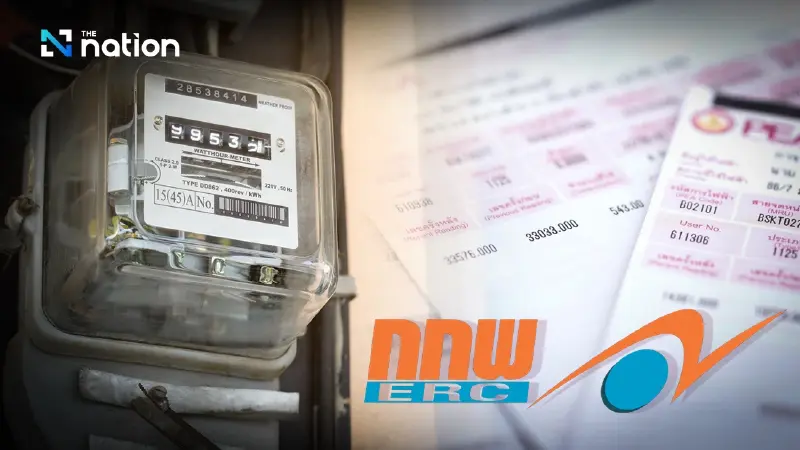


Thailand’s energy regulator has approved a new power tariff of 3.95 baht per unit for May-August, using clawback funds to soften the impact on consumers.
Thailand’s Energy Regulatory Commission (ERC) has approved an average electricity tariff of 3.95 baht per unit for the May-August 2026 billing cycle, up from the current 3.88 baht, after setting the fuel tariff, or Ft, at 16.23 satang per unit.
The new rate, excluding VAT, combines the Ft with the base tariff of 3.78 baht per unit. The regulator said the decision was aimed at balancing actual energy costs with cost-of-living pressures as global energy markets remain volatile amid unrest in the Middle East.
Clawback funds used to soften tariff rise
Dr Poolpat Leesombatpiboon, secretary-general of the ERC Office and spokesperson for the commission, said the new Ft reflects fuel and power purchase costs of 29.66 satang per unit for the period. To ease the burden on consumers, the ERC will use about 9.472 billion baht in clawback funds, equivalent to 13.43 satang per unit, while the Electricity Generating Authority of Thailand (EGAT) will continue absorbing 35.928 billion baht in accumulated outstanding costs on behalf of the public.
The commission said the move was in line with the Energy Industry Act and ERC tariff-setting rules, which require rates to reflect real costs while remaining transparent and fair. In the public consultation held from March 25 to 31, a total of 340 comments were submitted, with 49% backing the 3.95-baht option, which relied on the clawback mechanism to reduce the impact on consumers.
Freezing current rate would cost around 5 billion baht
Poolpat said calls to freeze electricity prices at the current 3.88 baht per unit would carry a heavy fiscal cost. With about 26 million electricity users nationwide, every 1-satang reduction would require around 706 million baht in support, meaning an additional 7-satang subsidy would cost about 5 billion baht over four months.

He said that if support were limited to households using no more than 200 units a month, covering about 14.3 million accounts or 62% of residential users, the budget required would be about 366 million baht over four months. For households using up to 300 units a month, or about 17.5 million accounts representing 76% of residential users, the amount would rise to about 591 million baht.
Summer heat could still push monthly bills higher
The ERC also warned that actual household bills could still rise in April as extreme summer heat drives up electricity use, particularly from air conditioners and refrigerators. It said heavier usage during the hot season could result in higher monthly charges under Thailand’s progressive tariff structure.
The ERC last week floated three tariff options for the May-August period, ranging from 3.95 baht to 4.59 baht per unit, before settling on the lowest option. The current tariff for the January-April cycle stands at 3.88 baht per unit.
