
Middle East conflict hits Thailand as factories shut and layoffs rise
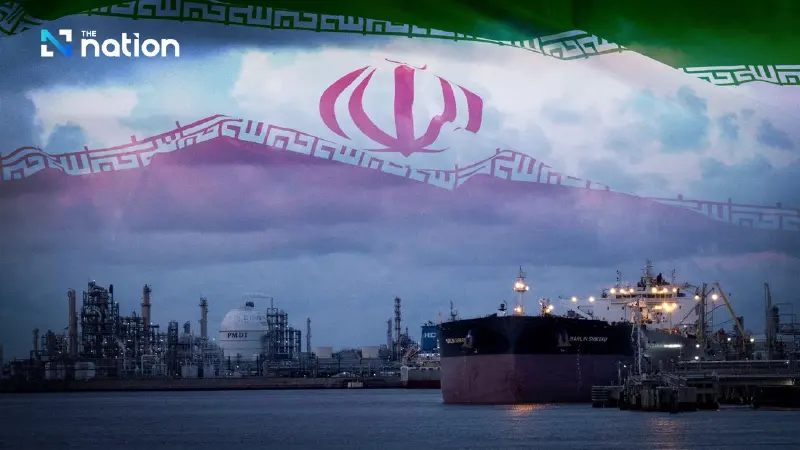


Prolonged Middle East tensions drive up energy costs, forcing Thai factory closures, SME strain and tourism slowdown
Thailand’s economy is beginning to feel the full force of prolonged conflict in the Middle East, with rising energy costs, weakening demand and global uncertainty combining to pressure businesses across multiple sectors.
The crisis, now stretching beyond two months since the United States and Israel launched attacks on Iran on February 28, has disrupted global markets and pushed oil prices higher. The situation has been further exacerbated by the closure of key shipping routes such as the Strait of Hormuz, a vital artery through which around 20–25% of the world’s crude oil supply, or roughly 20–21 million barrels per day, passes.
According to the Asian Development Bank (ADB), the ongoing conflict and trade uncertainty are expected to slow economic growth across developing Asia and the Pacific to 5.1% in both 2026 and 2027, down from 5.4% previously. Inflation in the region is also projected to rise to 3.6% in 2026 and 3.4% in 2027, compared with 3.0% last year.
Factories under pressure, layoffs rising
Kriengkrai Thiennukul, chairman of the Federation of Thai Industries, said the prolonged conflict has led to persistently high global energy prices, fundamentally altering the cost structure for businesses.

Factories in Thailand have already begun to close in stages as production costs surge while consumer purchasing power remains weak. Many operators have been forced to scale back output, and those unable to cope may eventually shut down altogether if the situation continues.
The hardest-hit sector is manufacturing, particularly industries reliant on raw materials such as plastics, where rising input costs have already led to factory closures and job losses affecting thousands of workers.
Large industrial operators are also under pressure, especially those dependent on energy-intensive processes and imported materials such as iron ore, minerals and aluminium, all of which have become significantly more expensive. At the same time, slower investment in construction and major projects has further reduced demand, leaving businesses struggling to decide whether they can raise prices in a weakening market.
Kriengkrai warned that the situation could worsen if negotiations fail and attacks escalate to critical infrastructure such as power plants or oil facilities. Even if hostilities were to end immediately, damaged infrastructure could take up to a year to repair, keeping energy prices elevated for an extended period.
Chinese imports intensify competition
Thai businesses are also facing growing competition from low-cost Chinese imports, as trade barriers and higher tariffs in the United States push Chinese goods into Southeast Asian markets, including Thailand.
While production costs in Thailand continue to rise, Chinese goods remain relatively cheaper, widening the price gap and shifting consumer demand towards imported products. The issue remains complex and unresolved, particularly for SMEs already struggling with limited resources.
SMEs squeezed by rising costs and debt
Sangchai Theerakulvanich, president and strategy chairperson of the Federation of Thai SMEs, described the current situation as a “multi-layered crisis” driven by trade tensions, technological competition and geopolitical conflict.

SMEs, he said, are among the most vulnerable, facing simultaneous pressure from rising costs, slowing demand and intensifying competition. Energy costs, including fuel, electricity and transport, have increased sharply, particularly affecting smaller operators with high electricity usage.
At the same time, global supply chain disruptions have driven up logistics costs, while raw material prices have risen across sectors. Businesses in food, retail and services have been forced to raise prices despite weakening consumer spending.
Household financial strain is also deepening, with higher living costs reducing domestic consumption. Rising household debt and non-performing loans (NPLs) are further highlighting liquidity challenges for both consumers and businesses.
Structural challenges remain another concern, including limited productivity, shortages of skilled labour, and slow adaptation to new technologies such as artificial intelligence. These constraints continue to limit the competitiveness of Thai SMEs on the global stage.
As pressure mounts, many businesses have begun cutting costs through layoffs or closures, raising concerns about broader impacts on the grassroots economy if conditions persist.
The federation has proposed a long-term strategy centred on five key pillars: fair economic restructuring, equitable energy pricing, improved access to finance, workforce development and regulatory reform. It also called for coordinated government action to ensure policies are implemented effectively and deliver tangible results.
“Thailand needs a quick, large-scale transformation to achieve a rapid and meaningful economic recovery,” Sangchai said.
Aviation cuts flights as fuel costs surge
The aviation sector is also under strain. Chai Eamsiri, chief executive of Thai Airways International, said airlines are facing significant pressure from soaring jet fuel prices, which at one point peaked at around US$240 per barrel, nearly three times higher than levels seen before the end of February.

Although prices have eased slightly, they remain at least double previous levels on average. Combined with the low travel season, airlines have been forced to manage costs more tightly.
Thai Airways, despite having hedged around 50% of its fuel needs, is reducing flights by about 5% in May, equivalent to roughly 46 flights per day from its usual average of more than 200 daily services.
The airline is continuing to monitor the situation closely and may implement further flight reductions in June. Fuel surcharges may also be adjusted, while ticket price increases will depend on market conditions.
While the situation has not yet reached the level of a full-scale crisis leading to airline bankruptcies, prolonged high fuel prices and weak passenger demand could extend industry difficulties into the third quarter of the year.
Tourism demand weakens sharply
Tourism, another key pillar of the Thai economy, is also feeling the impact. Prachoom Tantiprasertsuk, honorary adviser to the Thai Hotels Association, said hotel bookings for the second and third quarters have slowed by around 20–30%.

The decline has been particularly severe among European markets, especially German-speaking travellers, where bookings have dropped by as much as 70% compared with last year.
The downturn is partly linked to reliance on Middle Eastern airlines, as well as a roughly 20% increase in airfares, which has discouraged travel. Domestic flights have also been reduced and become more expensive due to fuel costs, further affecting tourism activity.
As the Middle East conflict drags on, its ripple effects are increasingly visible across Thailand’s economy, from factories and small businesses to airlines and hotels, raising concerns that the full impact may yet to unfold.
