
Thailand eyes B100bn future fund for green infrastructure push
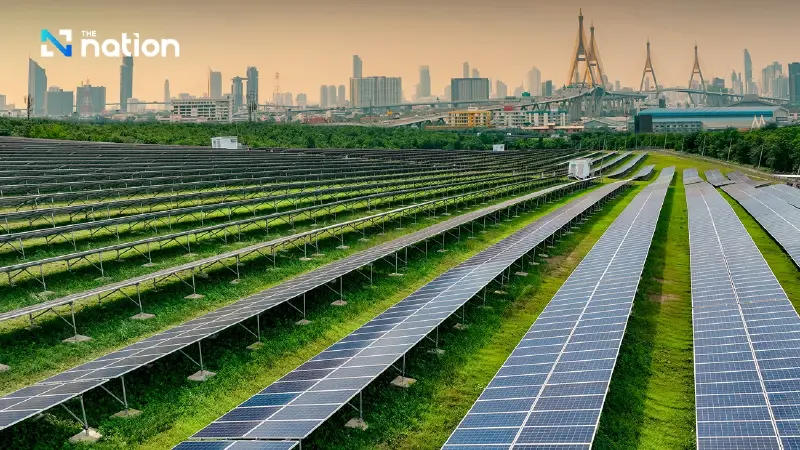


The Finance Ministry is preparing a new Thailand Future Fund phase to raise B100bn for clean energy and future-economy infrastructure.
Thailand’s Finance Ministry is preparing to launch a new phase of the Thailand Future Fund to raise around 100 billion baht for clean-energy and future-economy infrastructure, as the government seeks to make investment a central driver of economic growth.
A Finance Ministry source said Deputy Prime Minister and Finance Minister Ekniti Nitithanprapas had called a meeting of related agencies to discuss measures to stimulate national investment, with the Thailand Future Fund, or TFFIF, seen as a key financial instrument.
The new phase would use future revenue from selected projects as collateral for fundraising, allowing the government to mobilise capital for major infrastructure without creating a direct fiscal burden.
Clean energy to lead new investment phase
The investment focus will shift towards projects that support the new economy, particularly clean energy and energy-saving schemes.
Potential projects include floating solar schemes and transport infrastructure that can help reduce energy consumption.
Projects to be included in the fund must be ready to proceed, have completed feasibility studies and offer clear returns. The ministry expects investment units to be offered for sale within this year, with fundraising targeted at around 100 billion baht.
Fund model shifts beyond expressways
The government previously launched a similar infrastructure fund in 2018, raising 44.7 billion baht through the Thailand Future Fund’s capital increase. The first phase was linked mainly to expressway revenue and infrastructure projects.
The earlier fund supported major expressway projects, including the Rama III–Dao Khanong–Western Outer Ring Road Expressway and the third-stage expressway northern route, section N2. A SET-related announcement described TFFIF as a new fundraising source for public infrastructure development when it began trading in 2018.
The planned new phase marks a broader policy shift from traditional transport infrastructure towards green, digital and future-industry assets.
Ministry targets investment at 30% of GDP
Winit Wisetsuwannaphum, director-general of the Fiscal Policy Office and spokesman for the Finance Ministry, said the global economy continued to face uncertainty from geopolitical risks and the energy crisis.
However, he said the ministry would continue pushing the Thai economy to grow at its full potential.
The ministry aims to lift Thailand’s investment ratio to 30% of GDP by accelerating investment in green and digital economic infrastructure while maintaining fiscal discipline. It is also ready to use additional easing measures if needed.
Public investment forecast to be upgraded
The Finance Ministry is also preparing to revise up its investment forecast for this year, particularly public investment.
It now expects public investment to expand by 1.7%, compared with an earlier forecast of a 1.7% contraction, after assessing that the fiscal 2027 budget will be completed on schedule.
The ministry expects this to allow capital budget disbursement to proceed as planned, supporting state-led investment at a time when the government wants investment to become a stronger growth engine.
BOI and PPP channels to support private sector
At the same time, the government is working to make it easier for the private sector to invest, including through the Board of Investment and public-private partnership projects.
The aim is to make investment a main mechanism for driving the economy, alongside efforts to attract capital into future industries.

Ekniti said earlier that Thailand faced structural constraints, especially investment levels that remained low compared with the country’s potential. He said the government needed to raise investment as a core pillar of national strategy, including in digital technology, artificial intelligence infrastructure, human capital, regulatory reform and the green and digital economy.
For the Finance Ministry, the new Thailand Future Fund phase is therefore expected to serve two purposes: unlocking large-scale investment without directly increasing fiscal pressure, and steering capital towards infrastructure that could strengthen Thailand’s long-term competitiveness and economic resilience.
