
From Epic Fury to Project Freedom: Who Pays the Bill for a Blocked Strait?
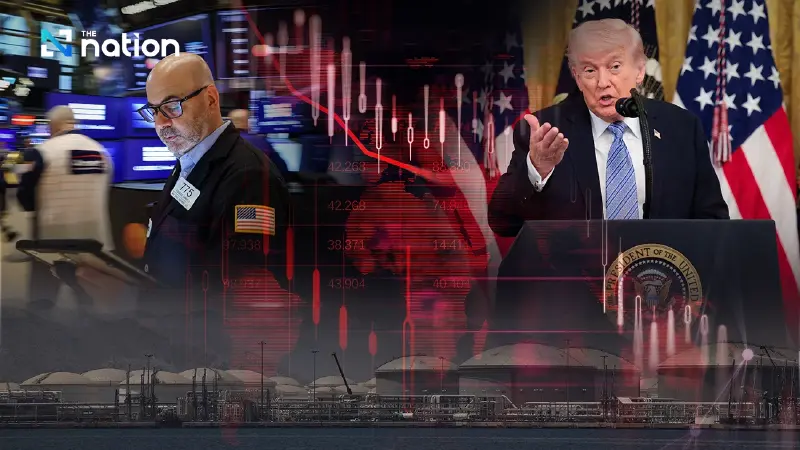


The military names sound distant. The economic cost does not. It is appearing in fuel prices, factory margins, food costs, airline collapses, public subsidies and government borrowing
- The blockage of the Strait of Hormuz, a chokepoint for 25% of global seaborne oil, is projected to reduce global GDP by hundreds of billions of dollars and cause sharp increases in energy, food, and fertilizer prices.
- Consumers and corporations bear direct costs, seen in rising retail gas prices, and severe financial strain on industries like aviation, leading to profit warnings and bankruptcies such as Spirit Airlines.
- The crisis is causing industrial slowdowns and trade imbalances in energy-dependent nations like Germany and Japan, while also accelerating structural shifts, such as China's transition to new-energy trucks.
- Governments are paying a "hidden fiscal bill" by increasing borrowing to fund subsidies that ease living costs, which in turn raises national debt and future interest payments.
The military names sound distant. The economic cost does not. It is appearing in fuel prices, factory margins, food costs, airline collapses, public subsidies and government borrowing.
Operation Epic Fury and Project Freedom may sound like chapters in a military campaign. For the global economy, they have become shorthand for a simpler question: what happens when the world's most important energy chokepoint ceases to function normally?
The Strait of Hormuz is not merely a waterway. It is an economic artery. The International Energy Agency reports that an average of 20 million barrels per day of crude oil and oil products moved through it in 2025 — equivalent to roughly 25 per cent of global seaborne oil trade, with 80 per cent destined for Asia.
The strait also carries approximately 19 per cent of global LNG trade, whilst alternative pipeline capacity is limited to only 3.5 million to 5.5 million barrels per day.
That is precisely why a regional conflict has become a global economic event. The cost extends far beyond the price of oil. It encompasses lost factory output, weakened consumer spending, delayed shipments, costlier fertiliser, tighter government budgets and rising debt.

The Scale of the Damage
The clearest global figure remains a scenario rather than a final bill. The WTO warns that should crude oil and LNG prices remain elevated throughout 2026, global GDP growth could be reduced by approximately 0.3 percentage points. Set against the IMF's projected world economy of US$126.3 trillion for 2026, that represents roughly US$379 billion in output at risk.

The WTO further cautions that merchandise trade growth could be cut by 0.5 percentage points, from 1.9 per cent to 1.4 per cent.
The OECD offers a darker stress test.
Were oil and gas prices to rise by around a quarter and remain elevated – while financial conditions tighten – global GDP could be approximately 0.5 per cent lower by the second year, with consumer prices higher across the board. On the IMF's world GDP base, that implies a potential loss of some US$632 billion.
The World Bank frames the shock most sharply of all.
In its April 2026 Commodity Markets Outlook, it describes attacks on energy infrastructure and shipping disruption in the Strait of Hormuz as having triggered the largest oil supply shock on record, with an initial reduction in global oil supply of approximately 10 million barrels per day.

Overall commodity prices are expected to rise 16 per cent this year; energy prices by 24 per cent; and fertiliser prices by 31 per cent. Brent crude is forecast to average US$86 a barrel in 2026, though it could rise to between US$95 and US$115 should disruptions prove more prolonged or severe.
The World Bank's warning carries particular weight because it traces the chain from oil through to food, inflation and debt. Developing economies are now expected to see inflation average 5.1 per cent in 2026 — a full percentage point higher than pre-war projections — while growth has been revised down to 3.6 per cent. The institution's chief economist, Indermit Gill, put the lesson starkly: "war is development in reverse."

The Household and Corporate Toll
The United States illustrates the direct household effect. Reuters reported that the national average retail petrol price surpassed US$4.50 a gallon in early May for the first time since July 2022 as the Hormuz disruption tightened global oil supply. Brent crude had risen 58 per cent since the conflict began.
The aviation sector offers the corporate equivalent of the same shock. Spirit Airlines announced an orderly wind-down on 2nd May, saying all flights had been cancelled following a "sudden and sustained" rise in fuel prices that left the carrier without sufficient liquidity to continue operations.
Reuters reported that Spirit had already been under financial strain before the fuel shock, having absorbed an estimated US$100 million in incremental fuel costs since 1st March. Spirit's collapse serves as an instructive case study, though it would be reductive to attribute the outcome to fuel costs alone.
The pressure is not confined to one failed carrier. IAG, the owner of British Airways, has also warned that soaring jet fuel costs and supply disruption will weigh heavily on profits, cash flow and capacity. IAG expects its 2026 jet fuel bill to reach approximately €9 billion (approximately US$10.6 billion) — roughly €2 billion (approximately US$2.4 billion) higher than in 2025.

Structural Shifts and Industrial Strain
China faces the shock as the world's largest oil importer, yet the disruption is simultaneously accelerating structural change.
Reuters reported that diesel prices in China have risen 27 per cent since the conflict began, contributing to a 45 per cent year-on-year increase in new-energy heavy truck sales in the first quarter. Higher oil prices are thus inflating logistics costs whilst simultaneously hastening China's transition away from diesel-powered freight.
Germany illustrates the industrial dimension. March exports rose a modest 0.5 per cent, but industrial output unexpectedly fell 0.7 per cent. Imports surged 5.1 per cent, narrowing Germany's trade surplus to €14.3 billion from €19.6 billion.
Elevated energy prices and supply bottlenecks stemming from the Hormuz blockade have been cited as material threats to second-quarter industrial output.
Japan is exposed through both energy dependence and corporate earnings. The country relies on the Middle East for approximately 95 per cent of its oil supplies, with around 70 per cent transiting Hormuz — though it holds emergency oil reserves equivalent to 254 days of consumption.
Toyota has now attached a company-level figure to the crisis: it expects the conflict to cost approximately US$4.3 billion in the current financial year through higher material costs, delivery delays and lower sales volumes.

The ASEAN Dimension
For ASEAN, the damage is uneven but widespread. Energy importers such as the Philippines, Laos and Cambodia face the greatest vulnerability, whilst Thailand, Indonesia and Vietnam sit in the next tier of risk.
Krungsri Research notes that ASEAN economies are exposed not only through oil and gas but also through food, fertiliser, currency pressure and the fiscal cost of subsidies.
Thailand's exposure is particularly acute. The country imports approximately 0.3 million barrels per day of crude oil through the strait — equivalent to 58 per cent of total crude imports — as well as approximately 2.2 million tonnes of LNG annually, representing 24 per cent of LNG imports.
More than 60 per cent of Thai electricity generation depends on natural gas, whilst the country sources roughly one-third of its fertiliser imports from the Middle East.
The fiscal response has already begun. Thailand has approved a draft emergency decree to borrow up to 400 billion baht (approximately US$12.4 billion) to ease living costs arising from the energy crisis and to support energy-sector restructuring. The government has described the measure as necessary to avert stagflation — the combination of high inflation and sluggish growth.

The Hidden Fiscal Bill
That borrowing reveals a broader and less visible cost of the crisis. Governments may cap fuel prices, subsidise electricity or support farmers through higher fertiliser costs, but the funding must ultimately come from somewhere: taxation, borrowing, reduced spending elsewhere, or future debt service.
The IMF warns that global public debt already rose to 94 per cent of GDP in 2025 and is projected to reach 100 per cent by 2029, whilst interest spending has climbed from 2 per cent to nearly 3 per cent of GDP over the past four years.
The true cost of this conflict is therefore not a single figure. It is GDP foregone, trade not shipped, fuel not delivered, flights cancelled, factory output deferred, fertiliser made dearer and public debt pushed higher.
Even if the Strait of Hormuz were to reopen tomorrow, the world economy would not return to its pre-crisis footing. Inventories have been drawn down, investment decisions deferred, inflation risks revived and fiscal buffers weakened.
The question is no longer only whether the strait can be reopened. It is how much of the bill has already been written — and who will be left to pay it.
