
Thai businesses warn corruption crisis is worsening as survey reveals agency-level alleged bribery risks


A JSCCIB survey found 89.1% of Thai businesses see corruption as an obstacle, while newly disclosed agency-level data points to high alleged bribery risks in dealings with some state agencies.
Thailand’s private sector has warned that corruption remains a structural crisis undermining the business environment, after a new survey found nearly nine in 10 businesses see graft as an obstacle and, for the first time, identified state agencies with the highest alleged bribery risks.
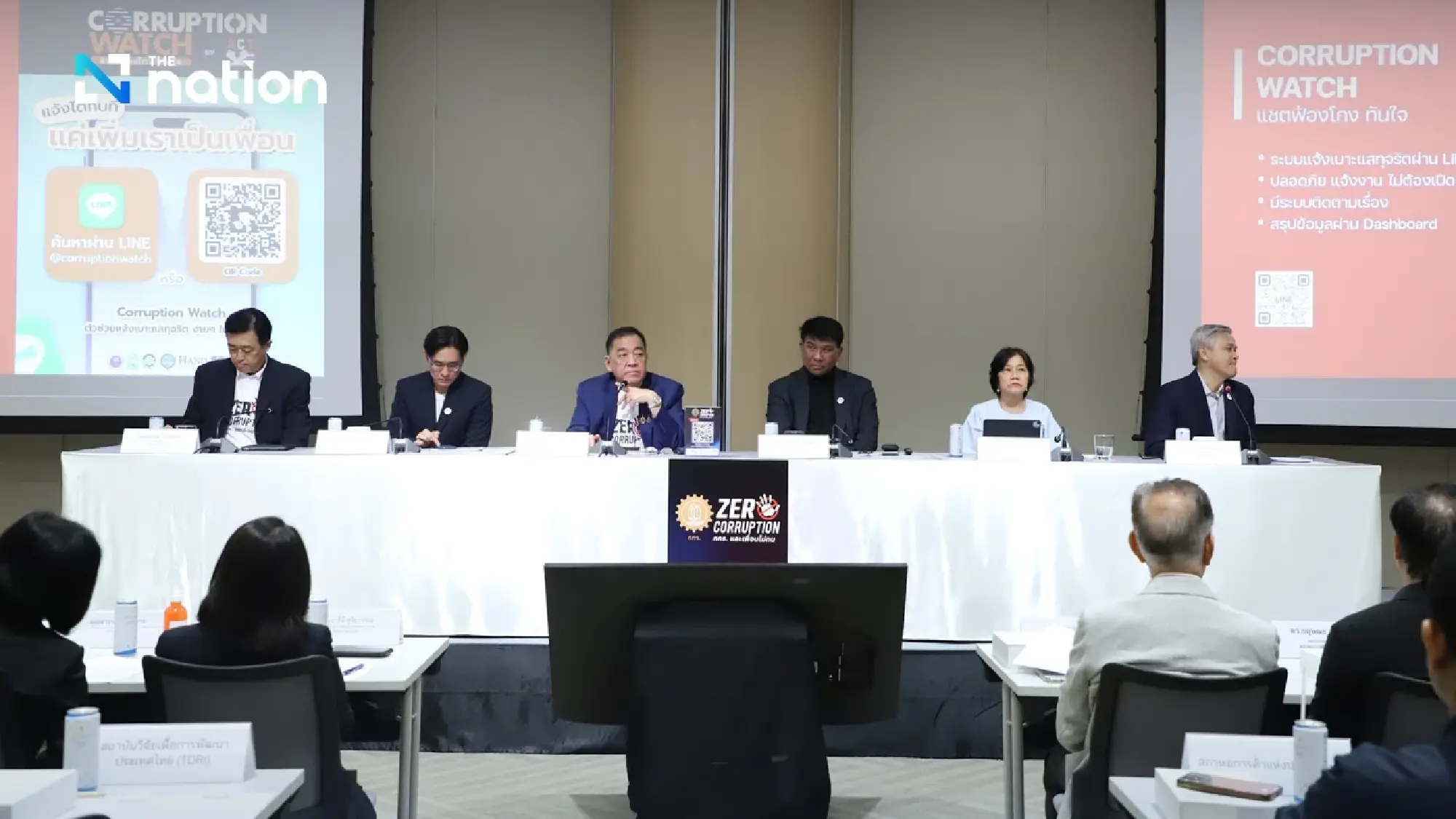
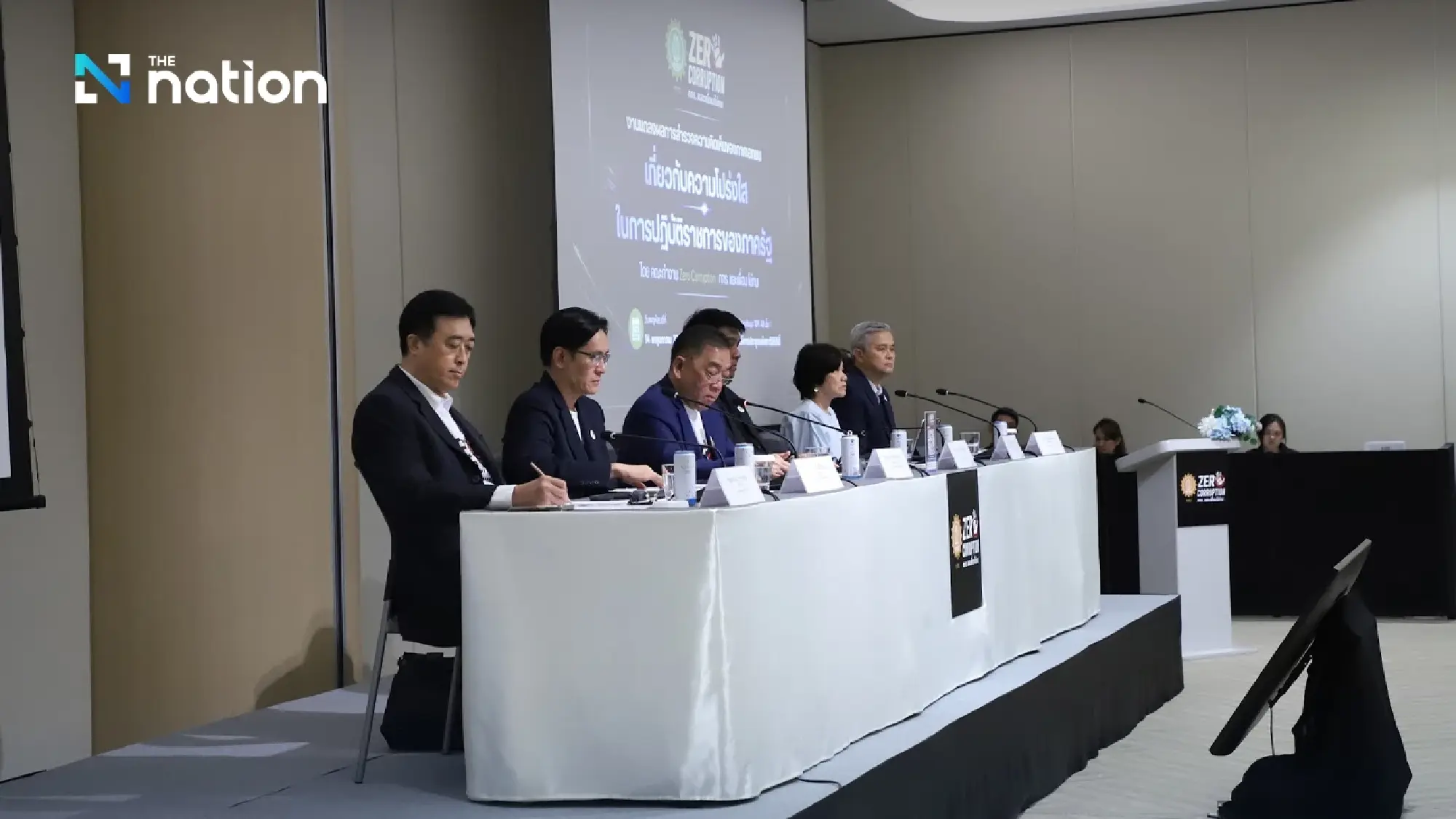
The survey was released by the Joint Standing Committee on Commerce, Industry and Banking, or JSCCIB, through its Zero Corruption working group and Puean Mai Thon. It covered 401 business executives and representatives nationwide between March 26 and April 10, 2026.
Nearly 90% say graft obstructs business
According to the survey, 89.1% of business respondents said corruption was a moderate to very serious obstacle to doing business. Another 51.2% said corruption had worsened compared with the past three years, while 51% said dealing with government agencies had become more complicated. Only 3% said the process had become easier.

The findings present corruption not only as a governance problem, but also as an economic burden affecting business costs, investor confidence and Thailand’s long-term competitiveness.
First agency-level bribery-risk data released
The latest survey is the first by the group to disclose agency-level alleged bribery-risk data. The ranking used two indicators: the alleged rate of proposed inducements compared with the number of times businesses contacted each agency, and the alleged average bribe value per transaction.
The survey does not constitute a legal finding against any agency or official. Its figures reflect reports and perceptions from private-sector respondents about alleged requests, inducements or payments linked to official procedures.

Highway and traffic police top alleged inducement-rate list
The survey identified highway police/traffic police as the agency category with the highest alleged inducement rate, at 100%. Respondents reported contacting the agency 1.69 times per year on average, with alleged inducements proposed 1.69 times.
The next highest alleged inducement rates were reported for justice system agencies excluding courts at 94.4%, subdistrict administrative organisations at 91.7%, the Marine Department at 90.0%, and the Department of Highways at 82.0%.
Other agencies in the top 10 were the Department of Public Works and Town & Country Planning at 78.9%, local police at 77.7%, the Department of Intellectual Property at 76.0%, the Revenue Department at 71.0%, and the Department of Land Transport at 69.4%.

Pollution Control Department records highest alleged bribe value
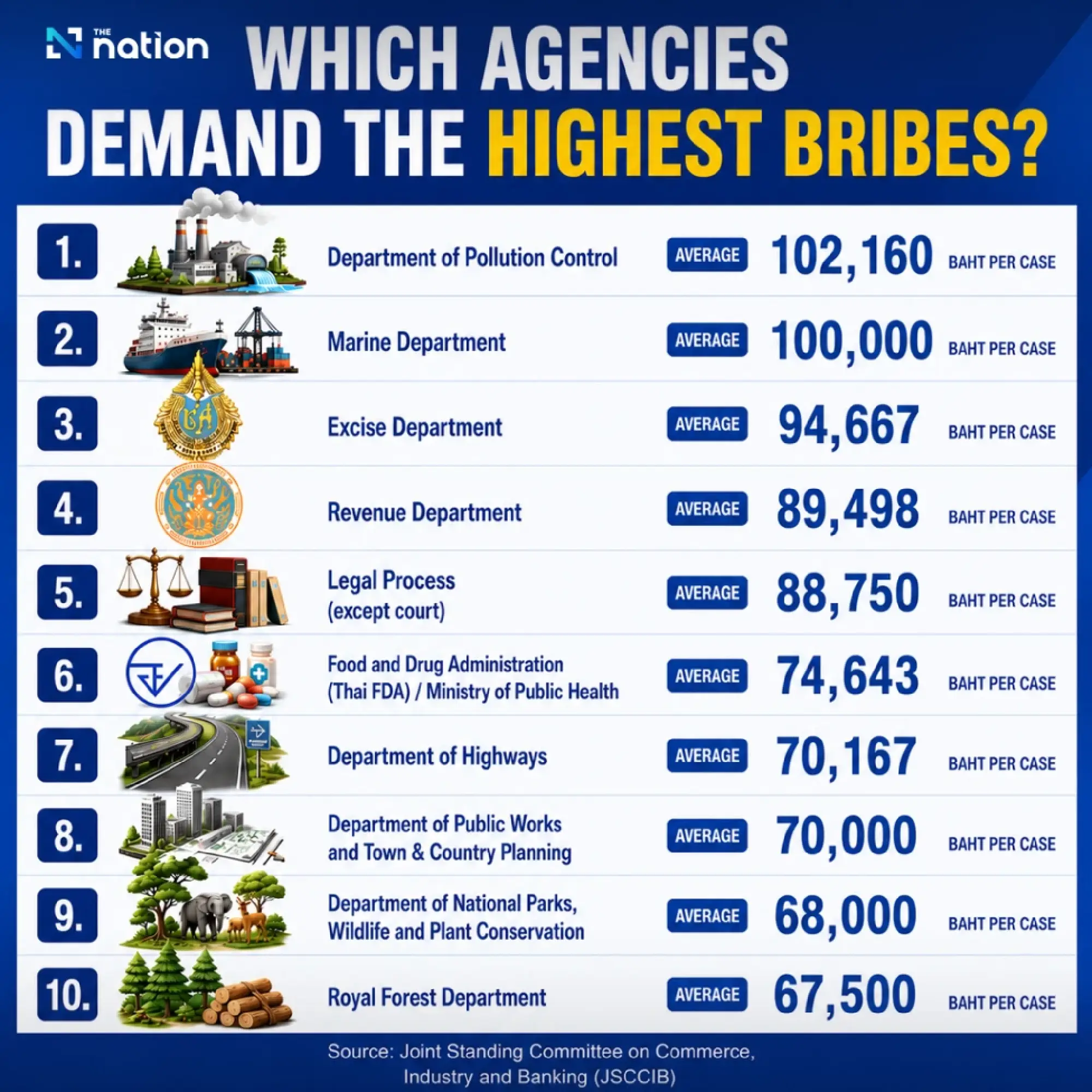
For alleged average bribe value per transaction, the Pollution Control Department ranked highest at 102,160 baht per transaction, followed by the Marine Department at 100,000 baht, the Excise Department at 94,667 baht, and the Revenue Department at 89,498 baht.
The survey also listed justice system agencies excluding courts at 88,750 baht, the Food and Drug Administration/public health services at 74,643 baht, the Department of Highways at 70,167 baht, the Department of Public Works and Town & Country Planning at 70,000 baht, the Department of National Parks, Wildlife and Plant Conservation at 68,000 baht, and the Royal Forest Department at 67,500 baht.

Businesses call for digital government and open data
The JSCCIB survey also pointed to wider concerns about how businesses interact with the state. The JSCCIB said 60.9% of respondents seeking permits from government agencies said they had encountered implied or direct alleged requests for inducements in their most recent permit application, while 45.9% of companies said they had paid money, gifts or other benefits to officials to facilitate procedures.
Business respondents called for wider use of e-government and e-procurement to reduce face-to-face contact between officials and companies. They also urged stronger penalties for corruption, more transparent regulations, regulatory reform to cut red tape, and open disclosure of government procurement data, including terms of reference, bidding results and project budgets.
Corruption remains a long-running national challenge
Thailand has long faced concerns over public-sector corruption, bribery and weak enforcement. Transparency International’s Corruption Perceptions Index 2025 gave Thailand a score of 33 out of 100 and ranked it 116th out of 182 countries, down one point from the previous year. The index measures perceived levels of public-sector corruption on a scale from 0, meaning highly corrupt, to 100, meaning very clean.
Transparency International’s Thailand country page also notes that 88% of people surveyed under its Global Corruption Barometer believed government corruption was a big problem, underlining the depth of public concern beyond the business sector.
Survey adds pressure before policy talks
The release of agency-level alleged bribery-risk data is likely to intensify pressure on the government to respond with concrete reforms, especially as the Anutin administration seeks to restore business confidence and improve Thailand’s economic competitiveness.
For the private sector, the message is that corruption is no longer just an ethics issue. It is being framed as a direct cost to business, a drag on investment and a threat to fair competition.
