
Kevin Warsh Confirmed as US Federal Reserve Chair Amid Rising Economic Volatility
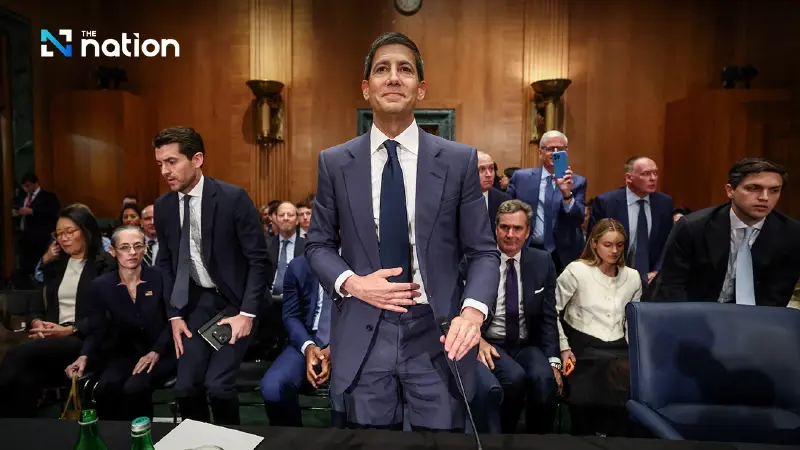


The former governor succeeds Jerome Powell with the narrowest margin in decades, facing a volatile mix of surging oil prices and presidential pressure
- Kevin Warsh has been confirmed as the new chair of the Federal Reserve, succeeding Jerome Powell after a narrow, largely partisan Senate vote of 54-45.
- He assumes the role amid significant economic volatility, including surging oil prices and annual inflation reaching a high of 3.8%.
- Warsh, a Donald Trump appointee, faces immediate pressure from the President to cut interest rates, a move that conflicts with standard economic policy for combating inflation.
- Despite vowing to protect the central bank's independence, his confirmation was contentious, with critics concerned he will yield to political pressure from the White House.
The former governor succeeds Jerome Powell with the narrowest margin in decades, facing a volatile mix of surging oil prices and presidential pressure.
The United States Senate has confirmed Kevin Warsh as the next chair of the Federal Reserve, following a 54–45 vote that fell almost entirely along party lines, Reuters reports.
Warsh, a Donald Trump appointee, succeeds Jerome Powell, whose final days have been overshadowed by federal investigations and a public rift with the President.
The confirmation marks the narrowest margin for a Fed chair since the current approval process was established in 1977. Senator John Fetterman of Pennsylvania was the sole Democrat to break ranks to support Warsh.
Warsh, 56, returns to the central bank—where he previously served as a governor between 2006 and 2011—at a moment of acute geopolitical and economic crisis. His four-year term as chair begins this Friday, though he also assumes a 14-year term as a governor, replacing Stephen Miran on the board.
The Inflation Challenge
The new chair inherits an economy under significant strain. Data released on Tuesday revealed that annual inflation reached 3.8% in April—the fastest rate since May 2023. As reported by the BBC, this spike is largely attributed to surging energy costs following the closure of the Strait of Hormuz amidst the ongoing US–Israel conflict in Iran.
While President Trump has vociferously demanded interest rate cuts to stimulate the economy, standard economic theory suggests the Fed should hold or even raise rates to combat the rising cost of food, housing, and airfares.
Market analysts are currently pricing in the possibility of a rate hike, a move that would put Warsh on a direct collision course with the White House.

Independence vs. Interference
Throughout his confirmation hearings, Warsh sought to reassure the Senate Banking Committee that he would not act as a "sock puppet" for the President, vowing to defend the central bank’s independence.
However, the committee’s ranking Democrat, Senator Elizabeth Warren, argued that Warsh is "uniquely ill-suited" for the role, suggesting he was appointed specifically to do Trump's bidding.
The transition remains fractious. Outgoing chair Jerome Powell, whom the President has previously branded "incompetent," is currently the subject of a federal probe into a renovation project at the Fed’s headquarters. Although Powell’s stint as chair ends on Friday, he has indicated he intends to remain on the board as a governor until the investigation is concluded.
The first test of Warsh’s leadership will come on 16 June, when the rate-setting Federal Open Market Committee (FOMC) meets to decide the future of US monetary policy. He must balance the President’s calls for "regime change" at the Fed against a labour market that, while stable, is grappling with inconsistent payroll growth and the inflationary pressure of recently levied tariffs.
