
Thailand’s Land Bridge faces fresh test over demand and costs
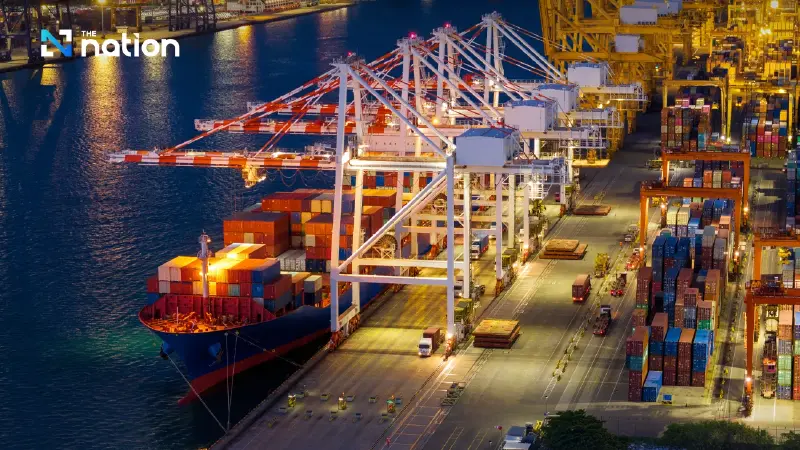


A senior academic says Thailand must assess demand, finance, the environment, logistics and geopolitics before moving ahead with the project.
- The project's viability is questioned due to uncertain future demand and intense competition from Singapore and Malaysia, which are aggressively expanding their own port capacities.
- With a THB1 trillion price tag, there are significant concerns about the project's financial sustainability and value for money, as it requires huge initial investment with a return expected only over several decades.
- The project faces major logistical hurdles, such as avoiding bottlenecks in land transport, and strong opposition due to its potential environmental impact on ecologically fragile areas.
- Broader challenges include its geopolitical implications, the social impact on local communities, and a controversial draft law designed to fast-track development by overriding existing regulations.
The push for a large megaproject such as the Land Bridge has drawn public attention, particularly over whether the investment will be worthwhile and how much it will affect the environment, tourism and the way of life of people in the area.
The government has appointed a committee to study ways to drive the Land Bridge project, chaired by Ekniti Nitithanprapas, deputy prime minister and finance minister.
The committee has 90 days to study the project across all dimensions, including economic viability, the environment and geopolitical factors.
One issue discussed at the first meeting was the need for further study based on the Office of Transport and Traffic Policy and Planning’s 2025 report on the transport infrastructure development project to develop the Southern Economic Corridor and link transport between the Gulf of Thailand and the Andaman Sea.
This will serve as the base case for consideration alongside the Senate’s 2022 study on the feasibility of linking Thailand’s Gulf of Thailand and Andaman Sea maritime transport routes, particularly the expansion of deep-sea ports in Malaysia and Singapore, which could become direct competitors to Thailand’s Land Bridge project in the future.

Most recently, Prof Kriengsak Chareonwongsak, a senior academic at Harvard University, chairman of the Nation-Building Institute (NBI) and president of the Institute of Future Studies for Development (IFD), said the Thai government must assess the Land Bridge project on several fronts, including value for money and sustainability, before moving ahead.
On the assessment of the project’s real demand, he said the question was whether there would be enough actual users in the future.
If the project cannot attract cargo ships and containers to use its services in line with its assumptions, it will inevitably face value-for-money risks.
In addition, persuading shipping lines to change routes to Thailand will not be easy.
The state must also seriously consider key regional competitors, especially Singapore, a global maritime transport hub.
Singapore’s main port currently has a combined capacity of about 46.5–50 million TEU a year, and in 2025, actual usage was around 44.66 million TEU, almost at full capacity.
Singapore, Malaysia press ahead with port expansion
Singapore is accelerating the development of Tuas Port, which aims to increase handling capacity to 65 million TEU by 2040.
Although it faces short-term congestion, Singapore is expanding aggressively over the long term to maintain its leadership.
At the same time, Malaysia is accelerating the expansion of Port Klang and moving ahead with the East Coast Rail Link, which is already more than 92.62% complete, to link Malaysia’s east and west coasts.
This would allow Malaysia to handle 48–50 million TEU and help reduce transport time and costs in a way similar to Thailand’s Land Bridge concept.
The combined future capacity of Singapore and Malaysia would be about 100–120 million TEU a year, close to the estimated demand for container transport in the region around 2040.
“If this is really the case, the key question is how much business space Thailand still has, or whether late entry into the market will expose Thailand to an oversupply situation.”
Calls for a wider view of the issues
In addition, the Land Bridge project must be assessed from several dimensions:
- The environmental dimension is an especially important checkpoint for the Land Bridge project because the target areas, particularly on the Ranong side, are rich in natural resources and highly ecologically fragile. They also overlap with mangrove forests, internationally important wetlands and the Ranong Biosphere Reserve, which has the potential to be pushed towards becoming a natural World Heritage Site in the future. The project has therefore faced continued opposition from the public, academics, and marine and environmental experts.
- Technology and logistics bottlenecks. Although the Land Bridge project has been presented as a new alternative for inter-ocean trade routes, in practice, the key questions that must be answered clearly are technological capability and logistics efficiency. The heart of this project is not merely the construction of roads, railways or ports, but the ability to move goods across land quickly, cost-effectively and reliably enough for shipping lines to change their behaviour from existing routes to a new route. A key point is the bottleneck in the rail system. Even if the ports can accommodate large vessels, if the railway system has limited capacity to clear containers, cargo backlogs will occur immediately.
- Financial and investment model. The Land Bridge project is valued at THB1 trillion and would require huge investment from the initial stage, while revenue would return gradually over the long term, and it could take several decades to break even. The government must therefore consider a public-private partnership (PPP) model without putting the state at a disadvantage.
- Global geopolitics and international politics. The project is directly linked to trade routes, energy and the balance of power among global powers. It may be seen as an option for reducing China’s risk from reliance on the Strait of Malacca, meaning it could be viewed as having greater strategic value for some countries, such as China, than direct economic value for Thailand.
- Legal and regulatory dimension. The draft Southern Economic Corridor (SEC) Act is designed to support project development and speed up investment in strategic areas in the South. However, the draft law has been widely debated because it contains key provisions empowering a high-level committee, chaired by the prime minister, to set special measures or exempt the enforcement of some laws, such as town planning, environmental and land-related laws. This has prompted criticism that it could lead to a “state within a state”.
- Social dimension and community rights. Areas in the project zone could be affected by the project’s development, including farmland, ways of life, culture and traditional sources of income. The state must provide clear answers on land expropriation, agricultural land, impacts on the grassroots economy, local fishing groups, ethnic groups and traditional communities.
