
Anutin government faces cost-of-living test as public confidence weakens
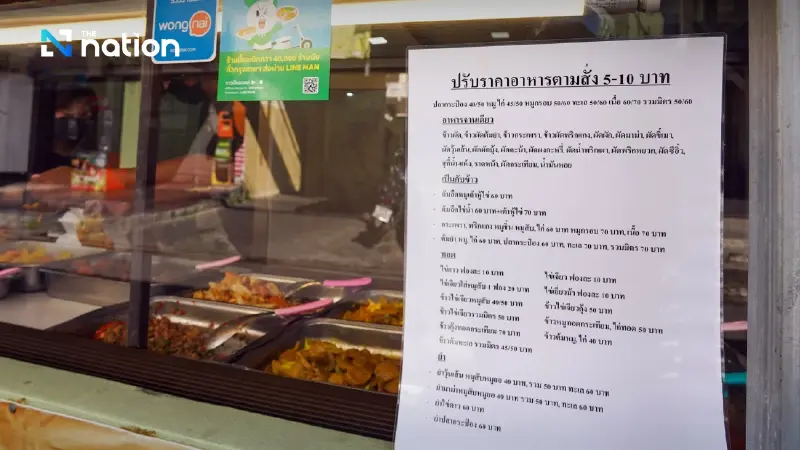


A Suan Dusit Poll shows most Thais want the Anutin government to urgently cut living costs and tackle debt, while nearly half expect the economy to worsen over the next three months.
The Anutin government is under immediate pressure to ease living costs and restore economic confidence, as most respondents want urgent action on prices and debt while nearly half expect the economy to worsen over the next three months, according to a new Suan Dusit Poll.
The nationwide survey, conducted by Suan Dusit University, found that 77.97% of respondents want the government to urgently reduce the cost of living, energy costs and goods prices.
The poll also showed fragile public confidence in the economy, with 46.89% of respondents expecting economic conditions to worsen between June and August.
At the same time, public expectations of the government remain limited. The largest group, 33.16%, said they did not have much expectation of the Anutin government’s performance, while 23.45% said they had no expectation at all.


Cost of living tops public demands
Suan Dusit Poll surveyed 1,143 people nationwide on the topic “Public expectations of the work of the Anutin government”.
The survey was conducted through online and field surveys between May 12 and 15, 2026.
The results showed that economic hardship remains the public’s top concern, with living costs, debt and government transparency ranked as the most urgent issues people want the administration to address.
What issues do people want the Anutin government to urgently address?
- 77.97% — Reduce the cost of living, energy costs and goods prices
- 63.78% — Solve people’s debt problems
- 63.08% — Crack down on corruption and ensure transparent administration
Respondents were allowed to give more than one answer, so percentages were calculated separately for each item.


Nearly half expect economy to worsen
The poll found that many respondents remain pessimistic about Thailand’s short-term economic outlook.
When asked what they thought the Thai economy would be like over the next three months, from June to August, the largest group expected conditions to deteriorate.
What do people think Thailand’s economy will be like over the next three months?
- 46.89% — Worse
- 32.81% — The same
- 10.50% — Not sure
- 9.80% — Better
Public debt burden is biggest worry
The government’s planned borrowing has also become a major public concern.
The poll found that the issue worrying respondents most was the public debt burden and the 400-billion-baht borrowing plan, followed by questions over the value for money of the Khon La Khrueng Plus co-payment scheme.
What are people most worried about today?
- 44.44% — Public debt burden and the 400-billion-baht borrowing plan
- 13.65% — Value for money of the Khon La Khrueng Plus co-payment scheme
- 11.81% — Thai-Cambodian border issue
Expectations of government remain modest
The poll also showed that public expectations of the Anutin government are not strong.
Although some respondents said they still had fairly high or high expectations, more than half said they had little or no expectation of the government’s performance.
How much expectation do people have of the Anutin government’s work?
- 33.16% — Not much expectation
- 31.06% — Fairly high expectation
- 23.45% — No expectation at all
- 12.33% — High expectation
Pollster says economy remains main challenge
Dr Pornpan Buathong, president of Suan Dusit Poll, said economic problems remain a major challenge for every government and are the issue on which the public wants urgent action.
She said that although the Anutin government is preparing to borrow 400 billion baht to address problems, people are concerned about the public debt burden, as well as the value for money and long-term impact of the borrowing.
This could explain why many people believe the economy may worsen in the coming months and are still waiting to see how much confidence they can place in the government’s performance, she said.
Academic warns of confidence crisis
Dr Ngampravan Aesomnuk, dean of the School of Law and Politics at Suan Dusit University, said the poll clearly reflected that the legitimacy of the current government no longer depends only on having a majority in Parliament.
Instead, she said, it depends increasingly on the government’s ability to solve economic problems effectively and maintain credibility in national administration.
She said many people were not immediately rejecting the government but were in a “wait-and-see” mode, after several years of political promises that often failed to produce results people could genuinely feel.
When people are worried about living costs, personal debt and the public debt burden, it reflects pressure that goes beyond economic figures, she said. It also points to a crisis of confidence over whether the state still has sufficient capacity to govern effectively.
Dr Ngampravan added that people are placing more importance on the quality of administration than political popularity.
Even if a government has stability in Parliament, failure to create economic stability and social confidence could lead to accumulated pressure over the long term, she said.
The feeling of having “not much expectation” could gradually turn into distrust and develop into stronger political pressure on both the government and the wider political system in the next phase.
