
Thailand races to secure US reciprocal trade deal
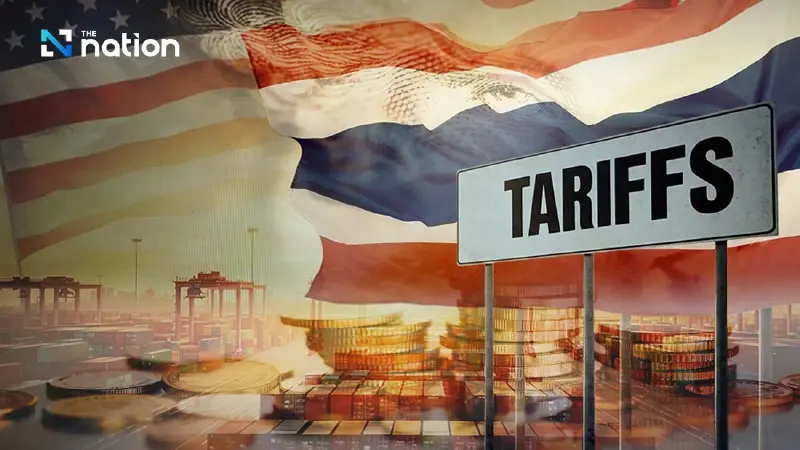


Thailand is pushing for a reciprocal trade pact with the US as it seeks to avoid higher tariffs under Section 301 scrutiny
- Thailand is accelerating negotiations for a reciprocal trade agreement with the US to mitigate the risk of new tariffs under a Section 301 investigation.
- The urgency stems from a US review that placed Thailand in a high-risk group for having insufficient regulations to prevent imports made with forced labour, which could lead to an additional 12.5% tariff.
- By securing the trade deal before a US decision on July 24, Thailand hopes to be moved into a lower-risk, lower-tariff category, a strategy that has benefited other nations.
- The trade pressure is compounded by a separate US inquiry into Thailand's "excess capacity" in key export industries such as electronics, rubber, and machinery.
Thailand is accelerating talks with the United States on a reciprocal trade agreement, hoping the negotiations will help reduce tariff pressure as Washington reviews possible additional duties under Section 301 of the Trade Act of 1974.
Deputy Prime Minister and Commerce Minister Suphajee Suthumpun said Thailand was ready to provide further explanations to the US over concerns linked to forced labour regulations, after Washington placed Thailand among economies considered to have insufficient rules or enforcement measures in this area.

The US preliminary review divided 60 economies into two groups. Fourteen were found to have adequate measures, while 46, including Thailand, were placed in the group deemed to lack sufficient regulations or enforcement against imports linked to forced labour.
The review comes after the US Supreme Court on February 20, 2026, ruled against reciprocal tariffs imposed under the International Emergency Economic Powers Act, or IEEPA.
Thailand had previously faced a 19% import tariff under that framework.
Washington has since invoked Section 122 of the Trade Act of 1974 to impose a 10% import tariff on goods from all countries for 150 days, from February 24 to July 24, 2026.
During this period, the US is also preparing to move forward with measures under Section 301.
Suphajee said the preliminary findings could leave Thailand facing an additional tariff of 12.5%, while the 14 economies in the lower-risk group would be capped at 10%.
She said the US did not take issue with Thailand’s domestic handling of forced labour, but rather with the absence of a specific law or control measure covering imports from countries where forced labour is used.
Thailand will still have an opportunity to clarify its position.
The country must submit a request by June 22, 2026, to participate in a US public hearing, before filing written comments by July 6 on tariff rates, product lists, possible removals and goods eligible for exemption under Annex A.
The US hearing is scheduled for July 7, with a final decision expected before July 24.
At present, 1,655 items out of more than 10,000 tariff lines are exempt under Annex A.
They cover five main groups: electronics and IT products, rubber, agriculture and processed food, civil aviation-related industries, and precious metals.
Thailand exports around 10,000 product items to the US, prompting officials to push for more agricultural goods, processed agricultural products, selected automotive-related items and rubber products to be added to the exemption list.
Suphajee said Thailand was also seeking to conclude an Agreement on Reciprocal Trade, or ART, with the US by the end of June.
She noted that some countries without forced labour-related laws were still subject to only a 10% tariff because they had signed such agreements with Washington, including Malaysia, Guatemala, Bangladesh, Argentina and Taiwan.
Six jurisdictions already have relevant laws in place: Canada, Ecuador, the European Union, Indonesia, Mexico and Pakistan.
Thailand hopes that completing the reciprocal trade talks before the temporary US tariff measure expires on July 24 could help move the country into a lower tariff group, although it may not eliminate tariff exposure entirely.
The negotiations still have 25 unresolved issues spread across several ministries.
Thai trade representatives are scheduled to travel to the US on June 5, 2026, for about two weeks of further talks.
Thailand is also waiting for the outcome of a separate US inquiry into excess capacity, expected in mid-June. The three key industries under review are electronics, rubber and machinery.
Suphajee said Thailand was confident it could provide complete information on all issues and believed Washington would recognise Thailand’s long-standing importance as a strong economic partner.
Thailand has maintained that its capacity utilisation in the sectors under review stands at 70-95%, above the 60% threshold cited by the US in its allegation.
Officials believe the figures will strengthen Thailand’s case in its submission to Washington.
The Commerce Ministry has not revised its export target for this year, as shipments in the early months of 2026 expanded more strongly than expected.
Exports grew nearly 20% in the first quarter, while April saw growth of more than 20%.
Pimjai Leeissaranukul, chairwoman of the Federation of Thai Industries, said the private sector was concerned by the US move to return to Section 301 investigations on tariff-related issues, with Thailand among several countries under review.
She said the case posed a major external challenge for the Thai economy in 2026 and could have a significant impact on the manufacturing sector.
However, she said Thailand had clear evidence to prove that the goods in question were produced by Thai workers and could present this information to US authorities.
The National Economic and Social Development Council has also warned of uncertainty surrounding US trade measures.
In its report on Thailand’s first-quarter economic conditions and 2026 outlook, the council said Washington could use other laws to impose additional import duties, raising the risk that Thai products may face higher tariffs in the next phase.
The council said the US Section 301 investigation covers 16 trading partners, including Thailand, and focuses on two main issues: structural excess capacity and forced labour.
On structural excess capacity, the US has raised concerns about Thailand’s rapidly widening trade surplus with the US, particularly in key industries such as automobiles and auto parts, machinery and components, and rubber.
It has also pointed to relatively high excess production capacity, reflected in Thailand’s capacity utilisation rate remaining below 60% while exports to the US continued to grow strongly.
On forced labour, the US has been reviewing policies and measures used by 60 trading partners to prevent imports of goods produced with forced labour.
The Commerce Ministry has already submitted its comments to Washington, while the case is now moving into the public hearing process.
The US is expected to announce the outcome of the investigation by July 2026.
