
Thailand’s IMF-World Bank 2026 role seen as golden chance to attract investment
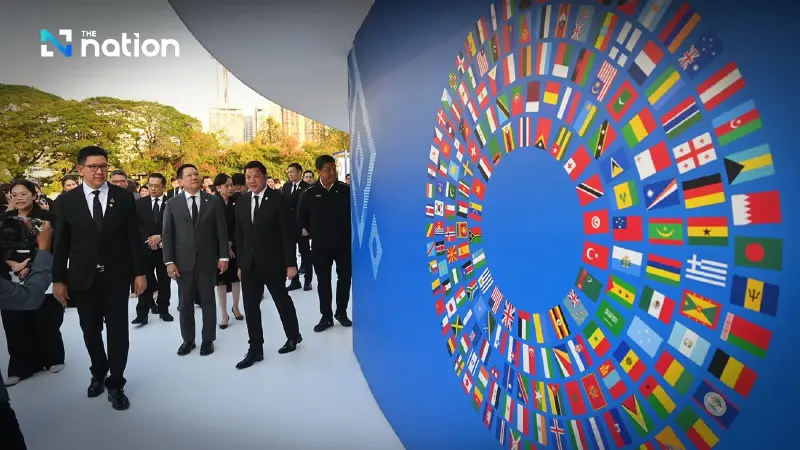


Thailand’s hosting of the IMF-World Bank Annual Meetings 2026 is seen by the private sector as a major opportunity to attract investment, raise national standards and strengthen long-term growth.
- The event is seen as a crucial opportunity to attract foreign direct investment into future industries, specifically data centers, semiconductors, and sustainability and health-related businesses.
- Business leaders believe hosting the meetings provides a catalyst to raise national standards in financial transparency, anti-corruption, and regulatory reform, making Thailand more attractive to investors long-term.
- The meetings offer a global stage to showcase Thailand's economic potential to over 19,000 international executives, aiming to strengthen the country's image and build investor confidence.
- The private sector hopes the event will help connect Thai SMEs to new global supply chains and foster cooperation on sustainable finance mechanisms.
Thailand’s selection as host of the 2026 IMF and World Bank Group Annual Meetings, to be held from October 12-18, 2026, at the Queen Sirikit National Convention Center, marks the country’s return as host after 35 years.
With tens of thousands of participants expected from around the world, the private sector sees the event as a crucial window of opportunity to upgrade Thailand’s economy, build investor confidence and lay the foundations for the country’s long-term growth.
Promoting the white economy and attracting future investment
Sangchai Theerakulwanich, strategy chairman of the Federation of Thai SMEs, said Thailand’s New Horizon should be an economy driven by good governance — or a “white economy” — growing on the foundations of AI technology, innovation and an economic structure aligned with global change.
He said he hoped Thailand’s hosting of this global meeting would create opportunities for the country to cooperate with international organisations in developing a roadmap and sustainable finance mechanisms. These would help Thai and global entrepreneurs better cope with economic volatility.
At the same time, Thailand has an opportunity to attract foreign direct investment into future industries, especially data centres, semiconductors, and sustainability and health-related businesses. This would allow Thai SMEs to connect more closely with new global supply chains.
Sangchai also urged the government to accelerate the development of clean energy and restructure the agricultural sector towards higher-value processed agriculture, in order to strengthen competitiveness and reduce long-term costs for Thai entrepreneurs.

Opportunity to raise national standards
Dr Kessara Thanyalakpark, managing director of Sena Development Public Company Limited, said the meeting was like a “political Olympics”, placing Thailand in the global spotlight.
She said the key opportunity was not merely short-term spending, but the chance to raise national standards, particularly in financial transparency, the handling of grey businesses and the development of a financial system aligned with international norms.
If the government uses this moment to accelerate structural reforms — including education, anti-corruption efforts, regulatory improvement and lower business costs — Thailand could become more attractive to investors on a sustainable basis, without relying only on short-term incentives.

Global stage to support tourism and Thai industry
Pimjai Leeissaranukul, chair of the Federation of Thai Industries (FTI), said Thailand’s New Horizon lies in using the IMF and World Bank meetings to communicate the country’s potential to more than 19,000 global executives expected to attend.
She said the major event would not only benefit tourism and the economy during the meeting period, but also serve as an important opportunity to strengthen Thailand’s image as a country that is attractive for tourism, investment and future industries.
On data centres, which have raised concerns over high energy and water use, Pimjai acknowledged the challenges. However, she said data centres are also key digital infrastructure needed to support the development of AI and Thailand’s future digital economy.
She believed that if Thailand can make effective use of such infrastructure, it will generate significant benefits for domestic demand and future economic development.
“The 2026 IMF and World Bank Annual Meetings are therefore not merely a global economic conference,” the private sector view suggests.
“They are a platform that could open a new horizon for the Thai economy — in investment, national standards, future industry development and long-term international confidence in Thailand.”
