
Fitch Warns Thai Corporate Deleveraging Faces Long Slog Amid Layered Shocks
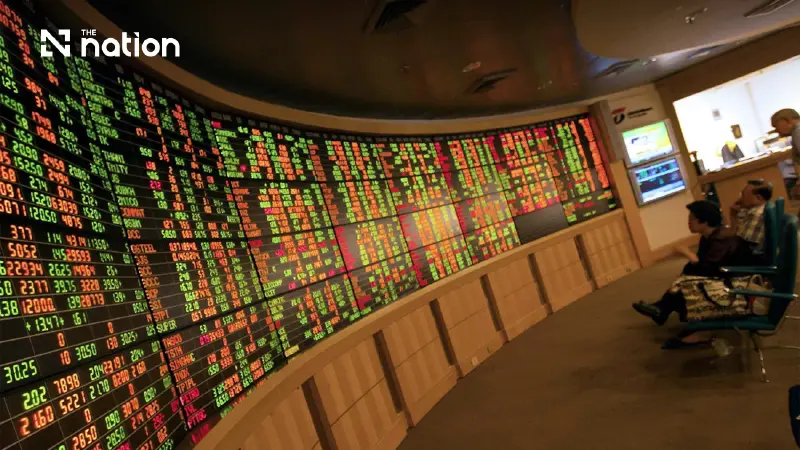


Fitch warns Thai firms face slow deleveraging as energy, trade and tourism shocks collide with a decade-long debt overhang and climate capex needs
- Thai corporate deleveraging is expected to be a prolonged process, as a decade of debt-financed expansion has resulted in 70% of corporate debt being held by highly leveraged firms—the second-highest concentration in Asia.
- The struggle is intensified by a combination of "layered shocks," including high energy costs, trade pressures, weak tourism recovery, and sluggish domestic demand, which are squeezing corporate earnings.
- The financial strain is most acute in the property and petrochemical sectors, which have a worsening outlook, while sectors like industrial estates and telecoms remain more stable.
- Structural risks are compounded by a heavy reliance on the bond market, creating refinancing hurdles, and a looming wave of mandatory climate-transition spending that will further pressure the most indebted industries.
Fitch warns Thai firms face slow deleveraging as energy, trade and tourism shocks collide with a decade-long debt overhang and climate capex needs.
Thai corporates face a prolonged and gruelling path to balance sheet rehabilitation as a decade of aggressive, debt-financed expansion collides with an unforgiving mix of immediate geopolitical shocks, sluggish domestic demand, and a looming multi-billion-dollar climate transition.
Speaking at Fitch Ratings’ half-yearly investor briefing on Tuesday, analysts warned that the heavy leverage embedded in Thailand’s corporate sector has shifted from a cyclical headache to a deeply rooted structural vulnerability.
The scale of the challenge is stark: according to OECD data cited by Fitch, 70 per cent of Thai corporate debt is now held by highly leveraged firms with a debt-to-EBITDA ratio greater than 4x. This represents the second-highest concentration of highly leveraged corporate debt in Asia, trailing only Hong Kong at 75 per cent and sitting comfortably above the global average of 48 per cent and Asia's regional average of 58 per cent.
Macro Headwinds Collide with Targeted Fiscal Relief
Obboon Thirachit, senior director of Corporate Ratings at Fitch Ratings (Thailand), told investors that the operating environment has become unusually disruptive.
Corporate earnings are being squeezed simultaneously by elevated energy costs driven by the Middle East conflict, persistent US trade pressures, and an influx of cheap Chinese manufacturing inflows flooding the domestic market.
At the same time, a slow recovery in high-spending Chinese tourist arrivals and crimped domestic purchasing power due to high household debt continue to weigh heavily on top-line revenue growth across retail and hospitality segments.
However, the macroeconomic outlook is not entirely uniform, and Fitch highlighted several critical structural tailwinds and policy cushions preventing a broader credit meltdown.
Near-term consumption is receiving crucial support from the government's THB 62 billion "Thai Help Thai Plus" fiscal stimulus package, which launched in May 2026 and currently reaches some 30 million beneficiaries.
Furthermore, Thailand continues to capture significant foreign direct investment as multinationals diversify their manufacturing supply chains away from China. This shift is fueling an infrastructure boom that directly benefits industrial estates and the electric vehicle supply chain.
FDI and the Digital Infrastructure Boom
This digital pivot is drawing massive global capital. According to the IMF’s April 2026 Global Financial Stability Report, Thailand has attracted an estimated USD 9 billion in foreign direct investment dedicated entirely to artificial intelligence and digital infrastructure.
Industrial estates and power utilities are emerging as the primary beneficiaries of this wave, driven by the surging demand for data centre tenancy and the massive, stable electricity supply these facilities require.
Yet, Fitch’s sector-by-sector assessment reveals a widening divergence between cash-generative sectors and highly exposed cyclical industries. Industrial estates stand out as the only segment with an improving outlook, supported by a robust foreign investment pipeline.
Telecoms carry the lowest leverage of the sectors reviewed, maintaining a stable outlook due to post-consolidation market stability. Conversely, the power and utilities sector remains highly leveraged but carries a neutral outlook, as regulated returns provide a reliable cushion against its upcoming capital expenditure cycles.
Hospitality, retail, and consumer sectors also maintain a neutral outlook with moderate-to-high leverage, floating on the near-term support of fiscal stimulus.
Divergent Outlooks and Severe Sectoral Pain Points
The primary pain points remain concentrated in the property and petrochemical sectors, both of which carry a worsening outlook alongside severe leverage profiles.
Property developers are facing elevated leverage amid declining pre-sales, weak domestic purchasing power, and an oversupply in the market. Meanwhile, the petrochemical sector is facing the most acute credit pressure under Fitch’s coverage.
Most petrochemical issuers are grappling with net debt-to-EBITDA ratios exceeding 8x, driven down by weak global demand, high raw material costs, and structural Chinese oversupply.
A key structural risk compounding this outlook is Thailand’s heavy reliance on debt capital markets. Bond financing accounts for 27 per cent of total corporate debt in Thailand—the highest ratio in Asia, outstripping South Korea at 26 per cent, Japan at 15 per cent, and China at 10 per cent.
This concentration creates an immediate liquidity hurdle. Fitch data shows that Thailand’s ten largest corporate bond issuers face a combined THB 318 billion in debenture maturities in 2026 alone, concentrated among major, closely watched corporate names.
Obboon noted that warning signals are already flashing for these weaker, highly leveraged issuers. These include persistently negative pre-dividend free cash flow and a structural inability to scale back capital expenditure without sacrificing long-term market share.
The Double Whammy of Climate-Transition Spending
Compounding this debt burden is a looming wave of climate-transition spending. Using its Climate Vulnerability Signal framework, which measures transition risk through 2035 based on the UN-backed Inevitable Policy Response pathway, Fitch warned of a dangerous structural overlap: the sectors facing the highest climate transition risks are the exact same sectors that are already buried under balance sheet debt.
Petrochemicals and oil and gas carry the highest vulnerability scores, while power utilities and automotive supply chains face a moderate-to-high burden.
For these heavily leveraged players, green capital expenditure is not an optional environmental compliance metric; it is an existential, capital-intensive mandate that will depress free cash flow long before any clear financial returns materialise.
Systemic Risks and Institutional Liquidity Constraint
The briefing also marked Fitch Ratings’ 25th anniversary in Thailand, an office established in the wake of the 1997 Asian Financial Crisis with backing from the Government Pension Fund (GPF) and the World Bank’s International Finance Corporation.
Reflecting on the market’s evolution over the last quarter-century, Vincent Milton, managing director of Fitch Ratings (Thailand), expressed explicit concern over the significant rise in corporate leverage, particularly among large borrowers.
He characterised the modern pattern of funding massive, long-term capital investments almost entirely through debt with minimal equity cushions as "unusual" and warned that it raises systemic risks for both the domestic bond market and the commercial banking sector. To strengthen market confidence,
Milton advocated for a wider adoption of dual credit ratings as a standard market best practice.
Arsa Indaravijaya, chief investment officer and deputy secretary-general of the GPF, echoed the need for rigorous credit differentiation, noting that while Thailand’s sovereign yield curve is well developed, the corporate credit market remains relatively shallow and heavily dominated by state-linked enterprises and a small group of blue-chip names.
Commenting on institutional liquidity, Arsa revealed that the GPF's current 70 per cent offshore asset allocation is partially driven by these structural constraints at home, where limited domestic liquidity and capacity constraints limit the local market's ability to safely absorb massive institutional inflows.
What Fitch is Watching Next
Moving forward, Fitch indicated it will closely monitor how debt-laden firms pursue alternative deleveraging measures beyond standard earnings recovery, such as asset divestments, hybrid capital structures, or stricter dividend and capex discipline.
The rating agency will also monitor whether lower-rated, highly leveraged corporate credits retain access to the domestic bank loan and bond markets as refinancing dates approach and how exposed heavy industries will finance their mandatory technology transitions as regional policy frameworks around carbon pricing and coal phase-outs tighten.
