
Smarter, Not Bigger: How Geopolitical Shocks Are Reshaping ASEAN’s Gas Strategy
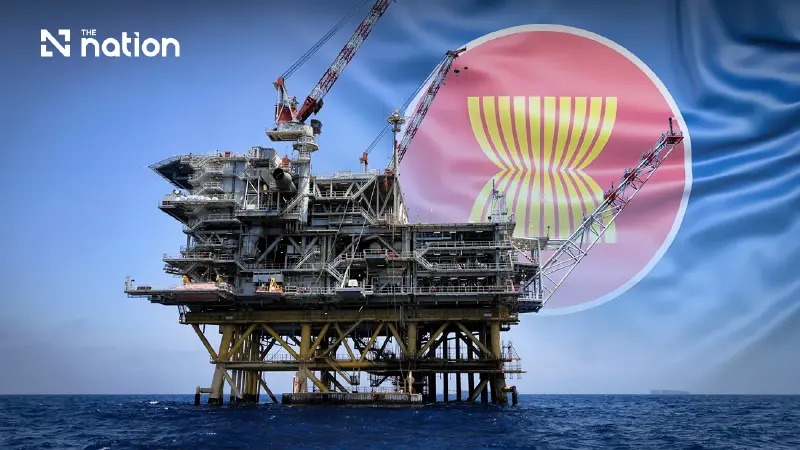


As Thailand prepares to host Gastech 2026, regional energy leaders move away from raw capacity toward flexible, cross-border infrastructure integration
- Geopolitical shocks and LNG price volatility are causing ASEAN nations to shift their strategy from simply expanding gas capacity to developing a more flexible and resilient energy infrastructure.
- The role of natural gas is evolving from a traditional baseload power source to a dynamic balancing fuel that ensures grid stability by complementing intermittent renewable energy sources.
- The new approach emphasizes cross-border integration of gas pipelines and electricity grids to enhance regional energy security and collectively manage future supply disruptions.
As Thailand prepares to host Gastech 2026, regional energy leaders move away from raw capacity toward flexible, cross-border infrastructure integration.
The geopolitical tremors felt in the Strait of Hormuz in early 2026 did more than just disrupt global shipping lanes; they fundamentally destabilised the economic assumptions underpinning Southeast Asia’s energy architecture.
As liquefied natural gas (LNG) prices nearly doubled from pre-crisis levels, governments across the Association of Southeast Asian Nations (ASEAN) were forced into a sharp realisation: the traditional reliance on natural gas as an unshakeable bedrock of energy security requires urgent revision.
For decades, the region’s rapidly developing economies viewed natural gas as a predictable transition fuel—a reliable partner to bridge the gap between fossil fuels and a low-carbon future.
However, the market volatility of 2026 has exposed vulnerabilities in global supply chains, pushing regional planners to re-evaluate not the necessity of gas, but its structural application within the wider energy ecosystem.
The emerging paradigm for ASEAN is clear: the future is not about building a bigger gas infrastructure but a smarter, more resilient one.
The Dual Pressures of Demand and Decarbonisation
This geopolitical shock arrives at a precarious time for the region. ASEAN is currently balancing a complex triad of priorities: meeting soaring domestic energy demand, fulfilling ambitious decarbonisation targets, and maintaining economic stability.
The pressure on regional power grids is compounding rapidly, driven by widespread industrial electrification and a massive influx of digital infrastructure.
According to projections by energy analytics firm Wood Mackenzie, electricity demand from data centres in Southeast Asia is forecast to quadruple, skyrocketing from 2.6 gigawatts (GW) to 10.7 GW between 2025 and 2035.
When fuel costs spike as aggressively as they did following the Hormuz disruptions, the economic fallout is immediate. Inflationary pressures mount, creating severe fiscal strain for utilities, businesses, and consumers alike.
In this climate, investments in solar power, alternative energy, and Battery Energy Storage Systems (BESS) are no longer viewed merely as climate-change mitigation tactics but as critical macroeconomic shields against global resource volatility.
Yet, because solar and wind energy remain inherently intermittent, natural gas cannot simply be abandoned. Instead, its role is shifting away from traditional, steady baseload power generation and toward a dynamic balancing mechanism that ensures grid stability when renewable outputs fluctuate.
Designing for Operational Flexibility
Transitioning natural gas into a balancing fuel requires a complete overhaul of how infrastructure is engineered. Traditional power plants designed to run continuously are poorly suited for a grid dominated by renewables.
The next generation of gas infrastructure must be built for cyclical operations—capable of frequent start-ups, shutdowns, and rapid adjustments to output.

According to engineering and consultancy firm Black & Veatch, which has operated in Asia for over six decades, this focus on flexibility is already dictating the deployment of capital. In the Philippines, the firm recently executed a large-scale LNG-to-power project as the primary Engineering, Procurement, and Construction (EPC) contractor.
The facility integrates an LNG regasification terminal directly with three 425 MW H-class Combined-Cycle Gas Turbine (CCGT) units.
This integrated design reflects a broader regional trend: gas procurement, storage, and generation are no longer treated as isolated components but are co-planned to respond fluidly to shifting demand patterns and unpredictable global supply lines.
The Case for Cross-Border Integration
Crucially, individual national strategies will not suffice to insulate ASEAN from future shocks. True energy resilience will require the region to look beyond geographic borders and integrate its systems holistically—managing both electricity grids and clean molecules as a unified network.
The ideal future state relies on technological interoperability. Natural gas plants, LNG terminals, solar farms, BESS, and emerging hydrogen or Sustainable Aviation Fuel (SAF) networks must operate in unison.
When one domestic market suffers a supply bottleneck or a sudden generation deficit, regional neighbors must be equipped to instantly route surplus power across borders.
ASEAN already possesses the foundational framework for this level of cooperation:
The Trans-ASEAN Gas Pipeline (TAGP) is a 3,673-kilometre network connecting six member nations through 13 bilateral points.
Meanwhile, the LTMS-PIP Initiative (the Lao PDR–Thailand–Malaysia–Singapore Power Integration Project) successfully facilitates cross-border electricity trading of up to 200 MW.
The next step is elevating regional coordination so that electrons and molecules can be dynamically balanced across different regulatory and market systems, maximising efficiency and minimising collective systemic risk.
Gastech 2026: Setting the Agenda
The strategic crossroads at which ASEAN finds itself will serve as the focal point for Gastech 2026, scheduled to take place in Bangkok from 14 to 17 September 2026. Convening under the theme "Where Global Energy Demand Meets Supply," the event arrives at a defining moment for regional energy policy.
The core debate in Bangkok will not be an ideological contest between natural gas and renewable energy. Rather, global industry leaders, policymakers, and developers will focus on the pragmatic realities of making these technologies work together within a unified, flexible, and affordable energy framework.
With over 900 projects delivered in Asia and 80 GW of capacity built across traditional power and renewables, firms like Black & Veatch are expected to use the Gastech platform to outline how ASEAN can successfully navigate this transition.
Ultimately, the region’s ability to withstand the next geopolitical shock hinges entirely on its capacity to innovate, integrate, and cooperate across borders.
