
World Bank says water security key to Thailand’s investment appeal


The World Bank says reliable water access is crucial to Thailand’s bid to attract future industries and build climate-resilient infrastructure.
- The World Bank states that water security is a decisive factor for foreign investors considering Thailand, particularly for new industries like data centers in the Eastern Economic Corridor (EEC) that require large, reliable water supplies.
- To maintain its investment appeal, Thailand must address three key water challenges identified by the World Bank: flooding ("too much"), drought ("too little"), and pollution ("too polluted").
- The World Bank suggests that attracting capital for water management hinges on creating well-structured, "bankable" projects that can tap into sustainable financing trends like green and blue bonds.
- By effectively managing its water resources, Thailand has an opportunity to become a regional leader in climate-resilient water investment, further boosting its attractiveness to investors.
Water is no longer simply a basic factor for consumption or agriculture in the modern era.
It has become a decisive factor in foreign investors’ decisions and part of the national security strategy.
Water as a magnet for future investment
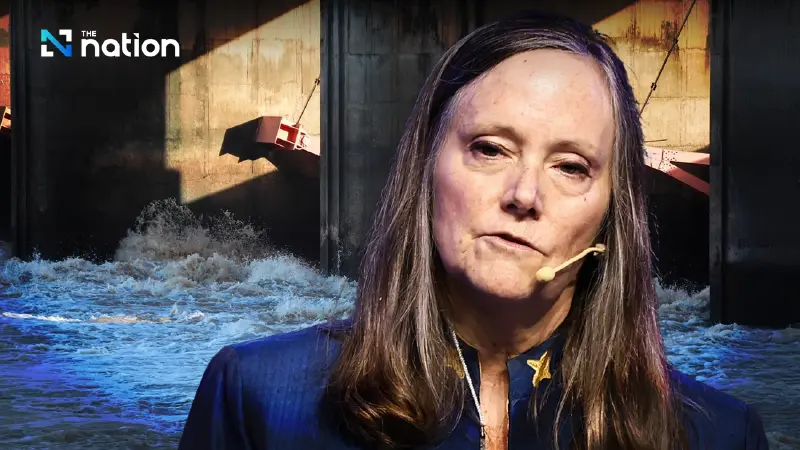
Melinda Good, the World Bank director for Thailand and Myanmar and a World Bank representative, emphasised at the “Navigating Thailand’s Water Future” forum that global geopolitics is being reshaped, moving from a focus on competition between major powers to competition to attract investment in future industries.
For Thailand, a major production base in agro-business and advanced manufacturing, clarity and security of access to water resources are central, especially in the Eastern Economic Corridor (EEC), where new industries such as data centres need large volumes of water for cooling systems.
Three challenges
Too much, too little and too polluted: under the “Water Forward” framework, the World Bank identified three main challenges Thailand and the world must face: flooding (“Too much”), drought (“Too little”) and water pollution (“Too polluted”).
In particular, this includes risk management in the Chao Phraya River Basin, which accounts for as much as two-thirds of the country’s economy.
The World Bank also supports Thailand in seriously adopting smart irrigation technology and water reuse, following Singapore’s success, to build confidence in the industrial sector.
Accelerating “bankable projects”
One of the key issues raised for discussion was the restructuring of finance for water management.
The World Bank said the problem was not a shortage of capital, but the lack of appropriate project structuring.
The private sector and financial institutions today attach great importance to climate resilience and want clarity on regulations and consistent capital flows.
Thailand has a strong opportunity to access new forms of financing, including green bonds, blue financing and ESG-linked finance, a major global trend.
If Thailand can package water management projects clearly and credibly, it will be able to attract substantial funds from investors looking for sustainable infrastructure.
Thailand’s golden opportunity to become a regional leader
With its strategic location at the centre of Asia and strong water management institutions, such as the Office of the National Water Resources (ONWR), the World Bank believes Thailand has the potential to become a regional leader in climate-resilient water investment.
The annual meetings of the IMF and the World Bank, which Thailand will host this year, will be an important platform for pushing water onto the global agenda.
