
Surge in demand for 'death-tainted' homes as Japan property prices soar
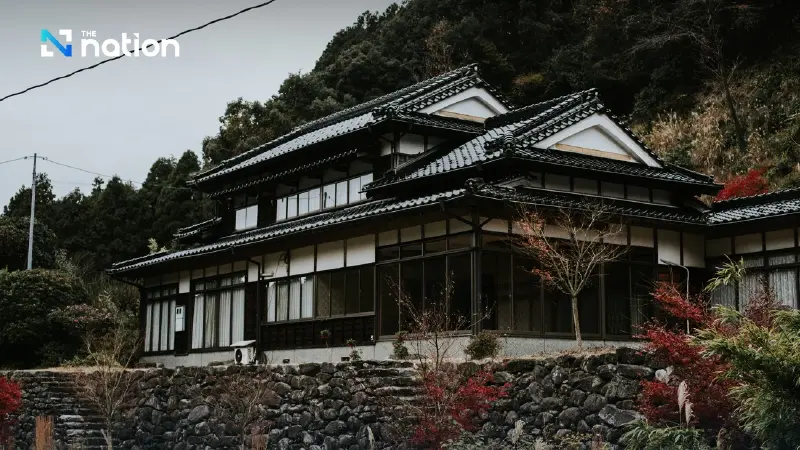


Property prices in Japan have surged, driven by increasing construction costs, rising labour expenses, and a wave of foreign investment.
This influx is partly due to the weakened yen, making Japanese real estate more affordable compared to other countries.
With the cost of new homes becoming unaffordable for younger generations, many are turning to rental properties with a dark history—known in Japanese as Jiko Bukken or 'death-tainted homes.'
According to Krungthep Turakij, these homes are typically associated with tragic events such as deaths by natural causes, murder, or suicide, as well as incidents like fires. These properties are often referred to as 'unlucky homes,' and their reputation for carrying emotional and psychological distress has deterred potential buyers or tenants in the past.
This perception stems from ancient Shinto beliefs in Japan, where it is thought that spirits of the deceased remain in the places where they passed, lingering with feelings of resentment or sorrow. As a result, these homes would often fall into disrepair over time.
However, as Kazutoshi Kodama, a real estate consultant and founder of Kachimode, a company that offers ghost-hunting services for new buyers and tenants, explains, the demand for Jiko Bukken has risen sharply. With skyrocketing property prices, more people are now willing to consider homes with a troubled past.
According to property research firm Tokyo Kantei, the average price of a second-hand condominium (70 sqm) in Tokyo’s 23 wards has risen by more than a third since May 2024, now reaching approximately ¥100.9 million (roughly 21.88 million baht).

Rising issue of social isolation among Japan’s elderly
Japan has seen a significant increase in its elderly population, leading to a growing number of deaths attributed to social isolation. According to reports from national policy agencies, in 2024, there were 21,900 elderly individuals who passed away alone and were not discovered for at least eight days.
This rising number of isolated elderly deaths has led to greater difficulties in renting homes, as landlords worry their properties could eventually become Jiko Bukken.
To address this issue, the Japanese government introduced guidelines in 2021, suggesting that if a death occurs in a rental property, it should no longer be disclosed after three years. This initiative was aimed at helping landlords attract new tenants.
However, landlords and real estate agents are still required to disclose the property's history if potential buyers or tenants ask.
These new regulations have sparked greater interest in Jiko Bukken. According to real estate agents, some younger tenants are becoming more open to living in properties with unfortunate histories, while investors—particularly Chinese investors—are drawn to high returns.
“Investors don’t care about the property's history because they won’t be living there,” said Akira Ookuma, founder of Happy Planning, a real estate agency. He added that some landlords even raise rents after three years.
Real estate brokers have noted that properties with a history of murder must be sold at a significant discount—up to 80% below market value—while properties with less severe events, such as natural deaths, are typically discounted by about 20%.
As Japan's elderly population continues to grow, the prevalence of Jiko Bukken is expected to increase. The National Institute of Population and Social Security Research estimates that 14% of all households in Japan are led by individuals aged 65 and over who live alone. In the next 20 years, this figure is projected to rise to 20%.
Data from the police shows that, in fiscal year 2024, Japan recorded 20,320 suicides, with 70% occurring in the home. Among those, 58,044 people aged 65 and over died alone.
Kodama estimates that approximately 20,000 to 23,000 of these deaths were discovered in a state of severe decomposition, in line with national policy agency reports. This means that each year, between 35,000 and 40,000 homes in Japan are likely to become Jiko Bukken.

Growing trend in Jiko Bukken
Many Jiko Bukken in Japan have been abandoned for years, and when it comes time to sell or rent them again, special cleaning services are often required. This could include replacing floors and wallpaper to eliminate the lingering smell and traces of the deceased.
Additionally, landlords must reassure potential tenants that the property is free from spirits. This is where the business of ghost-hunting services for such properties comes in, as exemplified by Kachimode, a company founded three years ago by Kodama.
Kachimode offers ghost investigation services to tenants and buyers of Jiko Bukken properties. Kodama himself stays overnight in these homes, using tools like thermal cameras, electromagnetic field meters, and other equipment to check for any paranormal activity.
Once he confirms that the property is spirit-free, Kodama issues a certificate of assurance. If tenants or buyers can prove that there are still spirits present after receiving the certificate, Kodama guarantees compensation of ¥1,000,000 (approximately 216,500 baht).
The death of a person in a home causes psychological discomfort for many. My goal is to eliminate these negative feelings and restore the property’s value, Kodama explained.
One memorable case involved Kodama being hired to investigate an apartment in Tokyo where a young woman had committed suicide. The apartment owner was devastated by the tragedy and left the unit vacant for years.
Kodama spent three nights in the apartment, ensuring there were no lingering spirits before issuing a certification stating it was suitable for habitation. Eventually, a new tenant moved in, willing to pay 95% of the usual rental price despite knowing the property’s dark history.
Younger generations, who tend not to believe in ghosts, are less concerned with the history of the house and are willing to rent Jiko Bukken homes for a much lower price than regular properties. Some are even confident in Kodama’s ability to rid the property of spirits.
Despite the deaths that have occurred in these homes, Jiko Bukken are thoroughly cleaned, renovated, and continue to be functional. With Kodama’s certification assuring tenants that no spirits remain, these properties offer peace of mind to both landlords and renters.
As such, Jiko Bukken has become an increasingly popular and affordable option for those who dream of owning a home but cannot afford a new property.
