
The Pattaya Pivot: Tourism Capital Reinvents Itself as the EEC’s Primary Residential Hub
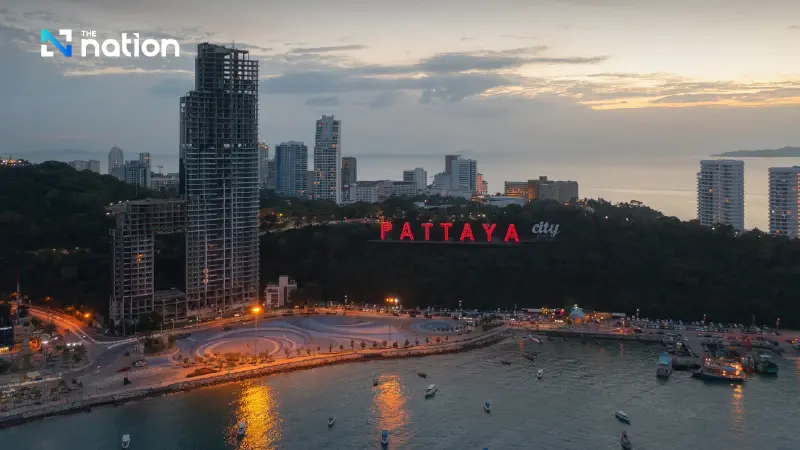


Pattaya transcends its holiday-resort reputation as high-speed rail and industrial expansion draw a permanent, high-skilled workforce to the Eastern Seaboard
- Pattaya is transforming from a tourism-focused city into the primary residential hub for professionals working in the Eastern Economic Corridor (EEC).
- This shift is driven by major infrastructure projects, like a high-speed rail link, and industrial growth which are attracting a permanent, high-skilled workforce.
- The property market is now shaped by "real demand" for long-term housing, causing developers to pivot from holiday condos to family-oriented homes like townhouses and detached houses.
- The new residents are primarily high-skilled specialists, expatriate executives, and families in the EEC's advanced industries, such as EV manufacturing and robotics.
Pattaya transcends its holiday-resort reputation as high-speed rail and industrial expansion draw a permanent, high-skilled workforce to the Eastern Seaboard.
Long synonymous with short-term tourism and nightlife, Pattaya is undergoing a profound structural transformation.
As the Eastern Economic Corridor (EEC) matures, the city is rapidly transitioning from a holiday destination into a "New Living Destination," becoming the residential anchor for a growing legion of domestic and international professionals.
Economists and property analysts suggest that the "Eastern Zone" is reaping the rewards of long-term strategic planning.
Massive state investment in infrastructure—most notably the high-speed rail link connecting Bangkok to U-Tapao airport—is fundamentally changing the city’s demographic.
It is no longer just a weekend escape for Bangkokians, but a primary residence for those powering Thailand’s new industrial age.
From Speculation to "Real Demand"
The shift is most visible in the urban sprawl extending from Central Pattaya into Jomtien, Na Jomtien, and Huay Yai.
Unlike previous property cycles driven by short-term speculative flipping of condominiums, the current market is being shaped by "real demand."

The new buyers are a far cry from the traditional tourist. They include:
- High-skilled technical specialists recruited for the EV and digital sectors.
- Expatriate executives overseeing logistics and deep-tech operations in the EEC.
- Modern families seeking a "coastal lifestyle" that offers a better quality of life than the capital, without sacrificing professional opportunities.
"Pattaya is now a Tourism Economy Hub that functions as a year-round city," says Churat Chakarakul, a veteran property developer. "We are seeing a move away from holiday rentals toward homes that accommodate permanent residency and daily family life."
Industrial Growth Spawns Residential Needs
The influx of stable, high-income earners into the EEC’s strategic industries—ranging from electric vehicle manufacturing to advanced robotics—has created a shortage of functional, long-term housing.
Property developers are responding by pivoting away from luxury high-rises toward landed estates.
For example, the recently launched Lalin Town Pattaya–Na Jomtien project—a 650-million-baht development—reflects this trend, focusing on multi-bedroom townhomes and detached houses rather than studio apartments.
The focus has shifted to "community building," providing the space and utility required by professional families rather than the minimalist needs of tourists.

Sustainability: The New Competitive Edge
As the city modernises, buyer expectations are evolving. Energy efficiency and environmental impact are becoming central to the purchasing decision.
New developments are increasingly integrating sustainable features as standard.
Energy-saving designs, enhanced air circulation systems, and the provision of EV charging stations are no longer viewed as luxury additions but as essential infrastructure for an eco-conscious workforce.
For the real estate sector, the "Pattaya Pivot" represents a high-stakes game.
Success is no longer determined by building the tallest tower on the beach but by accurately reading the needs of a workforce that is here to stay.
As the EEC continues to attract global investment, Pattaya’s future appears to be firmly rooted in its new identity as a sophisticated, industrial-adjacent metropolis.
