
The Last Yang Tree: How One Pattaya Plot Is Rewriting the Rules of Resort Development
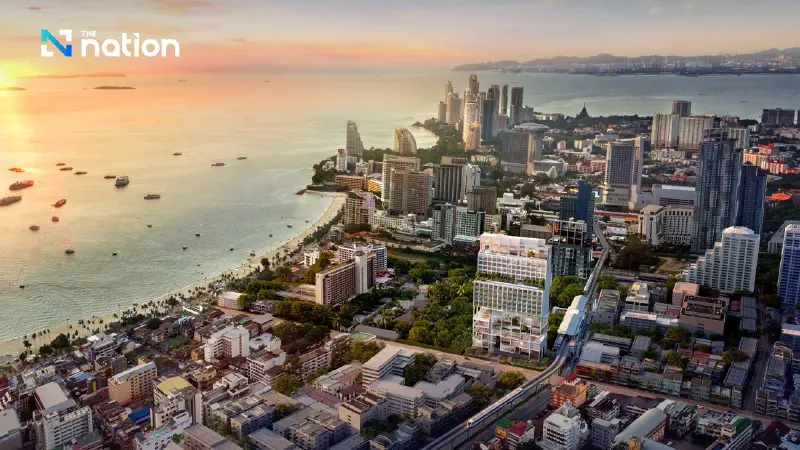


A rare site at Central Pattaya’s prime intersection is being reimagined as a green-led mixed-use destination built around one of the city’s last remaining Yang trees — a native species that has stood at the heart of Pattaya for decades
- A new mixed-use development is being built on a prime plot in Central Pattaya, uniquely centered around the preservation of one of the city's last remaining native Yang trees.
- The project challenges traditional development by dedicating half of the valuable land to green open space, with a hotel and community hub designed to integrate with the natural environment.
- The concept prioritizes a nature-based, community-focused experience over typical architecture, planning for a mid-scale hotel alongside multigenerational and pet-friendly spaces.
- This approach represents a shift from Pattaya's history of high-rise construction, aiming to create a landmark that values and is built because of the site's natural heritage.
A rare site at Central Pattaya’s prime intersection is being reimagined as a green-led mixed-use destination built around one of the city’s last remaining Yang trees — a native species that has stood at the heart of Pattaya for decades.
In a city where glass-and-steel towers have for decades displaced anything that cannot generate a quick return, one landowner in the heart of Pattaya is taking a conspicuously different path — and the property world is beginning to take notice.
Sirithon Thamrongnawasawat, known to those close to her as Khun Jeep — youngest sister of Dr Thon and Dr Thun Thamrongnawasawat — is the custodian of a hereditary plot at the intersection of Central Pattaya Road and Pattaya Sai 2, one of the most strategically positioned land parcels on the Eastern Seaboard.
The site, inherited through her family’s lineage tracing back to Luang Thamrongnawasawat (former Prime Minister of Thailand), has been quietly held for generations. Now, for the first time, there are plans to bring it to life.
But this is not a story about another hospitality project. At the centre of the site stands something far more rare: a Yang tree — one of the last of its kind in the city, a towering specimen of this native Pattaya species whose canopy stretches to the height of a 15-storey building.
The Yang tree is not an exotic transplant or a curated landscape feature. It is original to this land, a living record of what Pattaya looked like long before it became a city.

A Site With Rare Commercial Credentials
Beyond its heritage story, the land carries exceptional commercial credentials. Situated on a corner plot just 200 to 300 metres from the beach, it sits immediately adjacent to a landmark mega-project that will bring world-class leisure, hospitality, and entertainment offerings to this stretch of coastline — drawing significant international visitor footfall and raising the profile of the entire precinct.
That neighbouring development is Aquatique District Pattaya — a beachfront mega mixed-use project by Asset World Corporation (AWC), located in Central Pattaya, Chonburi.
Drawing on the proven success of AWC’s Asiatique in Bangkok, the scheme comprises five luxury hotels, large-scale beachfront retail, a world-class theme park and water park, and MICE event facilities.
In early 2026, AWC advanced a partnership with Marriott International to develop hotels within the project, including The Ritz-Carlton Pattaya and a property under the Autograph Collection brand — confirming the precinct’s credentials as a destination of genuine international standing.
The proximity positions Project Yang to benefit directly from that energy, without compromising its own boutique character.
Pattaya’s broader appeal as a destination is equally compelling. The city is uniquely positioned as the closest beach destination to Bangkok that has been developed as both a liveable urban centre and a leisure retreat — suitable for all ages, with clean air, direct beach access, and a well-established expat community alongside a vibrant local one.

The city has long embraced the rhythms of beach life: annual fireworks displays, night markets, major concerts, international events, and a bustling waterfront shopping scene that draws visitors year-round.
Pattaya is also emerging as a destination for those who live and work flexibly. Its connectivity, lifestyle infrastructure, and affordability relative to Bangkok make it a natural fit for the growing remote-working population — a trend that shows no signs of slowing. It is, in short, a city that works for residents, not just tourists.
Factoring in land value and construction costs, the total investment is expected to reach approximately 600 million baht—a figure that underscores Sirithon’s confidence in Pattaya’s long-term trajectory.
“I believe Pattaya will be a key secondary city,” she says. “It is the nearest seaside city to Bangkok that has been truly developed as both an urban centre and a place to rest. It is suitable for people of every age, and critically, it has the beach, the clean air, and the community — the kind of city that supports the way people want to live and work in the future.”

The Concept: Community, Nature and Hospitality in One
The development concept is still taking shape, with detailed planning expected to crystallise by mid-year. Of the site’s approximately 2 rai, only half will be built upon, accommodating a mid-scale hotel of between 80 and 120 rooms alongside a mixed-use community component. The remaining land will be preserved as green open space, centred on the Yang tree itself.
The guiding philosophy is one of nature-based development — a model in which 30 percent of the site is designated as high-biodiversity green area, and the remaining 70 percent is developed sustainably around it.
The inspiration is not drawn from a single precedent but from a broader global movement toward the integration of urban space and living landscape: building a city within a garden, rather than a garden within a city.
Sirithon envisions a space that is pet-friendly, multigenerational, and defined by a sense of everyday togetherness — a place where people of different ages and backgrounds genuinely share the same environment.
The programming will reflect this: wellness activities, community sports, longevity-focused events, and a calendar designed around the rhythms of people who live here, not just those passing through.
It is, in essence, a lifestyle concept that places nature — not architecture — at the centre of every visitor’s experience.
On the hospitality side, options under consideration include independent management, engagement with an international hotel brand, or a hybrid model in which a brand is brought in to establish operational systems during the first two years before transitioning to self-management.

Infrastructure Tailwinds: EEC and the Pattaya Monorail
The project’s credentials are further reinforced by the transformative infrastructure taking shape around it. The Eastern Economic Corridor (EEC) — Thailand’s flagship economic development zone — is driving a significant wave of investment into Pattaya and its surrounds, including the high-speed rail link connecting Suvarnabhumi, Don Mueang and U-Tapao airports, as well as the Laem Chabang Port Phase 3 expansion.
These developments are accelerating Pattaya’s transition from a leisure destination to an integrated business and tourism hub.
Of particular relevance is the planned Green Line Monorail — a 9.9-kilometre transit link connecting the future Pattaya high-speed rail station through the city centre to Bali Hai Pier.
The Central Pattaya intersection, where the site is located, sits directly along this planned corridor, placing the project in a strong transit-oriented development (TOD) position.
As of late 2025, the Green Line’s Environmental Impact Assessment had been finalised and submitted for review, with the project set to proceed to Thailand’s National Economic and Social Development Council (NESDC) for a cost-effectiveness assessment before seeking Cabinet approval under a public-private partnership framework.
Pattaya Mayor Poramase Ngampiches has publicly described the Green Line as a model for future development and central to the city’s vision of becoming a “smart, liveable tourism city.”
Independent research has assessed the Pattaya station precinct’s TOD potential at 73 out of 100 on AHP-weighted criteria, with transit accessibility ranked as the highest-value factor.
Land values in the area are already responding to these developments, with projections suggesting significant appreciation ahead — making the current planning phase an advantageous moment to enter the cycle.

The First Step in a Longer Story
The site has already been secured and fenced. In parallel, the team has engaged one of Thailand’s leading arborists to develop a comprehensive conservation plan for the Yang tree — mapping the zones of the site where construction is possible without compromising the tree’s root system, canopy, and long-term health.
Neighbouring developments currently under construction in the area have been invited to participate in this conservation effort, and the response has been overwhelmingly positive: several have already relocated mature trees from their own land to be incorporated into the shared green space.
This approach reflects a foundational belief underpinning the entire project: that the first step in protecting an ancient tree is building the community that will understand and care for it. The Yang tree has stood here for many decades.
Any architect or developer who engages with this site must arrive with genuine knowledge of what that means — and with the patience and precision it demands.
Construction is scheduled to commence in 2027, with a development timeline of approximately two years. Sirithon has indicated that she will share regular updates as planning progresses — this article marks the first in what promises to be an ongoing series.
For now, the vision is clear: a Pattaya landmark that is built not in spite of what stood there before, but because of it. In a market where genuine differentiation is increasingly difficult to achieve, Project Yang may well demonstrate that the most compelling asset a developer can offer is the one thing no one else thought to keep.
