
Five Bangkok land hotspots surge on mixed-use boom, with Ploenchit-Chidlom-Wireless topping 3.8m baht per square wah
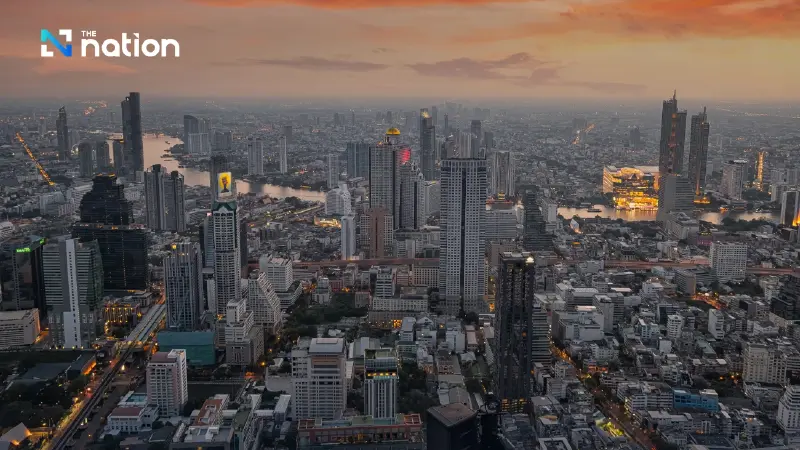


Bangkok land prices continue to rise, driven by mixed-use megaprojects, mass transit expansion and demand for ultra-luxury development in prime CBD locations.
- The Ploenchit-Chidlom-Wireless area is Bangkok's most expensive land location, with prices reaching up to 3.8 million baht per square wah.
- The surge in land prices across hotspots is primarily driven by the development of large-scale mixed-use projects, such as One Bangkok and Dusit Central Park.
- Other key areas with soaring prices include Rama IV (over 3 million baht/sq. wah), Early Sukhumvit (approaching 3 million baht/sq. wah), and the traditional financial district of Silom-Sathon.
- The boom has also reached suburban areas like Bang Na-Krungthep Kreetha, where megaprojects and a trend for luxury housing have significantly increased land values.
Bangkok’s land market continues to grow steadily, driven by megaprojects and the expansion of the electric rail network.
Looking at central business district locations, Bangkok has seen a clear spatial transformation — from its early historic commercial area of Charoen Krung, to the financial district of Silom-Sathon, the retail hub of Siam, and now towards the emerging economic centre of Sukhumvit.
Tanakorn Thanuthanud, manager of the valuation department at Colliers Thailand Ltd, said the main factor driving land prices over the past one to two years has been the rise of large-scale mixed-use projects worth hundreds of billions of baht, such as One Bangkok and Dusit Central Park.
These projects have acted as major catalysts, pushing up land prices sharply along Rama IV Road and around Lumphini Park, while also creating spillover effects towards outer-city zones.

Here are the five hottest land locations in Bangkok at present.
1. Ploenchit-Chidlom-Wireless: Thailand’s ultra-luxury champion
The Ploenchit-Chidlom area continues to hold its status as the most expensive land location in Thailand on a per-unit basis.
The latest assessment in 2024 found that actual transaction prices had risen to 3.4 million baht per square wah. This is reflected in the case of Sansiri, which acquired land on Chidlom Road at an average price of around 3 million to 3.8 million baht per square wah.
Compared with a 2016 transaction on the opposite side of the road — now the site of the 28 Chidlom project — at 1.9 million baht per square wah, the area has recorded compound annual growth of about 6%.
The developer is preparing to develop the site into an ultra-luxury condominium, with an expected average asking price of up to 500,000 baht per square metre.
2. Rama IV: price reset driven by mixed-use projects
Rama IV has become one of the most economically active locations of the year.
In 2017-2018, average land prices in the area were slightly above 1 million baht per square wah. By 2024, SC Asset reinforced the location’s potential by closing a land deal at more than 3 million baht per square wah.
The key supporting factor is the area’s physical advantage, especially its views of the green space at Lumphini Park.
Development in the area is therefore focused on ultra-luxury high-rise projects offering privacy, limited numbers of units and a strong emphasis on duplex layouts.

3. Early Sukhumvit: Nana-Asok
Movement in inner Sukhumvit remains active. Around BTS Nana station, land transactions in 2019 closed at around 2.5 million to 2.6 million baht per square wah. Current forward valuations have risen to around 2.8 million baht per square wah.
Meanwhile, in the Asok Montri area, landowners have begun setting asking prices above 3 million baht per square wah, although the market in practice remains in wait-and-see mode.
4. Silom-Sathon: the price-setting effect
The traditional financial district of Sathon had a price base of around 1.5 million to 1.7 million baht per square wah in 2016.
A major turning point came when a land plot on a main road was sold for 2.2 million baht per square wah for hotel development. That transaction created a price-setting effect, prompting other landowners in the area to immediately raise their asking prices.
The main limitation in this location is a shortage of land supply, as much of the land is still held by old families and long-established capital groups.
As a result, property developers have begun expanding their investment focus towards Bang Rak, where current asking prices are around 1.9 million to 2 million baht per square wah.
5. Bang Na-Krungthep Kreetha: luxury housing growth
The trend of premium low-rise housing development has significantly lifted land values in suburban areas.
Bang Na has benefited directly from megaprojects such as Bangkok Mall, The Forestias and Cloud 11, pushing land prices in the Udom Suk and Punnawithi areas close to 1 million baht per square wah.
Meanwhile, Krungthep Kreetha has seen a major transformation from 15 years ago. It has now become a luxury residential district, with land prices rising to 70,000-80,000 baht per square wah for smaller plots.
Major developers such as Sansiri have already established premium detached-house projects in the area, with starting prices as high as 45 million to 50 million baht. The location’s selling points include strong amenities, leading international schools and golf courses.
Although overall big-ticket land transactions over the past one to two years have been less active than expected, as most property developers have chosen to delay investment to preserve liquidity in the current economic climate, prime land locations still show positive signals.
This is reflected in the emergence of outstanding new supply, such as the land of the Netherlands Embassy, which has been put up for sale and remains highly sought after by major capital groups.
The trend shows that even though transaction volume has declined, the strategic value of land in central Bangkok has not weakened in line with economic conditions.
