
Big developers reshape Bang Yai-Rangsit growth zones
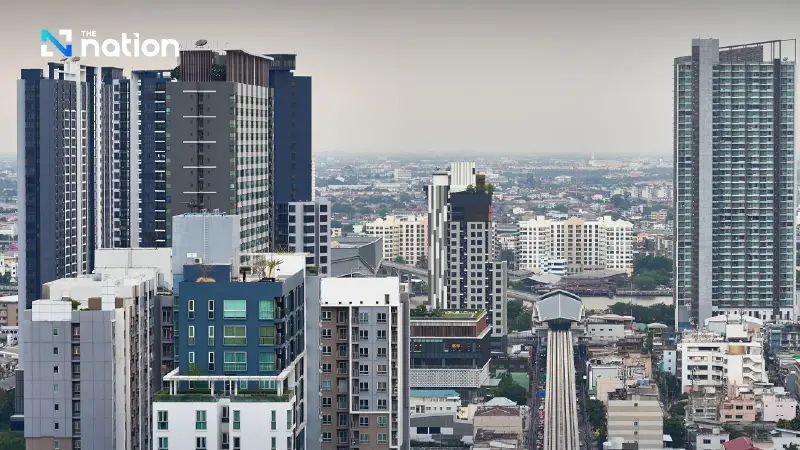


Major developers are turning Bang Yai and Rangsit into new economic and housing hubs, driven by mass transit, motorways and city planning
Bang Yai and Rangsit are rapidly emerging as two of the most closely watched growth corridors on the edge of Bangkok, as major developers move to secure land and launch large-scale projects in response to new transport links, city planning changes and rising demand for suburban living.
The two districts, in Nonthaburi and Pathum Thani respectively, are becoming important economic and residential centres for the Bangkok metropolitan area.
Their growth is being driven by continuing urban expansion, stronger interest from homebuyers seeking real residential locations, and large investors looking for new business opportunities.
A key factor behind the boom is the government’s ongoing investment in infrastructure, including new expressways, expanded main and secondary road networks, and several mass-transit links.
These projects are improving connectivity between Bangkok and its surrounding provinces, while revised provincial city plans are allowing more diverse land use for housing, mixed-use projects and commercial centres.
The changes mean Nonthaburi and Pathum Thani are no longer seen merely as areas absorbing Bangkok’s urban spillover. Instead, they are being positioned as new economic and residential hubs for the northern and western zones of Greater Bangkok.
Bang Yai gains from city planning and transport links
Bang Yai has seen rapid investment growth and is increasingly regarded as a new hub for the western side of Bangkok.
The area’s transformation was first accelerated by the Purple Line, which connects Bangkok to the heart of Bang Yai and helped trigger the first major condominium boom along a suburban rail route, with more than 10,000 units developed for both residents and investors.
Land prices have risen as a result, while the Bang Yai-Kanchanaburi Motorway, or M81, is expected to further strengthen the district’s role as a gateway linking Bangkok and its surrounding provinces with the western region.
The 96-kilometre route is also expected to bring more people into Bang Yai for housing, shopping and daily life.
The 2023 Nonthaburi provincial city plan designates Bang Yai as a commercial zone, or red zone, and a medium-density residential zone, or orange zone.
This has allowed large investors to develop more mixed-use schemes, shopping centres, hotels and high-rise residential projects.
Central WestGate, developed by Central Pattana Plc, or CPN, was one of the projects that helped lift Bang Yai’s profile. The large regional shopping centre serves purchasing power from the district and nearby areas, estimated at no less than 200,000-300,000 people.
Land in the area has been priced at around 100,000 baht per square wah, with a trend towards 200,000-300,000 baht per square wah as residential projects and infrastructure continue to expand nearby.
TCC and Proud Real Estate move in
Near Central WestGate, the Sirivadhanabhakdi family’s TCC Group is preparing a mixed-use project worth at least 10 billion baht on a 23-rai site next to Bang Yai Station on the Purple Line.
The land was formerly occupied by Big King Bang Yai, a well-known department store that closed in 2011.
The project is expected to become an important piece in Bang Yai’s wider transformation, adding more functions to the area and reducing the need for residents to travel into Bangkok.
Another major move comes from the Liptapanlop family through Proud Real Estate Plc, which is developing more than 10 rai of former Big C and HomePro land next to Central WestGate into Harina Sports Complex.
The project is aimed at serving purchasing power in Bang Yai and surrounding communities, and is expected to add further momentum once completed and opened.
Central Northville to open in July
Not far from Bang Yai, Central Pattana is also transforming Central Rattanathibet, near the MRT Purple Line’s Yaek Nonthaburi 1 Station, into a large mixed-use project called Central Northville.
The project, built on the original site, is designed to create a wider range of urban lifestyle activities in one location and is scheduled to open on July 3, 2026.
It features a biophilic design concept, blending nature with architecture and connecting the shopping centre with the PHYLL condominium project.
Rangsit marked for 750-rai future city
In Rangsit, Pathum Thani, Central Pattana is moving forward with a large mixed-use project on long-held land in northern Bangkok’s growth corridor.
The land was bought in 2011 from Thai Melon Polyester Co, a former large textile factory, after the site had changed hands from a well-known politician who won it in an auction from Bangkok Commercial Asset Management.
While waiting to develop the site, Central Pattana sought a change in the city plan land-use colour from purple, or former industrial land, to red, or commercial use, which was later approved.
The project is included in Central Pattana’s five-year investment plan from 2026 and is described as the largest project in the company’s history. It is intended to transform northern Bangkok into a “future city”.
Wellness and community living projects expand
Nearby, Jin Wellbeing County, a large mixed-use wellness residence project on 142 rai in Rangsit, has been developed by a company under Thonburi Healthcare Group.
The project combines condominiums, Thonburi Burana Hospital and healthcare facilities under a residential city concept.
Supalai Plc has also launched a major “Community Living Hub” project on more than 287 rai in Rangsit Khlong 3.
The development includes a campus of Singapore International School Bangkok, or SISB, creating an ecosystem that combines education and premium housing.
Seven infrastructure projects worth 158.8 billion baht
The Transport Ministry is also accelerating new infrastructure projects in Pathum Thani and Nonthaburi to improve road and rail links across the two provinces.
Seven projects are planned with a combined investment value of 158.789 billion baht.
The first project, under the Expressway Authority of Thailand, is the Chalong Rat Expressway extension from Chatuchot to Lam Luk Ka Road.
The 16.2-kilometre route is worth 24.06 billion baht and is now under construction, with opening expected by mid-2028.
The Department of Highways is also investing in the eastern section of the third outer ring road motorway, linking Highway 305, or Rangsit-Nakhon Nayok Road, at about kilometre marker 25+850, with Highway 3312, or Lam Luk Ka Road, at about kilometre marker 25+000.
The 13.6-kilometre route will connect with the Chalong Rat Expressway extension from Chatuchot to Lam Luk Ka.
Another major project is the M5 Uttaraphimuk elevated tollway extension from Rangsit to Bang Pa-in. The 22-kilometre route has an investment value of 42.055 billion baht.
The M9 western outer ring road, or Kanchanaphisek Road, from Bang Bua Thong to Bang Pa-in covers 31 kilometres and is worth 15.862 billion baht.
It links with the M9 Bang Khun Thian-Bang Bua Thong section. Construction began in mid-May 2026, with completion and opening planned for 2030.
The Lat Lum Kaeo-Bang Pa-in section covers 20 kilometres and has an investment value of 8.93 billion baht.
Other projects include the M9 outer ring road elevated section from Bang Khun Thian to Bang Bua Thong, which will connect with the M81 Bang Yai-Kanchanaburi Motorway.
For rail, the State Railway of Thailand’s Red Line suburban railway extension from Rangsit to Thammasat University’s Rangsit campus is now in the process of procuring a consultancy firm.
Approval to sign the contract is expected by July 9, 2026, with completion projected for 2029.
