
Nature as the Standard: Inside Matalay, Khao Lak's Future Landmark and One of Its Last Coastal Gems
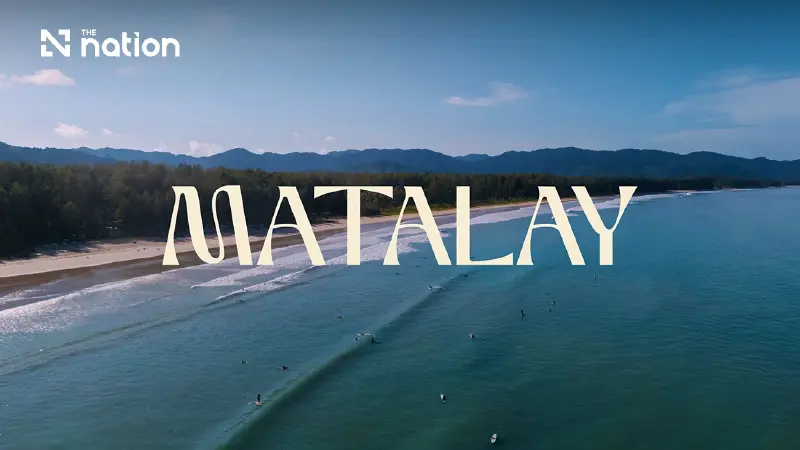


A 1,260-rai master plan poised to transform Phang Nga into a world-class coastal destination, making the case for investment beyond Phuket while remaining rooted in land where development has always moved in step with nature
- Matalay is a 1,260-rai master-planned coastal community in Khao Lak, positioned as a future landmark and a nature-focused alternative to the saturated Phuket market.
- The development's core philosophy is "nature as the standard," built on a coastal landholding that has been under careful stewardship for over four decades to prevent fragmented development.
- Its master plan integrates with the environment through features like the "Greenspine," a 125-rai public ecological park that constitutes 10% of the entire project.
- The large-scale, mixed-use community will include five hotels, branded residences, a wellness district, and a convention center, all designed to be rooted in Phang Nga's natural character.
A 1,260-rai master plan poised to transform Phang Nga into a world-class coastal destination, making the case for investment beyond Phuket while remaining rooted in land where development has always moved in step with nature.
Property experts rarely agree. Yet at the Phuket Property Exchange by the C9 Sessions, held at SAii Laguna Phuket on 11th June 2026, the room spoke with uncommon unity about Phuket's growth trajectory. Against that backdrop, one major development chose not to join the chorus – and in doing so, became one of the most compelling voices in the room.
Matalay arrived with something more valuable than a glossy prospectus. It came with tangible capital, a proven concept, and a founding philosophy that stands apart from the privacy-first, inward-looking resorts crowding a saturated market. Its distinction was never a matter of financial bravado or polished marketing. It came, simply, from where it sits: beyond Phuket's shores.
In a session titled “Unlocking Khao Lak: The Matalay Integrated Resort Community Model”, Mike Batchelor, Managing Partner at Hospitality Capital Advisers (HCA), and Anthony Moulton, Founder and Managing Director of BRAND & CO, set out a vision that was equal parts clear-eyed and ambitious.
Their conclusion was the one that stayed with the room long after it had emptied: "Khao Lak is becoming something of its own, a destination with a quieter soul, a stronger connection to nature, and a value that feels increasingly rare."


From Environmental Stewardship to National Landmark
Matalay's story did not begin in a boardroom. It began on a long stretch of sand, on a 1,260 rai plot of beachfront land along the Khao Lak coastline in Phang Nga province that has been under careful stewardship for more than four decades. The site's history dates back to the 1970s, when it was tied to the tin mining industry that once formed the economic backbone of southern Thailand.
As the years passed, a quiet conviction took hold: this land had to be protected from fragmented development, and, above all, it could never be broken up and sold to the highest bidder for short-term return.
For Matalay's project visionary, Jutipun "Pun" Boonsoong, it's about bringing people together.
“Matalay is a place where local surfers and corporate executives sit together, enjoying the nature and the community that surrounds them."
The masterplan does not envision another concrete hotel carved from cleared forest. It envisions something far more considered: a large-scale, mixed-use development that embraces diversity and remains genuinely rooted in Phang Nga’s original character.
Envisioned as a living, breathing community, Matalay is where locals, visitors, and the natural environment are woven into something genuinely whole. It is a place that welcomes people of all backgrounds on equal terms, held together by the quiet warmth of Khao Lak's pristine natural environment. The philosophy underpinning it is as simple as it is resonant: nature is the ultimate premium experience.
In an age when major cities suffocate under PM2.5 pollution, gridlocked streets, and hotels that mistake relentless programming for hospitality, the conviction behind the project is clear: the scarcest and most valuable things a person can experience today are clean air, open space, and the sound of the sea.
Matalay is designed to be the place where all three meet – completely and without compromise.

An Awakening Destination
Mike Batchelor, one of Asia-Pacific's most seasoned hotel investment advisers, describes Khao Lak as an "Awakening Destination", a place whose moment has genuinely arrived.
With Phuket welcoming between 10 and 14 million visitors each year, travellers are increasingly looking beyond the island and discovering Khao Lak. Defined by its tranquillity and ecological integrity, Khao Lak's appeal lies in the space it offers: to slow down, to explore, and to experience.
Matalay sits 70 minutes from Phuket International Airport, with direct connections spanning more than 57 countries. Should the proposed Andaman Phang Nga International Airport proceed as planned, that journey would shorten to under 50 minutes by 2030, placing Matalay firmly within reach of travellers seeking an alternative to Phuket while remaining close enough to enjoy the world-class amenities that make the island so enduringly popular.


170 Hectares, One Vision for Sustainability
At more than 1,260 rai, approximately 170 hectares, with 1.2 kilometres of uninterrupted beachfront, Matalay stands among Thailand's largest privately held coastal landholdings. But scale alone was never the point. Matalay is shaped as an integrated coastal community: a place where people, nature, hospitality and tourism come together in a way that feels authentic, active and alive.
Matalay leads the project alongside Capstone Asset, Hospitality Capital Advisers, Silver Bullet Strategic Group, S17, and Everest Consultancy. The Masterplan emerged from an eight-month visioning process involving some of the world's foremost international architecture firms, from which Gensler was appointed lead Masterplan Architect, with P Landscape taking the role of Landscape Masterplan Designer.
The creative and technical team extends well beyond. SHMA was appointed to design the main entrance and execute the beachfront Greenspine park. Chiang Mai Life Architects & Construction brings its celebrated bamboo craftsmanship to Memories Surf Village. Bangkok Project Studio leads the design of Matalay's cultural office and Goya Tower, a viewing tower whose presence is quietly, unmistakably its own.
Anchoring the project across strategy, marketing, engineering, legal, and financial disciplines, the advisory bench is equally strong: BRAND & CO, HATCH, EEC, Dunk Duck Dive, Meinhardt, Team Group, S2R, JLL, EY, and Baker & McKenzie.
The scope of what is planned is considerable. Five beachfront hotels sit alongside branded residences, the legendary Memories Surf Village, an elephant camp, an organic farm, a wellness district, a lakeside retail quarter, a 3,000-seat Convention Centre, an International School, and a Clinic affiliated with a leading hospital network. Running through it all is the Greenspine — a 125-rai ecological corridor that permanently sets aside ten per cent of the entire project as public green park.


The Confidence of Institutional Capital
For institutional investors, vision means little without execution. On that measure, Matalay stands on unusually firm ground. The JW Marriott Khao Lak Resort & Spa, anchoring the southern end of the development, is among the best-performing JW Marriott properties in the Asia-Pacific region and has also been recognised as Thailand's No. 1 Beach and Island Resort in the Travel + Leisure Luxury Awards Asia Pacific for three consecutive years, from 2024 to 2026.
The momentum is already tangible. KS Hotels and Resorts, owner of the JW Marriott Khao Lak Resort & Spa and one of the region's most respected institutional hotel investors, has chosen Matalay as the site of its next flagship development. The group's portfolio needs little introduction, spanning Park Hyatt Maldives, Park Hyatt Melbourne, Park Hyatt Siem Reap, JW Marriott Gold Coast, and Hyatt Regency Phuket.
On the same grounds as the JW Marriott Khao Lak, the group is now constructing one of Asia-Pacific's newest Marriott Vacation Club resorts, with 52 spacious keys already underway. It has also acquired 22 rai of beachfront land adjacent to Memories Surf Village, earmarked for two additional Marriott International-managed hotels. By 2030, KS Hotels and Resorts will hold approximately 750 keys in Khao Lak.
A second beachfront plot is under exclusivity with an undisclosed Thai conglomerate. One beachfront site remains available. Two further luxury-positioned parcels have yet to be introduced to the market.
None of this is speculative. It represents the deliberate movement of significant institutional capital by organisations that possess both the expertise and the track record to know precisely what they are committing to — and why.
A Name That Carries the Rhythm of the Sea
Anthony Moulton, the brand architect behind Matalay's identity, is clear that naming a destination of this scale demands more than creative ingenuity. It demands cultural honesty. The word "Matalay" emerges from a considered fusion of Thai and Sanskrit: the Thai words 'ma' (come) and 'talay' (sea), interwoven with the Sanskrit 'tala', meaning rhythm.
The result is a name that functions simultaneously as an invitation – Come to the Sea – and as something more elemental: a place defined by the unhurried cadence of the natural world.
On the question of comparison, Moulton is unequivocal. Matalay has no need to measure itself against anyone.
"Across Asia, there are countless property developments that try to imitate somewhere else," he said. "Matalay is not imitating anyone. It is creating something that is authentically Khao Lak, authentically Phang Nga, and a true expression of long-term stewardship and Thai hospitality rooted here for decades.”


More Than Returns: An Investment in Tomorrow's Landscape
For investors and business owners, Matalay offers three things that rarely appear together: meaningful scale, genuine rarity, and real upside potential. Land of this size, quality, and connectivity, adjacent to globally recognised hotel brands, supported by forthcoming airport infrastructure, and underpinned by a masterplan endorsed by world-class advisers, does not come available often.
It is the product of decades of careful preservation and more than two years of infrastructure investment made well ahead of the first sale.
The foundations are in place. An international team has been assembled. The brand has taken shape. And the community around it has already begun to form, most vividly when more than 7,000 people gathered for Matalay Khao Lak Classic, the inaugural surf and culture festival, alongside global partners including Rip Curl, JW Marriott, Coca-Cola, and Isuzu.
What Matalay seeks now is not capital alone, but rather partners who share the conviction that the most meaningful investments are not measured solely on balance sheets but in the sustainable environments they leave behind for the generations that follow.
At its core, Matalay is designed to dissolve the boundaries of social status to build a community that is genuinely open to all.
"When we looked at this land, we saw more than a development opportunity," Pun said. "We saw a chance to prove that people and nature can coexist. Matalay was born from a desire to create real livelihoods, to bring meaningful work to local families, and to make sure the people of Khao Lak are not just witnesses to what is being built here – but a living part of it. As a first-time father, I see the future differently now. I want my children, and the children of this community, to grow up with the same clean air, the same open beaches, and the same unhurried way of life that makes this place so quietly extraordinary. That is what Matalay is here to celebrate.”
PAID CONTENT
