
Suphajee signs ACFTA 3.0 on behalf of Thailand at ASEAN-China Summit
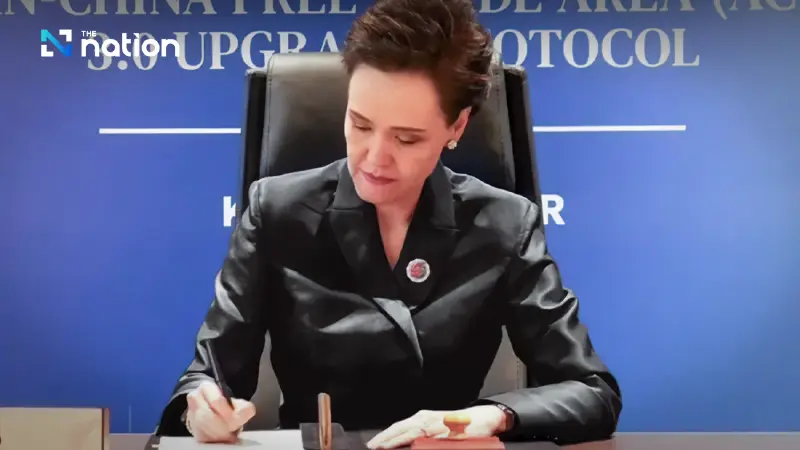


Thailand signs ACFTA 3.0 at ASEAN-China Summit, strengthening digital, green, and supply chain cooperation with China to tackle modern trade challenges.
Commerce Minister Suphajee Suthumpun represented Thailand at the signing of the upgraded and expanded version of the ASEAN-China Free Trade Agreement (ACFTA) 3.0 in Kuala Lumpur on Tuesday. The agreement aims to simplify customs procedures and enhance transparency, addressing modern economic challenges.
Key Features of ACFTA 3.0
Suphajee, speaking to reporters before attending the 28th ASEAN-China Summit on behalf of Prime Minister Anutin Charnvirakul , highlighted the key areas of the newly signed ACFTA 3.0. The agreement enhances economic cooperation between ASEAN nations and China, responding to the evolving trade environment.
ACFTA 3.0 is an upgraded and expanded version of the original ACFTA, which came into effect in 2010. While the original focused on tariff cuts and market access, the updated agreement addresses a broader range of modern economic issues.
Digital Economy
ACFTA 3.0 promotes digital trade and infrastructure, including 5G, e-commerce, and digital connectivity. It also addresses key issues such as cross-border data flows and data governance, enabling smoother digital transactions between ASEAN and China.
Green Economy
The agreement emphasizes sustainable economic growth, with a focus on reducing environmental impacts. It encourages the use of clean energy and promotes cooperation in green finance and green technologies.
Supply Chain Connectivity and Resilience
ACFTA 3.0 strengthens the flexibility and sustainability of regional supply chains, ensuring the seamless cross-border flow of essential goods and services—crucial in times of crisis.
Competition and Consumer Protection
The new agreement introduces measures to combat unfair or anti-competitive business practices and enhances protections for consumers, particularly in online and cross-border transactions.
Support for MSMEs
ACFTA 3.0 empowers micro, small, and medium-sized enterprises (MSMEs), making trade benefits more accessible to smaller businesses and fostering inclusive economic growth.
Strengthening Existing Commitments
In addition to the new areas covered, ACFTA 3.0 deepens existing commitments related to customs procedures and trade facilitation, simplifying processes and enhancing transparency. It also tackles non-tariff measures (NTMs), reducing barriers that hinder trade.
Next Steps for Implementation
After the signing, Suphajee announced that ASEAN nations would need to improve their internal processes and notify the ASEAN Secretariat when they are ready to implement the new agreement.
She assigned the Department of Trade Negotiations (DTN) to publicise the details of ACFTA 3.0, ensuring Thai businesses understand its provisions. The DTN will also organise seminars to explain the agreement to stakeholders, helping them prepare for its implementation. Following this, the government will seek parliamentary approval to enforce the new trade agreement.
Strong Bilateral Trade Growth
During the first half of this year, bilateral trade between ASEAN and China reached USD 429.806 million, marking an 18.65% increase compared to the same period last year.
