
Inside Crybaby's THB14bn success as Thai art toys rise on global stage
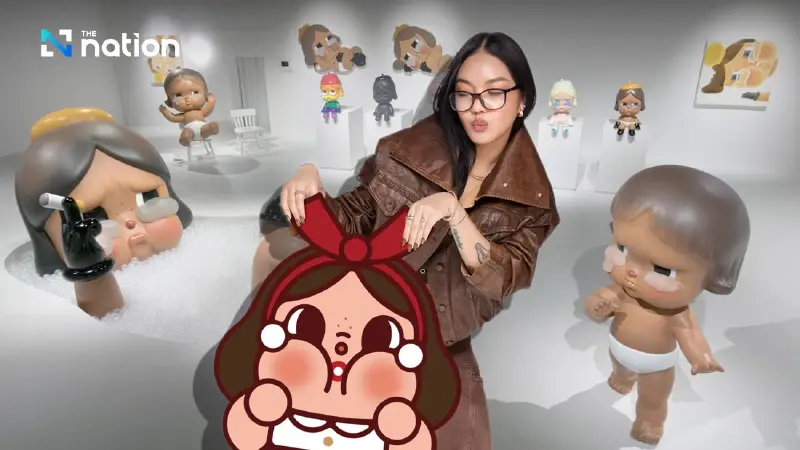


Gen Z consumers and office workers with spending power are helping art toys move into the mass market, while Crybaby gains traction as a Thai IP.
- The 'Crybaby' intellectual property (IP), created by Thai artist Nisa Srikumdee ('Molly'), has become a top-three revenue generator for Pop Mart, earning over 14 billion THB with more than 150% growth.
- This success exemplifies the art toy market's shift from niche to mainstream, a sector driven by younger consumers and projected to exceed $10.9 billion globally by 2030.
- The artist employs a dual-market strategy, using Pop Mart for mass distribution while her 'Molly Factory' studio targets a niche market with high-craft, limited-edition pieces.
- The Thai IP is demonstrating significant global growth, with North America becoming its second-largest market and expansion occurring through partnerships with fashion and lifestyle brands.

The art toy market, which has continued to expand over the past several years, is clearly shifting from a ‘niche market’ to a ‘mainstream market’, driven by younger consumers, especially Gen Z and office workers aged 15–40 who have purchasing power and value design and a sense of identity.
Data from the Trade Policy and Strategy Office (TPSO) show that the art toy market has grown rapidly, while HTF Market Intelligence estimated the global market in 2023 at US$8.517 billion (THB306 billion) and projected average annual growth of 4.26%, reaching more than US$10.938 billion (THB394 billion) by 2030, with Asia, North America and Europe as the main markets.


Amid the competition, ‘Crybaby’ has become one of the character IPs showing notable growth, with Nisa Srikumdee, or ‘Molly’, a Thai artist, behind its creation. Its strength lies in conveying ‘emotion’ through design, enabling it to reach consumers across different cultures and build emotional engagement.
Pop Mart’s 2025 results report said ‘Crybaby’ generated 2.93 billion yuan, or around THB14.064 billion, in revenue, growing by more than 150% and ranking among the top three revenue-generating characters within just six years. The performance made ‘Molly’ the first Thai artist in the company’s roster.
At the same time, ‘Molly’ is pursuing a ‘two-market’ approach (Dual Market Strategy), using Pop Mart’s platform to tap the mass market while setting up the ‘Molly Factory’ studio to target the niche market, focusing on highly crafted work, limited production and value added through storytelling.
Businesses in the Molly Factory group recorded revenue growth of more than 200% in 2024, reflecting the effectiveness of a strategy to diversify risk and expand the customer base.
On another front, ‘Crybaby’ is also being extended into an ecosystem through partnerships with brands in the fashion, lifestyle and licensed-product industries, widening revenue channels and consumer reach.
In overseas markets, North America has moved up to become the second-largest market after China, underscoring the potential of Thai IP to grow globally amid a creative-economy trend that is becoming one of the key drivers of the modern economy.

