
Gold prices surge globally: Exploring the factors behind the rise and market drivers
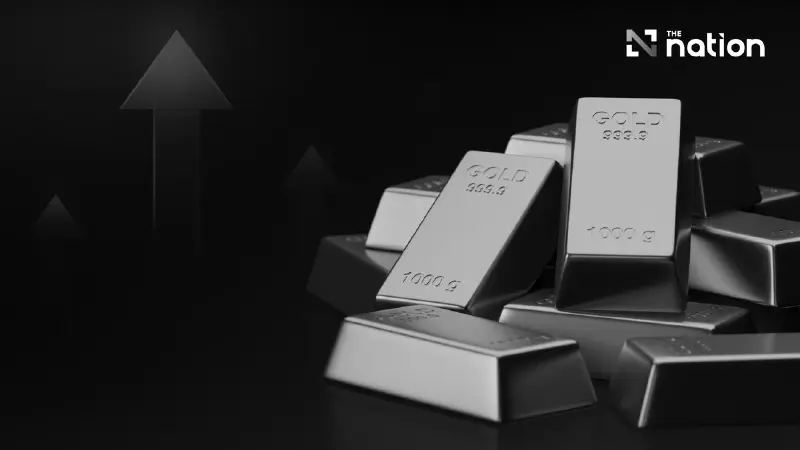


Global gold prices are soaring. Experts forecast prices between $2,850–$4,250 per ounce in 2026, driven by economic factors and geopolitical tensions
Gold prices in the global market are determined by both the "spot price" and "futures price," which are influenced by economic, political, and central bank policies worldwide. Analysts predict that in 2026, gold prices could range from $2,850 to $4,250 per ounce amidst global economic volatility and geopolitical tensions.
So, who decides the value of gold? How are gold prices determined? Gold can be priced in various forms, as it is an asset that can be traded in multiple ways. The main prices that investors should know are the "spot price" and "futures price."
Spot Price (Spot Price)
The spot price refers to the "current market price per ounce" for raw gold bars, sometimes called "spot gold." Gold-backed exchange-traded funds (ETFs) typically reference and move according to the spot price.
The spot price is often lower than what buyers would pay when purchasing gold bars, coins, or jewellery, as retail prices include a "gold premium," which covers refining costs, marketing, retailer expenses, and profit. Therefore, the spot price is akin to the "wholesale price," while the retail price is the spot price plus the gold premium.
Futures Price (Gold Futures)
The futures price refers to a contract that agrees to buy or sell gold at a predetermined price on a specified future date. These contracts are traded on exchanges and are more liquid than holding physical gold. Settlement can occur when the contract expires or earlier, either through cash settlement or the delivery of physical gold to the buyer.
Cash settlement refers to settling the contract’s profit or loss in cash, while delivery means the seller physically delivers gold to the buyer at the agreed price.
Factors Affecting Gold Prices
Both the spot and futures prices of gold are determined by supply and demand in the market, influenced by various factors, including:
- Geopolitical Events
Gold is considered a "safe-haven asset," which can retain or even increase value during stock market volatility or economic recessions. Geopolitical events such as military conflicts or trade disputes often lead to market instability and encourage investors to purchase more gold.
- Central Bank Gold Purchases
Central banks globally hold gold to hedge against inflation and maintain economic stability. Since gold is not tied to banking systems that may be controlled or face collapse risks, large-scale gold purchases by central banks directly affect the global supply.
- Inflation
Many investors view gold as an effective hedge against inflation. Rising prices of goods and services tend to increase demand for gold, thus pushing gold prices higher.
- Interest Rates
When interest rates rise, gold prices tend to fall. Conversely, when interest rates drop, gold prices usually rise. This is because gold does not yield interest, making it less attractive compared to cash assets or debt instruments during periods of high interest rates.
-
Gold Mining Production
Mining activities directly affect the global gold supply. Additionally, the cost of production influences overall gold price levels.
Historical Gold Price Trends
Historically, gold futures prices have been highly volatile, particularly when adjusted for inflation. Notable trends over various periods include:
• From April 1934 to July 1970, gold decreased by over 65% in a long-term downtrend.
• From July 1970 to January 1980, gold surged by nearly 850%.
• From January 1980 to February 2001, gold dropped 82%.
• From February 2001 to September 2025, gold increased by 591%.
Holding gold could expose you to similar long-term trends. It’s crucial to carefully determine the investment ratio. In periods of stagnation or recession, gold positions can weigh down overall portfolio returns. If this is seen as a concern, a lower allocation might be more suitable. On the other hand, if you accept years when gold underperforms in the short term for the opportunity in good years, a higher allocation could be appropriate.
Current Gold Price Movement
As of September 2025, gold futures prices have risen by 46%, driven by several factors, including the new US import tax structure, geopolitical tensions in Eastern Europe and the Middle East, and a weakening US dollar. This has prompted central banks worldwide to increase their gold holdings to diversify risk away from the dollar.
Gold Price Forecast for 2026
In June 2025, J.P. Morgan predicted that gold prices would reach $3,675 per ounce in Q4. This target was surpassed in September. The same analysis estimates that gold prices in Q4 of 2026 could reach $4,250 per ounce.
However, experts differ in their forecasts. According to a Reuters compilation of 11 gold price estimates, gold prices in 2026 could range from $2,850 to $4,025 per ounce, depending on global economic trends and future geopolitical situations.
