
Thai exports to US surge 41.8% as tariff ruling fuels rush orders
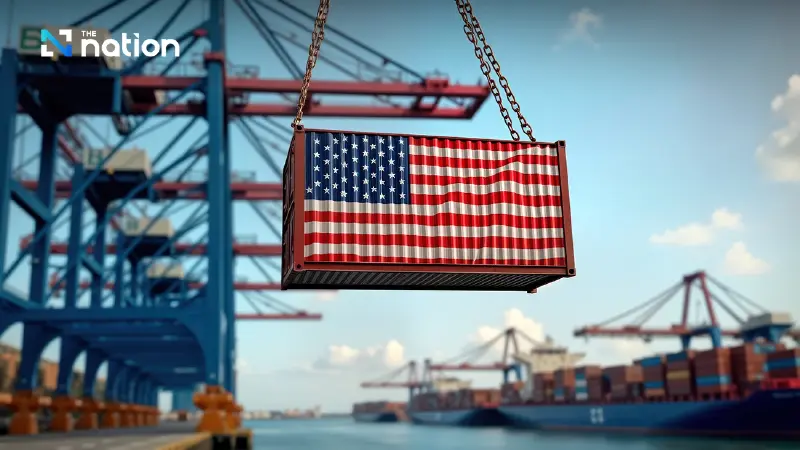


Thailand’s March exports hit a record high as US-bound shipments jumped after a court ruling voided Trump’s retaliatory tariffs
Thailand’s exports to the United States surged 41.8% in the first quarter of 2026, as US importers accelerated orders following a court ruling that voided retaliatory tariffs imposed under President Donald Trump’s policy.
The Trade Policy and Strategy Office (TPSO) reported that Thailand’s exports in March 2026 were valued at US$35.157 billion, the highest level on record, expanding 18.7% and marking the 21st consecutive month of growth.
Excluding oil-related products, gold and military-related goods, exports grew 19.3%.
Imports in March were valued at US$38.496 billion, up 35.7%, resulting in a trade deficit of US$3.339 billion.
For the first three months of 2026, Thailand’s overall exports expanded 17.6%. Excluding oil-related products, gold and military-related goods, exports rose 17.0%.
Most major export markets continued to perform well in March, led by the United States, where shipments jumped 41.9%. For the first quarter of 2026, exports to the US expanded 41.8%, accounting for 23.3% of Thailand’s total exports.
March also marked the 30th consecutive month of growth for Thai exports to the US.
Key products driving the expansion included computers, equipment and components; fax machines, telephones, equipment and components; and aircraft, spacecraft and parts.
However, some major exports to the US contracted, including gems and jewellery, rubber products and pet food.
Visit Limlurcha, vice chairman of the Thai Chamber of Commerce, said that the sharp 41.9% rise in exports to the US in March was driven by the US Supreme Court’s ruling on February 20, 2026, which voided the collection of retaliatory tariffs under Trump’s policy.
The ruling cancelled retaliatory tariffs on imports from around the world, including Thai goods, which had been subject to a 19% rate.
As a result, the US government invoked Section 122 of the Trade Act of 1974 to impose a 10% global tariff for 150 days, replacing the emergency measure struck down by the Supreme Court.
Visit said this had prompted importers to rush orders and deliveries before the 150-day period expires in July 2026.
He said importers remained uncertain over what measures the US government might use after the deadline, with speculation that Section 310 of the Trade Act of 1974 could be applied to impose product-specific tariffs. Thailand is preparing to provide explanations to the US on the matter.
Visit said the situation was expected to continue supporting Thai exports to the US in the second quarter of 2026, although the pace of rush orders was unlikely to match the acceleration seen in late 2025.
Computers, equipment and components remain Thailand’s key exports to the US, with their value rising in line with strong demand for digital products.
