
Suphajee sets out five-point plan to tackle energy shock and reset trade strategy
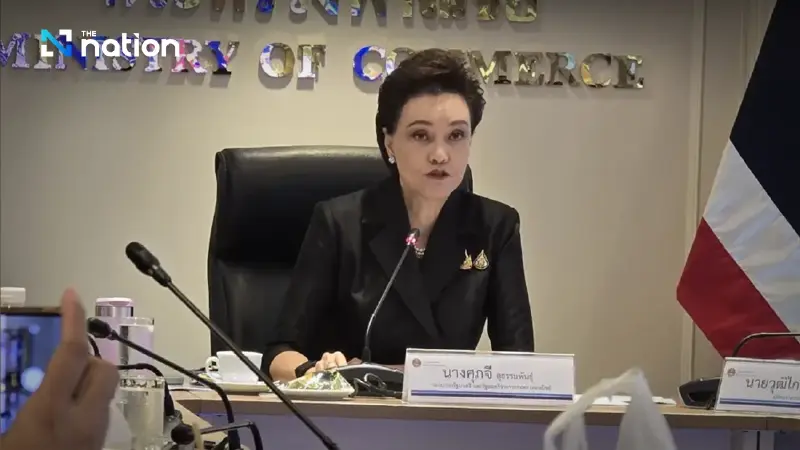


Thailand’s Commerce Ministry has unveiled a five-point policy response to the energy crisis, focusing on living costs, farm incomes, SME strength, exports and digital reform.
Deputy Prime Minister and Commerce Minister Suphajee Suthumpun said on Thursday that the energy crisis was putting pressure on transport costs, living costs and exports, and that Thailand needed both immediate relief measures and longer-term structural reform. She said the Commerce Ministry would respond through five main policy tracks aimed at helping households and businesses weather a period of overlapping economic, geopolitical and energy pressures.
1. Cutting living costs while creating income and upgrading local communities
Suphajee said the ministry would continue its Thai Chuay Thai programme, which has already been rolled out nationwide with more than 3,000 discounted items through modern trade outlets, local wholesalers and retailers, and online platforms. The next phase will bring 2,000 SMEs on to major e-commerce platforms, with waived platform fees, shipping support and 500,000 discount coupons worth 100 baht each for buyers.
2. Stabilising and adding value to farm products
On agriculture, the ministry said it would support the whole supply chain, from production to processing and marketing. Measures include absorbing up to 1 million tonnes of off-season paddy, with buying prices set 300 baht a tonne above the market, while also promoting higher-value agricultural goods, stronger community-level aggregation and better market matching. The ministry is also expanding fertiliser support under its Green Flag Plus scheme to help farmers manage rising input costs.
3. Strengthening SMEs and local communities
Suphajee said the ministry wanted to upgrade business skills, especially in online trade, while widening opportunities for local producers and community enterprises. The policy also places emphasis on product development, branding, geographical indication goods and intellectual property, alongside tighter scrutiny of nominee arrangements and unfair import practices that undermine Thai businesses.
4. Rebalancing exports
She said Thailand needed to adjust its export structure to cope with a more complex global landscape, expanding the role of SMEs, supporting greater use of local content and moving further into value-added branded goods. At the same time, the ministry will work to strengthen links with strategic partners and push ahead with trade negotiations in both established and newer markets, including the United States, China, the European Union, India, Latin America and Africa.
5. Upgrading service technology and unlocking regulation
The ministry also plans to move further towards a more digital model of public service by using AI, big data and cloud systems to make services faster, simpler and more transparent. Suphajee said these tools would also be used to improve agricultural management, including forward crop forecasting and smarter market analysis, while regulatory changes would be pursued to make business operations and investment easier.
Suphajee said the overall goal was to help Thailand respond to immediate pressures while using the crisis as an opportunity to reset the economy on firmer foundations. She said the ministry wanted to save costs, raise incomes and spread opportunity more widely, while ensuring that Thai trade and domestic commerce remained resilient in a rapidly changing world.
