
World Gold Council says Thai Q1 gold investment hits 7-year high
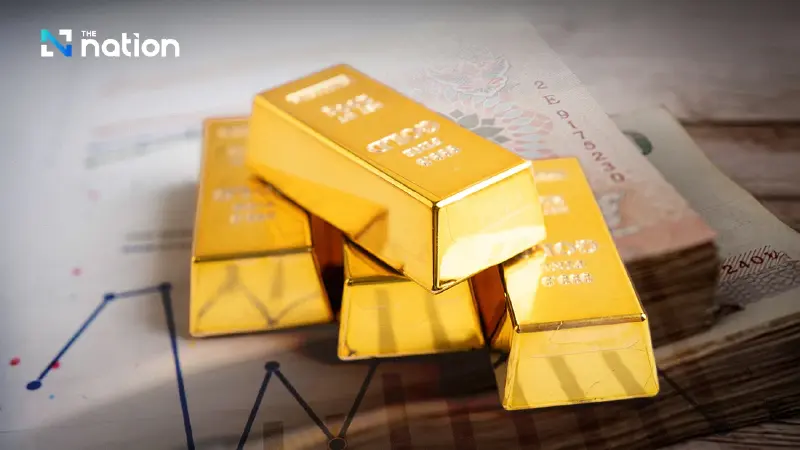


Economic uncertainty, political tensions and higher gold prices continued to support Thai safe-haven demand, the World Gold Council says.
- Demand for gold bars and coins in Thailand surged 35% year-on-year to 10 tonnes in the first quarter, marking the country's strongest Q1 performance since 2019.
- The World Gold Council attributes this growth to economic uncertainty, rising political tensions, and higher gold prices, which increased gold's appeal as a safe-haven asset.
- This increase in investment demand contrasts with a 5% year-on-year decline in Thai gold jewellery demand during the same period.
The World Gold Council (WGC) unveiled its Gold Demand Trends report for the first quarter of 2026, saying demand for gold bars and coins in Thailand climbed 35% year on year to 10 tonnes, the country’s strongest first-quarter performance since 2019.
The report said economic uncertainty and rising political tensions, together with higher gold prices, continued to support demand for gold as a safe-haven asset in Thailand.
Quarterly global demand across all sectors, including over-the-counter (OTC) trading, increased 2% year on year to 1,231 tonnes.
Although demand volumes rose moderately, the value surged to US$193 billion, up 74% from a year earlier.
Retail investors worldwide turned their attention to the direction of gold prices and gold’s safe-haven qualities, lifting demand for bars and coins by 42% year on year to 474 tonnes.
Other markets in Asia, including China, India, South Korea and Japan, also recorded higher purchases of gold bars and coins, one of the main factors behind the current shift in the structure of gold demand.
Demand for bars and coins was also supported by strong growth in the United States and Europe, where demand rose 14% and 50%, respectively.

Physically backed gold exchange-traded fund (ETF) demand remained positive in the first quarter, with holdings increasing by 62 tonnes.
This was largely driven by continued strength in Asia-listed funds, which rose by 84 tonnes over the quarter.
However, heavy outflows in March, mostly from US-listed funds, slowed what had been a very strong start to the year.
By contrast, jewellery demand declined sharply, falling 23% year on year to 300 tonnes as prices rose throughout the quarter.
Thai jewellery demand followed the global trend, down 5% year on year to 1.7 tonnes.
Gold jewellery demand weakened in all major markets worldwide and fell notably in China (-32%), India (-19%) and the Middle East (-23%).
In value terms, however, jewellery demand increased, reflecting consumers’ view of buying jewellery as a way to hold gold despite prices being at record highs.
Market analysis indicated that part of jewellery consumption had shifted into demand for bars and coins, particularly in markets such as China and India, where jewellery can serve as an alternative investment.
Shaokai Fan, Head of Asia-Pacific (ex China) and Global Head of Central Banks at the World Gold Council, said: “Thailand’s gold investment demand delivered its strongest first-quarter performance since 2019, with demand for bars and coins rising 35% year on year to 10 tonnes. This is a clear sign that investors continue to respond well to gold, particularly given gold’s strong performance amid rising geopolitical and economic uncertainty, which is expected to continue throughout 2026. Ongoing geopolitical risks, together with momentum from high inflation and persistently high gold prices, are expected to continue supporting investment demand and demand from central banks worldwide.”
Central banks worldwide continued to support overall demand, with net purchases totalling 244 tonnes in the first quarter.
Gold buying was higher than both the previous quarter and the five-year average, despite an increase in selling by a small number of official-sector institutions, including the Central Bank of the Republic of Türkiye, the Central Bank of the Russian Federation and the State Oil Fund of the Republic of Azerbaijan.
Market activity throughout the quarter reflected gold’s special role as an indispensable reserve asset that remains accessible even during periods of high market volatility.
Overall gold supply rose 2% year on year to 1,231 tonnes.
Mine production reached a new first-quarter record, while recycling increased only modestly by 5% despite high gold prices, reflecting a relatively limited supply response and tighter overall market conditions.
Louise Street, Senior Markets Analyst at the World Gold Council, said: “Gold price volatility has risen markedly in 2026, with prices peaking above US$5,400 per ounce in January before a significant but manageable correction. Price momentum, together with heightened geopolitical risk, has driven stronger investment demand, particularly in Asia, as investors seek stability in the form of gold bars. Continued gold purchases by central banks worldwide have also helped offset strategic selling.”
“Looking ahead, geopolitical risks are expected to remain a driver of investment demand, although interest rates staying high for an extended period could create pressure, especially in Western markets. Jewellery spending is expected to remain strong, even though high prices will affect volumes. On the supply side, mine production is expected to grow moderately. However, potential energy shortages could slow that outlook,” Louise Street added.
