
Gold tumbles below $4,000 as oil surge fuels rate fears
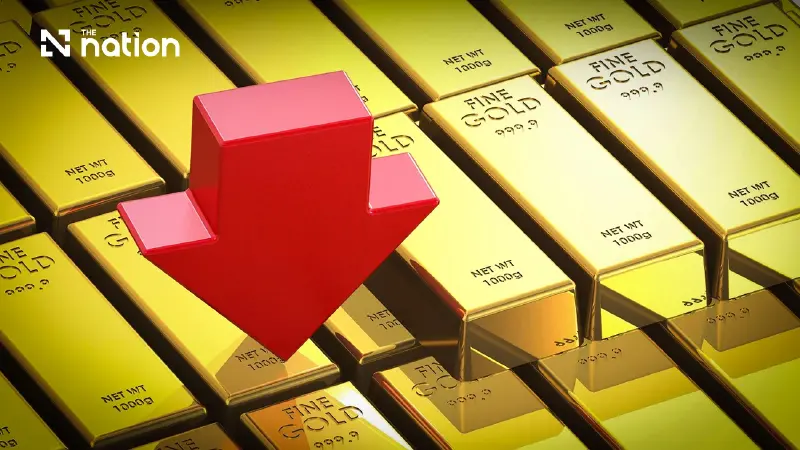


Gold falls 3% below $4,000 as renewed US-Iran tensions lift oil prices, intensify inflation concerns and strengthen expectations of US rate rises.
- Gold prices tumbled 3% to fall below the $4,000 an ounce threshold, driven by a sharp increase in oil prices.
- The oil price surge was triggered by escalating US-Iran tensions after Washington reinstated a naval blockade in the Strait of Hormuz.
- Higher oil costs have fueled fears of inflation, leading to market expectations that the US Federal Reserve will raise interest rates, which makes non-interest-bearing gold less attractive to investors.
Global gold prices fell sharply below US$4,000 an ounce as escalating conflict in the Middle East drove oil prices higher and strengthened expectations that the US Federal Reserve may need to raise interest rates.
Spot gold dropped 3% to US$3,996.76 an ounce at 1.40pm Eastern Time on Monday, marking a second consecutive session of losses. The metal touched its lowest level since July 1 and recorded its largest one-day decline in more than two weeks.
US gold futures settled 2.6% lower at US$4,005.70 an ounce.
The sell-off followed US President Donald Trump’s announcement that Washington was reinstating a naval blockade against Iran after Tehran claimed to have closed the Strait of Hormuz.
Oil prices initially jumped about 5% following the announcement, raising concerns that higher energy and transport costs would place renewed upward pressure on inflation.
The market reaction illustrated an unusual consequence of the escalating conflict. Although geopolitical crises often increase demand for gold as a safe-haven asset, investors instead focused on the risk that an energy shock would force central banks to maintain restrictive monetary policies.
Higher oil prices cloud inflation outlook
Rising oil prices can spread through the economy by increasing the cost of fuel, electricity, manufacturing and transport.
Those higher costs can feed into consumer prices, making it more difficult for central banks to bring inflation under control. Policymakers may consequently keep interest rates high for longer or raise them further.
Higher interest rates tend to weaken demand for gold because the metal pays no interest. Investors may instead move into government bonds, deposits and other interest-bearing assets when their potential returns rise.
Fawad Razaqzada, a market analyst at Forex.com, said surging oil prices and the prospect of tighter Federal Reserve policy created an unfavourable environment for gold.
“Oil prices are surging because of the Middle East conflict, and there is a possibility that the Federal Reserve will adopt a tighter monetary policy,” he said.
“That is bad news for a non-yielding asset such as gold.”
Gold could fall towards $3,800
Razaqzada warned that gold could face further losses should oil prices continue rising and selling pressure intensify.
He said the metal could initially fall through technical support towards US$3,800 an ounce. A more prolonged decline could take prices as low as US$3,500 if investors accelerate their selling.
The outlook reflects the close relationship between gold, inflation expectations, interest rates, bond yields and the US dollar.
A stronger dollar makes dollar-denominated gold more expensive for buyers using other currencies, while rising bond yields increase the opportunity cost of holding an asset that produces no regular income.
Trump revives Iran blockade
Trump said the United States was reimposing its naval blockade against Iran and seeking compensation equal to 20% of the value of goods transported through the Strait of Hormuz.
The announcement followed Iran’s claim that it had closed the strategically important waterway.
The Strait of Hormuz is a critical route for oil and gas exports from the Gulf. Any restriction on shipping can quickly raise fears of supply disruption and trigger sharp movements in global energy prices.
Commercial passage through the strait has already fallen significantly during the latest confrontation, increasing uncertainty over the availability and cost of oil supplies from the region.
Trump’s proposed charge and the reinstated blockade have also created uncertainty over shipping costs, freedom of navigation and the ability of energy exporters to move cargoes through the waterway.
The escalation has reversed some of the relief created by the earlier temporary settlement between Washington and Tehran, which had eased concerns about Middle Eastern oil supplies.
Markets raise bets on Fed tightening
Expectations of tighter US monetary policy strengthened after the latest surge in oil prices.
CME FedWatch indicated that traders saw a 75% probability that the Federal Reserve would raise interest rates by its September meeting, according to the report. FedWatch uses pricing in 30-day federal funds futures to estimate market expectations for upcoming rate decisions.
The Federal Reserve kept its target range for the federal funds rate at 3.5-3.75% in June, but officials left open the possibility of future tightening as they continued to assess inflationary pressure.
Federal Reserve Governor Christopher Waller added to those concerns on Monday by indicating that policymakers might need to raise rates in the near term.
Swap traders subsequently placed a 43% probability on an increase at the Fed’s July meeting, up from nearly 40% before his remarks, according to the report.
Warsh testimony and inflation figures in focus
Investors are now awaiting Federal Reserve Chairman Kevin Warsh’s semi-annual monetary policy testimony to Congress.
Warsh is scheduled to appear before the House Financial Services Committee on July 14 and the Senate Banking Committee on July 15, according to the Federal Reserve’s official calendar.
His remarks will be closely examined for indications of how the central bank views the inflationary effects of the latest oil-price surge and whether policymakers are prepared to raise borrowing costs.
The testimony will be his first semi-annual monetary policy appearance before Congress since taking office as Federal Reserve chairman in May.
Markets will also assess a series of important US economic indicators due this week, including the consumer price index, producer price index, June retail sales and weekly applications for unemployment benefits.
The figures could reinforce or weaken expectations of further tightening, depending on whether they show persistent price pressure and continued strength in consumer demand.
Gold remains under pressure in Asian trade
Gold remained below the US$4,000 threshold during Asian trading on Tuesday morning.
Spot gold edged down 0.1% to US$3,996.63 an ounce at 7.48am in Singapore, after Monday’s fall of nearly 3%.
The Bloomberg Dollar Spot Index was little changed after gaining 0.3% in the previous session, providing no immediate relief for bullion.
Oil prices continued rising as renewed fighting fuelled concerns over supplies from the Middle East. The latest gains helped oil recover some of the roughly 30% decline recorded during the second quarter.
For gold, however, higher energy prices increased the possibility that the Fed would need to keep rates elevated for longer to prevent inflation from becoming entrenched.
Silver and other precious metals decline
The sell-off extended across the precious-metals market.
Spot silver dropped 3.8% to US$57.55 an ounce on Monday, while platinum declined 1.7% to US$1,599.47.
Palladium fell 2.1% to US$1,249.70 an ounce.
In early Asian trading on Tuesday, silver slipped a further 0.3% to US$57.50 an ounce. Platinum edged lower, while palladium recovered slightly.
The broad decline showed that investors were reducing exposure to precious metals as higher oil prices, a firmer dollar and expectations of tighter monetary policy reshaped the market outlook.
Gold’s next direction is likely to depend on whether Middle East tensions continue driving oil prices higher, how US inflation figures develop and whether Warsh signals that another interest-rate increase is approaching.
