
88% of Thais exceed daily sodium intake, government introduces 'salt tax' to combat health risks
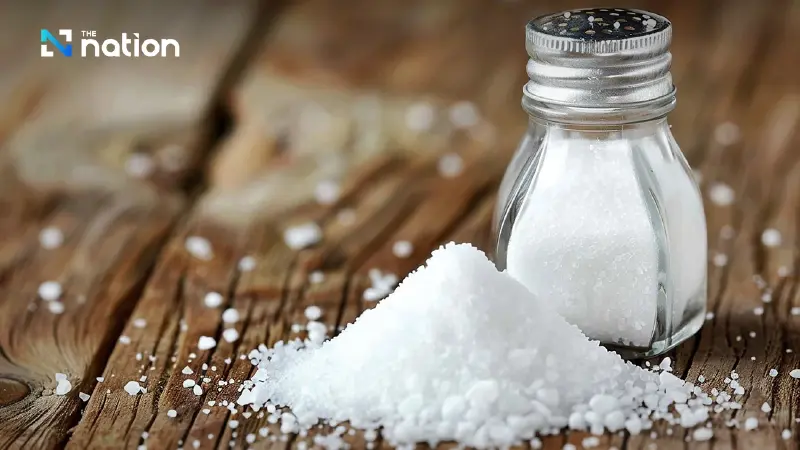


A new health survey reveals that 88% of Thais consume more sodium than recommended, prompting the introduction of a salt tax to reduce intake and prevent chronic diseases.
A survey conducted by Ramathibodi Hospital in collaboration with the Health Systems Research Institute (HSRI) and the ThaiHealth Foundation, titled "Health Survey of the Thai Population 2024-2025," reveals that the average daily sodium intake for Thais aged 15 and over is 3,650 milligrams (3,689 mg for men and 3,615 mg for women). The highest consumption was observed in those aged 15-44, with an average of 3,866 milligrams per day.
A staggering 88.2% of Thais exceed the World Health Organization’s recommended daily sodium intake of 2,000 milligrams. The survey also highlighted a rising trend in non-communicable diseases (NCDs), including a significant increase in diabetes (from 6.6% in 2004 to 10.6% in 2025), high cholesterol (from 15.5% in 2004 to 19.8% in 2025), obesity (from 28.6% in 2004 to 45% in 2025), and hypertension (from 22% in 2004 to 29.5% in 2025). Hypertension alone has added 4 million new cases over the past five years.

The Thai government has set a target to reduce sodium and salt consumption by 30% by 2030, aiming for a daily intake of no more than 2,000 milligrams of sodium, or roughly one teaspoon of table salt. This is part of the SALTS (Strategic Approach to Lower Sodium and Salt) strategy, which includes five key actions:
- Building and expanding partnerships with stakeholders to increase monitoring and reduce sodium consumption nationwide.
- Raising awareness and educating the public, producers, and policymakers on the health impacts of excessive sodium intake, promoting sodium tax policies and healthier food options.
- Legislative and environmental reforms to produce low-sodium products, including mandatory nutrition labels and healthier product formulations.
- Research and development of innovative low-sodium food options.
- Monitoring and evaluation of sodium levels, with the launch of apps like ThAI Salt Survey and the use of salt meters to measure sodium in food across the country.
A proposed sodium tax is seen as a crucial tool in reducing consumption, with expectations that it will encourage manufacturers to lower sodium levels in their products.

Asst. Prof. Dr. Pojjana Hunchangsith, a researcher from the Institute for Population and Social Research at Mahidol University, highlighted that children and youth are most affected by high sodium intake, particularly from snacks and processed foods. Research suggests that implementing a sodium tax on high-sodium snacks, coupled with a requirement for producers to lower sodium levels, could significantly reduce sodium consumption in children and prevent over 31,000 cases of high blood pressure, particularly among snack-eating youth.
Over the next 10 years, it is projected that the sodium tax could prevent 54,000 new stroke cases, 5,000 deaths, 51,000 chronic kidney disease cases, 2,500 deaths, and 49,000 heart disease cases, saving over 160,000 lives in total.
Pojjana emphasized the importance of the sodium tax in protecting the health of children, whose high consumption of salty snacks could lead to long-term health issues. The strategy is vital in preventing future generations from suffering from NCDs related to excessive sodium consumption.

