
Chulalongkorn University Secures Landmark Certification for Advanced Cell Therapy Research
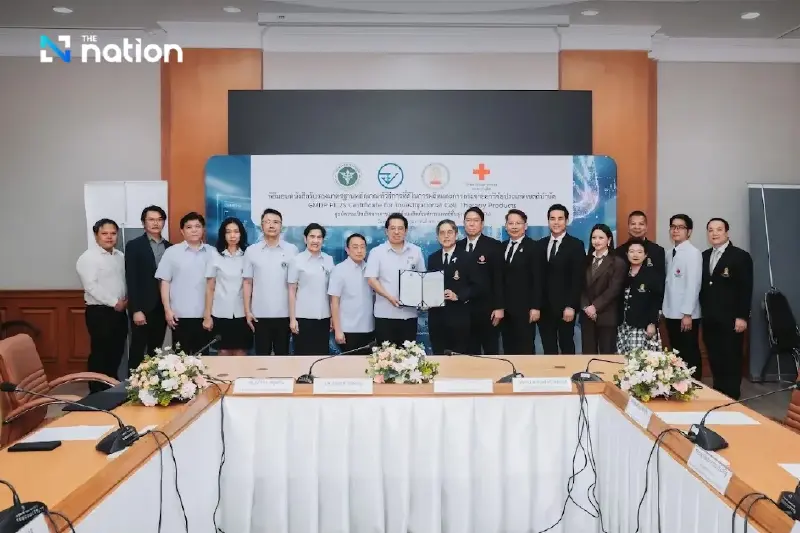


The Thai FDA grants first-ever GMDP certification to Chula Medicine, benchmarking the nation’s cell therapy research against international standards
- Chulalongkorn University's Faculty of Medicine has received Thailand's first-ever certification from the Thai FDA for the production and distribution of cell therapy research drugs.
- The certification confirms that the university's research and manufacturing processes now meet stringent international standards, specifically the Pharmaceutical Inspection Co-operation Scheme (PIC/S).
- This achievement is a pivotal step in Thailand's national strategy to establish itself as a global life sciences hub and boosts confidence in the safety and efficacy of its advanced medical treatments.
The Thai FDA grants first-ever GMDP certification to Chula Medicine, benchmarking the nation’s cell therapy research against international standards.
The Ministry of Public Health has officially designated the Faculty of Medicine at Chulalongkorn University as the nation’s first certified site for the production and distribution of cell therapy research drugs.
The certification, awarded on 19 February 2026, marks a pivotal moment in Thailand’s strategy to establish itself as a global life sciences hub.
It confirms that the university’s Center of Excellence in Advanced Therapy Medicinal Products (ATMPs) now operates in full alignment with the Pharmaceutical Inspection Co-operation Scheme (PIC/S)—the international benchmark for medicinal manufacturing.

The Minister of Public Health, Phatthana Phromphat, stated that the government is committed to making advanced medicine a "national pillar."
He highlighted a significant shift in the role of the Thai Food and Drug Administration (FDA), which has moved from being a traditional "gatekeeper" to a proactive partner in supporting domestic research.
"We are strengthening 'Team Thailand' to ensure our medical innovation is world-class," the minister said during the ceremony.

Dr Somrerk Chungsaman, permanent secretary for Public Health, explained that the certification is a critical step in regulating ATMPs—a field that includes gene and cell therapies.
These technologies are increasingly seen as the future of treatment for complex, rare, and chronic conditions that do not respond to traditional medicine.

The new status ensures that every stage of the process—from manufacturing and quality control to storage and distribution—meets stringent safety and efficacy requirements, providing greater confidence to both medical professionals and patients.
The Dean of Chula Medicine, Assoc Prof Dr Jiruth Sriratanaban, revealed that the faculty has invested over 200 million baht in infrastructure to achieve these standards.
Supported by the Science, Research and Innovation Fund, the centre is now positioned to lead the region in biopharmaceutical production.
"This is about more than just facilities," Dr Jiruth added. "It is about developing the human capital required to sustain an entire industry of advanced medical services."

