
Thai Vets Perform Country's First Feline Pacemaker Implant in Landmark Cardiology Breakthrough
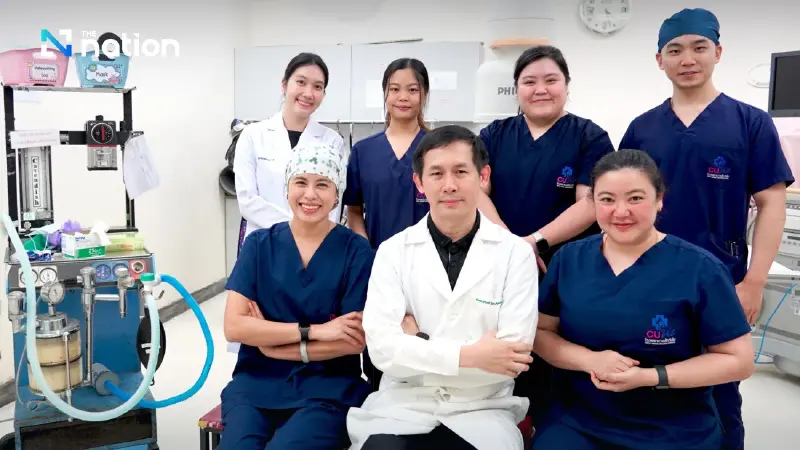


A Chulalongkorn University team has given a fainting eight-year-old cat a new lease of life in a procedure that signals Thailand's arrival on the global veterinary stage
- Veterinarians at Chulalongkorn University performed Thailand's first successful pacemaker implantation in a cat, marking a significant national milestone.
- The patient was an eight-year-old cat named Pepsi, who suffered from frequent fainting spells caused by a severe cardiac arrhythmia.
- The procedure was highly complex due to the cat's small veins and thin heart walls, requiring a direct surgical approach through the chest cavity.
- A human-grade pacemaker, adapted with appropriately sized leads, was used to correct the cat's irregular heartbeat, leading to a full recovery.
- This landmark operation is considered a major breakthrough, demonstrating Thailand's advanced capabilities in veterinary cardiology on an international level.
A Chulalongkorn University team has given a fainting eight-year-old cat a new lease of life in a procedure that signals Thailand's arrival on the global veterinary stage.
Veterinarians at Chulalongkorn University's Faculty of Veterinary Science have performed Thailand's first successful pacemaker implantation in a cat, marking a significant milestone in the country's advanced animal healthcare capabilities.
The patient, an eight-year-old female domestic shorthair named Pepsi, had been collapsing as many as three to four times a day before the procedure. She has since made a full recovery, regaining her strength and playful personality, and now leads a normal, healthy life.
The operation was led by Associate Professor Dr Anusak Kijtawornrat of the Department of Physiology, who described it as both a technical challenge and a turning point for veterinary cardiology in Thailand.

From fainting spells to a life-saving diagnosis
Pepsi's owner first brought her to the Chulalongkorn Small Animal Hospital after noticing symptoms of lethargy, weakness, and sudden collapse accompanied by muscle stiffness and occasional vocalisation.
Initial tests pointed to possible neurological or cardiac causes, but medication failed to produce any improvement.
Further examination at Chulalongkorn identified the true culprit: a severe cardiac arrhythmia caused by a blockage of electrical signals between the atria and ventricles.

The condition prevented the lower chambers of the heart from pumping sufficient blood to the brain, triggering the repeated fainting episodes.
"Normally, a cat's heart beats around 140 to 220 times per minute, regulated by natural electrical impulses," Dr Anusak explained. "When the signal is blocked, the heart stops contracting effectively, causing syncope. Such cases are uncommon — accounting for around 10 per cent of feline cardiac cases — but are more prevalent in older cats."
Accurate diagnosis was made possible through Holter monitoring, a 24-hour electrocardiogram device considerably more precise than the standard one-to-five-minute ECG test.

A complex and delicate operation
Implanting a pacemaker in a cat presented considerable surgical obstacles. Unlike dogs, whose larger veins allow the pacemaker lead to be threaded through the neck, cats have significantly smaller veins and thinner heart muscle walls — measuring just two millimetres — making the conventional approach too risky, as the lead could puncture the heart.
The surgical team instead opened the chest cavity between the ribs to access the heart directly, attaching the pacing lead to the heart's surface and implanting the small generator unit beneath the abdominal muscles.
"This method is more complex but safer for small animals," Dr Anusak said. "It was an improved technique from our previous feline case just two weeks earlier. Switching from a diaphragmatic approach to a thoracic one made the implantation easier and more accurate."
The hour-long procedure involved a multidisciplinary team of cardiologists, surgeons, anaesthesiologists, and cardiovascular intervention specialists working in close coordination.


Human-grade technology, adapted for cats
The pacemaker device used in Pepsi's surgery is the same model deployed in human patients, fitted with appropriately sized leads. The unit itself costs around 45,000 baht, with the leads adding a further 10,000 baht.
In Pepsi's case, the device was donated and sterilised for reuse, significantly reducing the financial burden on her owner.
Following surgery, Pepsi recovered swiftly. She no longer experiences fainting episodes, eats normally, and engages energetically with her owner and fellow cats at home. She will continue to attend check-ups every three months to ensure the device is functioning correctly.

Post-operative restrictions are minimal. Cats fitted with pacemakers can play freely and even swim, though owners must notify veterinarians before any MRI scans, as strong magnetic fields may interfere with the device.
The risk of post-surgical complications stands at roughly one to two per cent, most commonly minor lead dislodgement, which can be corrected with a further procedure.

A milestone for Thai veterinary medicine
Dr Anusak acknowledged that while pacemaker implantation in cats has been practised abroad for many years, it remains rare in Thailand owing to diagnostic challenges, the specialised training required, and the cost of equipment.
"This success showcases Thailand's readiness to perform advanced procedures at an international level," he said. "Chulalongkorn's veterinary faculty now has the expertise, technology, and multidisciplinary collaboration to match global standards."
He urged pet owners to seek immediate veterinary attention if their cats or dogs display signs of weakness or fainting. The Chulalongkorn Small Animal Hospital — also known as the Bangkok Animal Hospital — operates around the clock, providing specialist emergency and cardiac care.
Dr Anusak also had a message for the next generation of practitioners.
"Veterinary medicine evolves rapidly. Our students must continue to learn and adapt. With solid foundations and continuous self-improvement, what once seemed impossible in Thailand can become reality — advancing our profession to new heights."
