
Thailand makes GLP-1 injections prescription-only from September 15
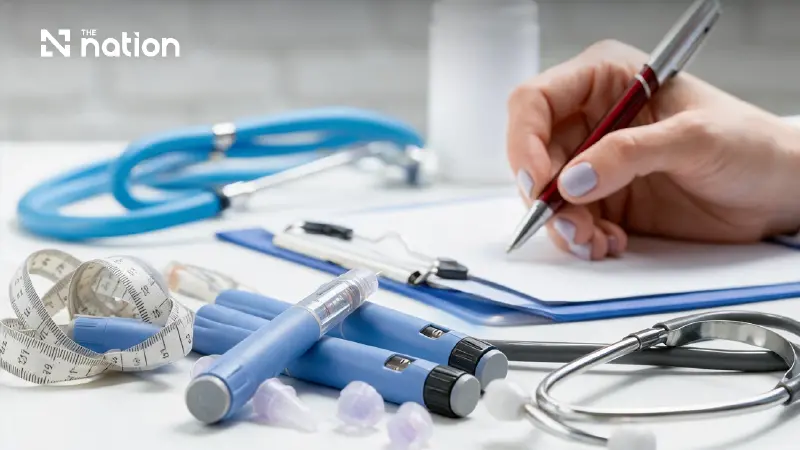


Thailand’s FDA is expanding drug tracking to curb counterfeit weight-loss injections while maintaining access for patients under medical supervision.
- Thailand will require prescriptions for injectable glucagon-like peptide-1 (GLP-1) medicines from September 15, 2026.
- The Food and Drug Administration (FDA) is initially asking licensed importers and sellers to report sales through its Track & Trace system.
- The FDA says patients with a medical indication can continue obtaining treatment under a doctor’s supervision.
- Patients can check individual medicine boxes through the FDA’s serial-number verification service.
Thailand will make injectable glucagon-like peptide-1 (GLP-1) receptor agonists prescription-only from Tuesday (September 15, 2026), as health authorities tighten controls on unsupervised weight-loss use, counterfeit medicines and illicit online sales. Pharmacy purchases will require a doctor’s prescription, and the medicines must be dispensed by a pharmacist, the Food and Drug Administration (FDA) announced.
Supattra Boonserm, secretary-general of the FDA, said the Public Health Ministry’s Notification on Specially Controlled Drugs No. 58 places injectable GLP-1 medicines in the specially controlled category. The requirement is intended to ensure patients receive an appropriate medical assessment before using them.
Supattra said injectable medicines such as liraglutide and semaglutide, commonly known as “weight-loss pens”, have indications for treating type 2 diabetes, while some formulations are approved for weight management in people with obesity. The FDA has found cases of weight-loss use without medical assessment or supervision, alongside sales of counterfeit products and medicines of unknown origin.
Supattra stressed that the measures were not intended to restrict access for patients who need treatment. Patients with a medical indication who remain under a doctor’s care can continue obtaining their medicines, with improved safeguards to verify their source and distribution history.
FDA expands tracking of injectable GLP-1 medicines
The FDA is strengthening monitoring of GLP-1 distribution through its Track & Trace system, initially requesting cooperation from licensed importers and sellers to submit sales information. The system is intended to follow medicines from importation through storage and distribution to dispensing to patients.

Supattra said traceability would help investigators work backwards when irregularities emerge, prevent medicines from being diverted outside authorised channels and tackle counterfeit and unregistered products. The FDA is still developing more detailed rules and conditions governing sales and distribution.
Online drug enforcement follows Nonthaburi seizure
The FDA and police announced on September 11, 2026, that an operation in Nonthaburi had uncovered unregistered injectable peptide products being promoted online for weight loss. Authorities valued the seized products, injection supplies and associated materials at more than 52 million baht.
The FDA said investigators traced the products to premises in Bang Yai district after a parent raised concerns about a daughter injecting a product advertised on social media. The seized goods included peptide vials, mixing liquid, syringes and packaging, rather than a confirmed haul consisting solely of counterfeit branded GLP-1 pens.
In the latest prescription-rule announcement, Supattra warned businesses, pharmacies and online sellers to comply with drug laws. Selling specially controlled medicines without a prescription, operating without a drug-sales licence or selling unregistered medicines can carry prison terms and fines, while unlawful drug advertising carries a maximum fine of 100,000 baht, according to the FDA.
GLP-1 safety warnings reinforce the need for medical supervision
Britain’s Medicines and Healthcare products Regulatory Agency advises against using GLP-1 medicines purely for cosmetic weight loss. The regulator describes the medicines as generally safe and effective for their authorised uses, while warning that acute pancreatitis is a known but infrequent side effect, with severe complications occurring in extremely rare cases.
US prescribing information for Wegovy, a semaglutide medicine, also warns of hypoglycaemia, or low blood sugar, particularly when used with insulin or certain other diabetes medicines. The prescribing information identifies a risk of acute kidney injury associated with dehydration, including after vomiting or diarrhoea.
A 2022 follow-up to the STEP 1 semaglutide trial documented substantial weight regain after treatment ended. Participants with overweight or obesity, but without diabetes, regained an average of about two-thirds of their previous weight loss within a year after both semaglutide treatment and structured lifestyle support were withdrawn. The finding concerns that study population and does not establish an identical outcome for every GLP-1 user.
Patients can check GLP-1 medicine boxes online
Patients can check GLP-1 products by entering the serial number printed on the box into the Track & Trace menu for the pilot medicine serialisation system on the FDA website, Supattra said.
The FDA advises patients to avoid using a product when no corresponding authorisation information appears or when the details do not match the packaging. Suspected irregularities can be reported through the FDA hotline on 1556 or the Oryor Smart Application, with reports accepted around the clock so authorities can investigate and take legal action where appropriate.
