
Mistrust and hot air causing public anxiety


Play
Politicians are allowing their imaginations to run wild and trigger anxiety with hot-air remarks and their own shadows.
A number of issues are based on conjecture, paranoia and suspicion, rather than factual information and tangible activities.
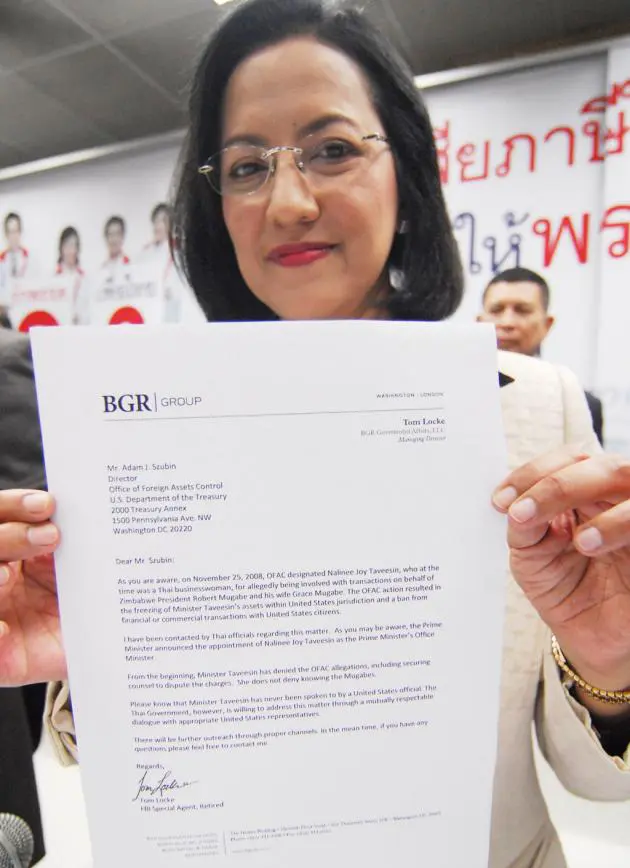
The appointment of PM’s Office Minister Nalinee Taveesin is, to say the least, very controversial. Prime Minister Yingluck Shinawatra has taken a calculated risk to bring Nalinee into the Cabinet despite the sanction imposed on her by the United States since 2008.
If Nalinee is seen as indispensable, then Yingluck should explain how and why Nalinee’s contributions to the government would outweigh her tarnished reputation in connection with her links to Zimbabwe’s President Robert Mugabe.
From the vast pool of qualified and talented individuals, Yingluck chose a controversial figure like Nalinee. The opposition Democrats are gaining some political traction via conjecture about Nalinee using her business connections to clear investment hurdles former prime minister Thaksin Shinawatra faced in Africa.
The controversy will get worse if the government continues to avoid outlining its justification for appointing Nalinee. Opposition conjecture about Nalinee’s business links with Thaksin is flimsy but gaining momentum.
The government has no one but itself to blame for this controversy. It knew about Nalinee being on the US blacklist but invited her to join the Cabinet anyway. In the face of mounting criticism, Pheu Thai bigwigs became paranoid about a perceived campaign to discredit her instead of rectifying a bad decision.
Meanwhile, four top leaders of the People’s Alliance for Democracy – while billing themselves as democracy advocates – called for military intervention to lead a “people’s revolution” and a cleansing of the political arena.
The PAD appears unfazed by the 2006 coup, which it initially supported, then attacked for not doing enough to root out Thaksin’s supporters. It has again cited safeguarding the monarchy as a pretext to call for a power seizure to eject its opponents.
Under prevailing circumstances, it is unlikely the PAD could garner sufficient support for this. There is no concrete evidence to suggest that soldiers would march out of their barracks.
Many view the PAD leaders as spouting hot air to retaliate and provoke the opposing side, which is proposing changes to the charter as well as the lese majeste law.
Even though charter changes have yet to be launched and arguments for or against the law about defaming the monarchy have yet to be framed in a proper context, the opposing sides are exchanging acerbic remarks just to annoy the other.
As the PAD is calling for a coup to topple the elected government, the Nitirat academic group, which sees the elected government as sacrosanct, is circulating an idea to have His Majesty the King sworn in to uphold the Constitution.
Neither the PAD nor the Nitirat are likely to see their ideas come to fruition anytime soon. But the opposing sides are still trading barbs with reckless disregard for the unwarranted anxiety they are stirring up.
The more the PAD portrays the Nitirat academics as anti-royalist, the stronger the Nitirat group pushes to curtail “royal power”.
As much as the PAD wants to uproot Thaksin and his supporters from the political system, the Nitirat group is equally determined to argue the legitimacy of the Thaksin camp.
Recent arguments on the charter, political system and government performance are proof of the persistent polarisation, based on mutual distrust rather than issues of actual substance.
One side sees only evil in any real or imaginary moves linked to Thaksin. The other side views opponents as a hindrance to political progress. The country seems stuck, meanwhile, with politicians spooked by the shadows of their rivals.
