
'HMFD cases not that bad'
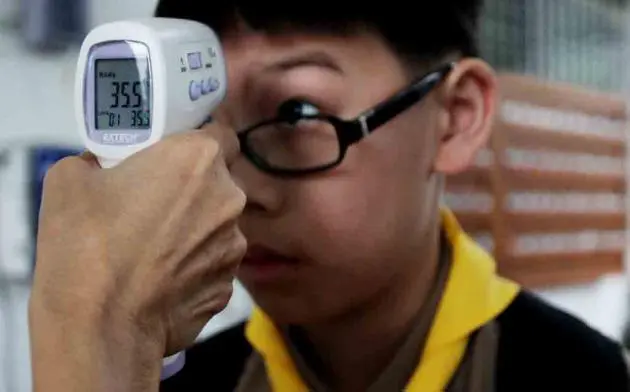


Scientists yesterday quelled fears over the outbreak of hand, foot, and mouth disease (HMFD), revealing that almost half of the cases in Thailand were caused by a less dangerous strain of the virus and only 10 per cent by the potentially deadly Enteroviru
Yong Poovorawan, head of Chulalongkorn Hospital’s Centre of Excellence in the Clinical Virology Department (Paediatrics), said yesterday that 40 per cent of Thai cases were caused by Coxsackie virus type A6 (CA6) which, unlike the dangerous EV71, only infects the central nervous system in one case in 100,000.
Yong, speaking during a panel titled “Hand, foot, and mouth disease is not as fearful as one thinks” organised by Chulalongkorn’s Department of Paediatrics, Faculty of Medicine, also reported that EV71 had been found in 10 per cent of Thai cases, with Coxsackie virus A16 in around 8 per cent, EV Untypable in 20 per cent, with 24 per cent of cases testing negative.
“I’d like to confirm that there is no need to be panic,” said Yong. “Only infections involving EV71 that lead to severe complications will cause death.”
Thanyawee Puthanakij, associate professor at the Infectious Disease Division in Chulalongkorn’s Department of Paediatrics, said that of the 17,656 cases of HFMD cases reported in Thailand up to last Tuesday, only two (0.01 per cent) had resulted in death. For infections, the worsthit group has been children under five years (242.46/100,000), with more boys infected than girls, at a ratio of 1:0.72.
Thanyawee also said that HMFD should not be confused with the current outbreak of Herpangina, a disease with similar symptoms. Herpangina symptoms include fever, sore throat and multiple, painful ulcers at the back of the mouth. In contrast HFMD usually brings a short fever plus blisters or red ulcers on the palms, or soles of the feet, with or without mouth ulcers.
To prevent the spread of both diseases, it is important to ensure “hygiene for all”, noted Yong. “In particular, adults looking after children must take care of their own hygiene too. Since the disease is a nonenveloped virus, it can remain infectious for several weeks in a damp environment. To control and prevent the spread of this disease, everybody needs to ensure their own, and environmental, hygiene.”
Hygiene standards that need to be maintained are:
Washing hands with soap before eating and after going to the toilet;
Covering the mouth and nose with a tissue when coughing or sneezing, and throwing the tissue away into a bin immediately;
Not sharing eating utensils.
The good news is that work to develop a vaccine for HFMD is underway. The bad news is HFMD will likely return every rainy season, as students go back to school for the new term.
