
Coup leader focused on 'peace and unity'
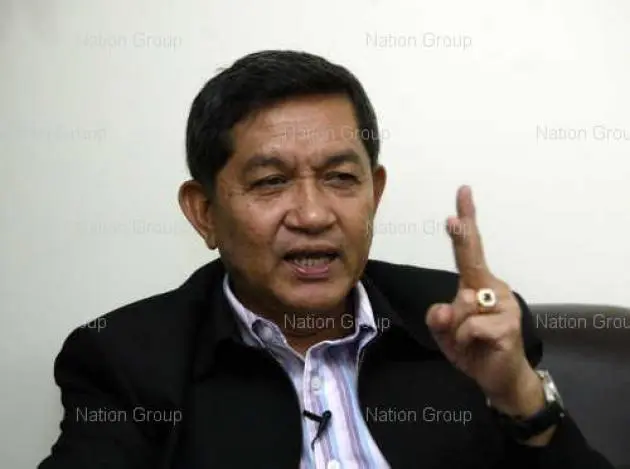


Play
The Nation's Hataikarn Treesuwan spoke to General Sonthi Boonyaratglin about why a man who toppled the government led by Yingluck's brother Thaksin now wants to assist her administration.
Sonthi, who led the 2006 coup and now the Matubhum Party leader, sits in two panels appointed by the government. He is adviser to the House committee vetting an amnesty bill and part of a political reform council initiated by Prime Minister Yingluck Shinawatra.
Q ; How did you join the vetting panel under the government quota?
Q ; How did you join the vetting panel under the government quota?
The government may have seen that my intention as chairman of the vetting committee for a reconciliation bill [last year] is compatible with the government’s current proposal. Moreover, the content of the amnesty bill proposed by Pheu Thai MP Worachai Hema is largely similar to that of the reconciliation bill. Both aim to pardon people with political offences. We regard those people as individuals who love the country but think differently in solving the problems, so we want to give them amnesty.
Q : You once said in other countries, the reconciliation process often begins after the fight ends, and there is winner and loser. As Thailand is still “fighting”, do you think it is the right time to push an amnesty bill now?
Negotiations often begin when one party has an advantage and the other a disadvantage. Many countries started a reconciliation process when one side lost and the other won. If we wait until that time, the country would be in disaster. So, it is better to do it when the country is not damaged.
Q : As a vetting committee member under the government quota, do you think it is an advantage or disadvantage?
I don’t think of myself but I focus on the national benefit. Actually, I get nothing from this position. On the contrary, many people have negative views of me. However, I insist that if I can bring peace and unity to our country, I am willing to do it.
Q : A key Pheu Thai politician said his party has given you this role because you “tied the knot, so you must undo it”.
That’s not true. People who said so have wrong understanding. I do not need to tie or untie anything. What I did, I did it for the country’s benefit. This comes from my inner spirit as a former soldier who is highly patriotic.
Q : What would you say to former Assets Examination Committee member Kaewsun Atibodhi, who has been appointed to the vetting committee under the Democrat Party quota, when you meet him?
We may talk about facts. We should focus on the country’s issues, not personal matters. We have not met for a long time. People who think differently should sit down together and talk. Both sides can settle their differences and go forward together.
Q : What is your role as a member of the reform council?
The reform council has nothing to do with the amnesty bill. The council looks forward to developing democracy. We should determine what are obstacles to democracy and which part of the Constitution should be improved to reach a higher level of democracy.
Q : A key Pheu Thai figure said independent agencies often have assumed that the government is bad. Do you think independent agencies are the best tool to examine the government, and how should they change their role?
Judgements by independent agencies are made by only five or nine people [commissioners]. Is that sufficient for justice? What is the quality of the committees tasked with selecting members for independent agencies? Is it time for a review?
Q : How would you respond to the view that the 2006 coup has caused a rift and is destroying Thailand’s democracy?
My explanation would still be the same. We staged the coup to prevent social division. I did it for the country, not for myself. If I did not act, people would have fought each other. On September 20, 2006, everyone was happy. If I did not act, it would have been a day of bloodshed.
Q : After the coup, you were regarded as a hero. Do you think your new role will make you become a hero again? Are you a sidekick to a heroine or a villain?
Don’t see it that way. In democracy, there is no one hero. If you have a hero, it is tyranny. Democracy requires the majority to lead and drive forward. In a rule by the majority, you can’t have a single hero.
