
Garbage turned to power in Hat Yai


Play
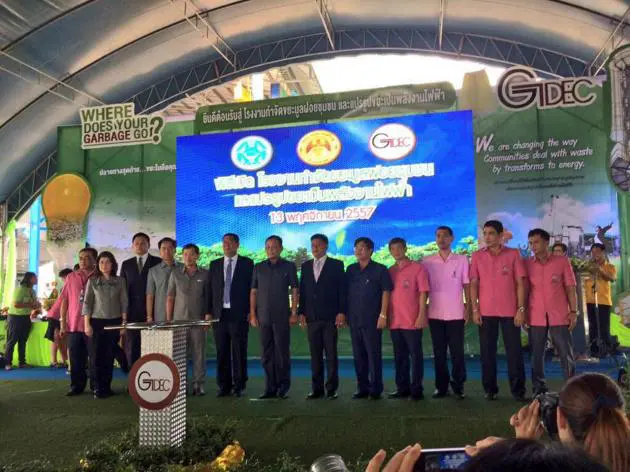
A FACILITY that turns garbage into electricity was officially launched yesterday in Songkhla's Hat Yai district. Hat Yai had some 2.4 million tonnes of accumulated garbage.
Natural Resources and Environment Minister General Dapong Ratanasuwan, who presided over the launch, pointed out that garbage disposal should be part of the national agenda and that this power plant’s success could be a model for tackling garbage nationwide. He said it would be showcased in the government’s “Moving Forward Thailand” programme.
Hat Yai Municipality Mayor Prai Pattano said the facility, located in Tambon Kuan Lang, was inspired by the fact that Hat Yai was struggling with an overwhelming amount of garbage and hence needed a proper, effective, non-polluting and hygienic garbage-disposal system.
Hence the municipality decided to join
up with waste-management firm Gidec Company Ltd to help build this plant, which turns household garbage into electricity through the European-standard “Ash Melting Gasification” method, in which at least 250 tonnes of garbage can be disposed of daily, producing six megawatts of power.
Other than getting the garbage in Hat Yai under control, this plant will also dispose of trash from nearby areas, Prai said.
Meanwhile, Dapong said he planned to use the private-run Hat Yai plant model in his proposal to resolve the garbage problems in Nakhon Si Thammarat Municipality, which is the country’s fourth worst-hit area in terms of garbage volumes.
“If you open the way for the private sector to manage this, it might become easier, because in the past, local bodies only disposed of garbage by burying it, which often led to environmental impact and protests,” he said.
He added that the government should also facilitate the private sector’s investment in garbage-management by cutting down on the bureaucracy, because the government did not have enough money to deal with the problem on its own anyway.
According to the Pollution Control Department, Thailand had 26.77 million tonnes of garbage last year, which is 2 million tonnes more than the garbage created in 2012.
