
NHSO to allow only emergency use of PCI


Play
Move follows complaints of unnecessary use of procedure by private hospitals
ALL non-emergency cases of percutaneous coronary intervention (PCI) will be suspended, the National Health Security Office (NHSO) has announced.
The news follows complaints that some patients have undergone the operation but didn’t really need it.
NHSO manages the universal healthcare scheme, which covers nearly 50 million Thais and provides
almost all kinds of treatments, including PCI, for free.
“We have received complaints that the number of PCI operations at private hospitals is unusually high,” NHSO spokesperson Atthaporn Limpanyalert said.
In response to the complaints, the NHSO issued a resolution banning elective surgery patient information for PCI treatment.
Big jump in heart centres
“In other words, we now allow PCI only in emergency cases,” Atthaporn said.
He said the NHSO also asked the Public Health Ministry’s Medical Registration Depart-ment to postpone certifying privately run medical facilities that want to register as heart centres in the universal health scheme.
This year, the number of heartcare centres stands at 115, a big jump from 12 centres in 2002. About 50 “heart centres” have popped up over the past few years alone. This is in addition to many hospitals that are waiting for the department’s endorsement.
Insiders revealed that many private hospitals were keen to perform PCI operations under the universal health scheme because of the attractive remuneration.
NHSO offers Bt85,000 per PCI. In the beginning, the amount was not unreason- ably tempting, as the cost of stents and other equipment was not cheap. But with in-creased efficiency in procure-ment in recent years, the cost of equipment has fallen. For example, the price of a drug-eluting stent (DES) set dropped from Bt85,000 to be less than Bt23,400, while bare stent prices dropped from Bt35,000 a set to less than Bt5,400.
The NHSO agreed to welcome privately run “heart centres” to the universal health scheme because it noticed that patients had to go on long waiting lists to get treatment for heart disease.
Atthaporn said complaints that some hospitals had spurred demand for PCI surgery had prompted the NHSO to set up a committee to investigate PCI cases from both state and private hospitals under the universal health scheme.
“We have not yet decided who will be appointed to the committee,” he said.
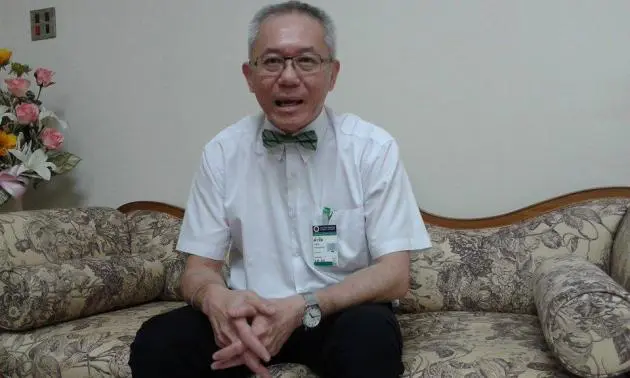
Assoc Prof Dr Damras Tresukosol, head of Her |Majesty’s Cardiac Centre at Mahidol University’s Faculty |of Medicine Siriraj Hospital, |said the NHSO had asked him to take charge of the investigation but he had not yet made up his mind.
“I have to look into the details first,” he said. “I want to know what will happen after the investigation concludes. I want to know what the investigation will bring.”
NHSO ‘should take action’
Damras said he wanted to know if the NHSO would be ready to take action against those found guilty if the investigation was able to identify them.
He also said the NHSO should introduce some measures to govern the delivery of PCI surgery to patients.
“Without additional measures, some patients may undergo a PCI for nothing. They may not benefit at all,” Damras said.
He said Thailand should be able to learn from Japan, which requires patients to undergo Coronary Angiography tests and submit the results for health insurers to check first. The NHSO should also introduce measures such as setting a proper ratio of PCIs patients per population, he said.
“For example, the ratio could be around 100 per 100,000 people covered by a hospital,” he explained.
Damras had complained to former NHSO chief Winai Sawatdiworn about questionable PCI practices and even filed a complaint with the Central Administrative Court. The court has yet to act on his complaint on the grounds that Damras is not a damaged party in the case.
