
India eyes record rice crop; Thai prices up on China, Singapore deals
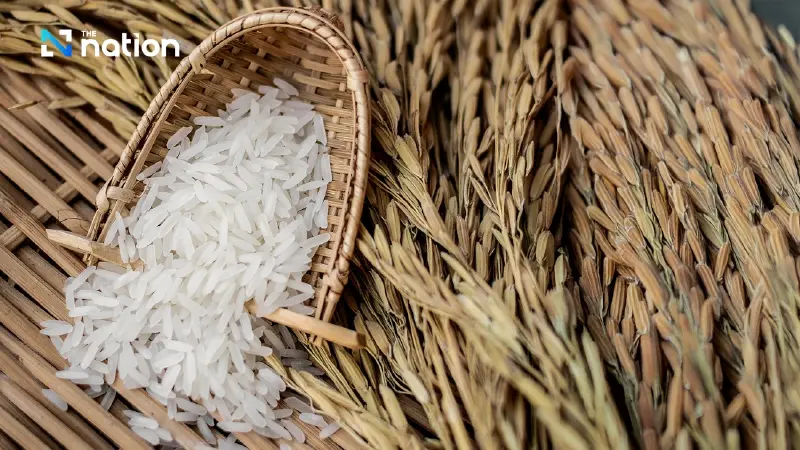


India set for 10th straight record rice crop in 2026 as global stocks swell; Thai prices rise on China, Singapore deals while Cambodia exports fall
People worldwide consume more than 500 million tonnes of rice each year. In Thailand alone, rice is grown on about 72 million rai, with around 18 million farmers—about 25% of the population. Global rice trade averages roughly 60 million tonnes a year.
Thailand exports about 7–8 million tonnes of rice annually, ranking third in the world, behind India and Vietnam.
Recently, the US Department of Agriculture (USDA) published Rice Outlook: December 2025 (RCS-25K), December 11, 2025 by the Economic Research Service. The report forecast global rice production in 2025/26 at 540.4 million tonnes (milled basis), down 0.5 million tonnes from the estimate released in November.
The decline in global output is mainly attributed to reduced production in Madagascar and the Philippines. In contrast, production in India is projected to rise in 2025/26 to a tenth consecutive record high, driven by a larger—and record—harvested area. This is expected to make India the world’s largest rice producer since 2024/25.
Although production is projected to fall in several countries—especially Brazil, Cambodia, Indonesia, Madagascar, Nigeria, Pakistan, the Philippines, Thailand, the United States and Vietnam—these declines are expected to be more than offset by forecast increases in Bangladesh, Egypt, the European Union, and the two largest rice producers, India and China. Together, India and China account for more than half of global rice production.
Global rice supplies continue to rise
Global rice supplies in 2025/26 are forecast at 730.7 million tonnes, a record high, up 1.7 million tonnes from the previous forecast. This would be the third consecutive year that supplies increase. The upward revision is mainly due to higher beginning stocks, particularly in India, more than offsetting reductions in South Korea and Vietnam.
Global rice consumption in 2025/26 (including residual use reflecting post-harvest losses) is forecast to fall 0.4 million tonnes to 541.9 million tonnes, though it would still be a record high. The downgrade is mainly due to lower consumption in Madagascar, more than offsetting an increase in Cambodia.
The report says record-high global consumption in 2025/26 is largely driven by record-high consumption forecasts in major rice-consuming countries, including Bangladesh, India, Nigeria, the Philippines, Thailand and Vietnam.
Global ending stocks in 2025/26 are forecast at 188.8 million tonnes, up 2.1 million tonnes from the previous estimate, though still 1.5 million tonnes lower than last year. The revision is largely due to an increase of 1.5 million tonnes in India’s stocks, based on stocks as of October 1 reported by the Food Corporation of India. This more than offsets reductions in South Korea, the Philippines and Vietnam. China and India together account for around 80% of global ending stocks, partly due to government stockholding programmes.
Global rice trade expected to hit a record
The report also forecasts record-high global rice trade in 2026, up 3.2 million tonnes from 2025. Global rice trade in calendar year 2026 is projected at a record 62.8 million tonnes, 0.3 million tonnes higher than the previous forecast. Higher export forecasts for Myanmar and China are expected to more than offset a decline in Cambodia.
Myanmar’s rice exports in 2026 are forecast to rise 300,000 tonnes to 2.5 million tonnes, supported by price competitiveness in markets such as China, the European Union and Madagascar.
China’s exports are forecast to increase 100,000 tonnes to 1.3 million tonnes, based on stronger demand for medium-grain rice from key markets in Africa, East Asia and Europe.
In contrast, Cambodia’s exports are forecast to decline 100,000 tonnes to 4.0 million tonnes, as Vietnam is expected to cut purchases of rice from Cambodia due to the Philippines’ import ban. The Philippines, a major buyer of Vietnamese rice, announced a 60-day import ban starting September 1 to address low domestic paddy prices, and extended the ban through December 31, 2025.
Thai rice prices rise against the market on China and Singapore deals
For global rice imports in 2026, the report raised forecasts for China and Tanzania due to relatively low global rice prices, and for Madagascar due to reduced output. In contrast, import forecasts were lowered for Benin and Togo, as a larger-than-expected supply of Indian parboiled rice is expected to be transshipped onward to Nigeria.
The report said India’s 5% broken rice price fell US$5 to US$350 per tonne, due to record-high output and full stocks. By contrast, Thailand’s 100% Grade B price rose US$39 to US$387 per tonne, following a government-to-government export deal with Singapore and export trade agreements with China. Vietnam’s price held steady at US$365 per tonne.
Agriculture Ministry: cut costs, promote alternative rice and restructure production
Winaroj Trapsongsuk, permanent secretary of the Ministry of Agriculture and Cooperatives, said after chairing a meeting on managing rice and rubber that officials discussed ways to promote and develop rice production in line with market demand at home and abroad.
He said the focus is on restructuring the entire rice production system according to suitability and the potential of each area, including expanding certification for Hom Mali rice to widen planting areas.
The ministry will also support knowledge and practices to reduce production costs, and promote production under GAP (Good Agricultural Practices), low-carbon rice, and organic rice standards, while also working to secure markets for farmers. Relevant agencies have been instructed to collect area data for analysis and zoning before rolling out the next phase of support.
For rubber, the ministry is also considering management measures by studying and researching innovation-based mechanisms to process rubber products domestically, such as producing water-delivery pipelines for agricultural irrigation systems. The aim is to drive an efficient rubber mechanism, build clearer markets and ensure appropriate prices, to raise product value and improve the livelihoods of rubber growers.
The meeting also discussed improving agricultural service systems to reduce barriers that farmers face in accessing services—whether due to age, cost or location. Agencies have been assigned to survey farmers’ needs in their respective areas and restructure services to make them easier to access and more convenient.
Zoning soft-textured rice while maintaining the hard-textured rice base
Peeraphan Korthong, acting secretary-general of the Office of Agricultural Economics (OAE), said rice cultivation in Thailand covers many varieties and takes place in both suitable and unsuitable areas. This can lead to low returns compared with investment and high costs. The ministry therefore aims to restructure the system while implementing zoning based first on suitable areas, aligning production with market demand by rice type—such as sticky rice commonly grown in the North and Northeast, jasmine rice in the Thung Kula Rong Hai area, soft-textured rice, hard-textured rice, and low-carbon rice.
He said Pathum Thani 1 is a soft-textured variety with less fragrance than jasmine rice and should be clearly zoned within the off-season rice group, which traditionally grows hard-textured or white rice. Even though current market demand favours soft-textured rice, hard-textured rice is still needed for products such as rice vermicelli, noodles and steamed rice. If it is abandoned, he warned, Thailand could lose that market segment.
He said the zoning will begin from 2026, based primarily on areas where farmers already prefer to grow rice. The state will then support seeds, inputs and cultivation methods such as alternate wetting and drying, which can reduce greenhouse-gas emissions and provide a marketing advantage that may help lift prices further.
