
Harmonisation of three major healthcare schemes best bet for now, Suwit says


Play
EFFORTS ARE ongoing to cut down on inequalities between the country's three key healthcare schemes and harmonise them as much as possible.
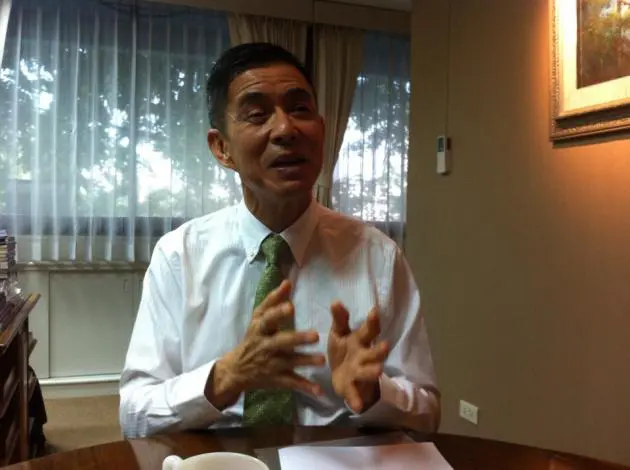
“We have to deal with the fact that these schemes are still different in terms of medical benefits, services and budgets, and we may not be able to merge them after all,” |Dr Suwit Wibulpolprasert said in |an exclusive interview with The Nation. He chairs the panel tasked with studying and developing mechanisms to reduce inequalities.
The three major schemes are the Universal Healthcare Scheme, which covers about 48 million people; Social Security Scheme, which covers about 10 million; and the Health-Benefit Scheme for Civil Servants.
These three schemes offer different benefits, with the one for civil servants and their family members offering the best coverage. This scheme also costs more per-head than the other two.
Articles 9 to 11 of the National Health Act, in fact, require that these three schemes be merged into one. However, 14 years after this Act came into force, there is still no sign of a merger.
Asked if harmonisation efforts were a sign that efforts to merge the three had finally been abandoned, Suwit said: “No, it remains the goal for as long as the Act stays in effect.”
He added that harmonisation had become a focus now, because relevant authorities still could not find a way to merge the three once and for all.
“If we can’t merge them now, we should at least push them towards adopting the same standards first,” Suwit said.
He is also vice chair of both the International Health Policy Programme Foundation and the Health Intervention and Technology Assessment Foundation.
He said this approach has already been in place in many countries, including Japan, Germany and the Netherlands. He pointed out that even though Japan has more than 3,000 schemes, people still enjoyed the same benefits.
His panel is now pushing for the establishment of the Harmonisation of Healthcare System Commission.
According to Suwit, harmonisation does not have to start from scratch because the three schemes already share some basic standards, for instance the treatment of HIV-positive patients.
“The national drug list is also applicable to all three schemes,” he said, adding that the schemes have been gradually adjusting their reimbursement methods along the same guidelines.
Suwit explained that Thailand has always used the “gradual-change” approach in developing its healthcare systems anyway.
Asked if harmonisation of the schemes would encourage more middle-class people to claim free medical treatment, Suwit said that was not the aim of the harmonisation effort.
“In a democratic country like Thailand, I think everybody is free to choose what they like,” he said.
He added that the very fact the Universal Healthcare Scheme has been attracting more patients must mean that the service is good.
“Initially, urban people accounted for 40 per cent of the scheme’s outpatients and 60 to 70 per cent of inpatients. But now, they account for 60 per cent of the total outpatients and 80 per cent of inpatients,” he pointed out.
Hence, he reckoned, this growing number of users would mean a need for larger funding, which could impose a huge burden on the country.
“There’s a committee checking the scheme’s budget and studying its financial viability in the long run,” he said.
He pointed out that the budget for the scheme over the next seven to eight years should not go beyond 5 per cent of the gross domestic product, nor should it go above 20 per cent of the country’s spending.
He said that while the scheme aims to prevent medical bankruptcy, it should also function along the principles of equality and fairness.
“Make the healthy share their resources with the ailing, and the haves share theirs with the have-nots,” he said.
Suwit also said the practice of prescribing unnecessary drugs and the unnecessary use of medical technology must come to an end.
“Even the World Health Organisation has pointed out that about 40 per cent of drugs and technology used are unnecessary. So, we should find a way to prevent or at least minimise such waste,” he said.
He added that such waste was, in fact, a greater concern than the cost of caring for the country’s growing elderly population.
Suwit spoke to The Nation ahead of the “First National Conference on Thai Universal Healthcare Coverage (2015): Universal Health Coverage: Achievements, Challenges and Harmonisation”, which will run on Monday and Tuesday.
