
Dams reducing water release as rainfall gets less intense
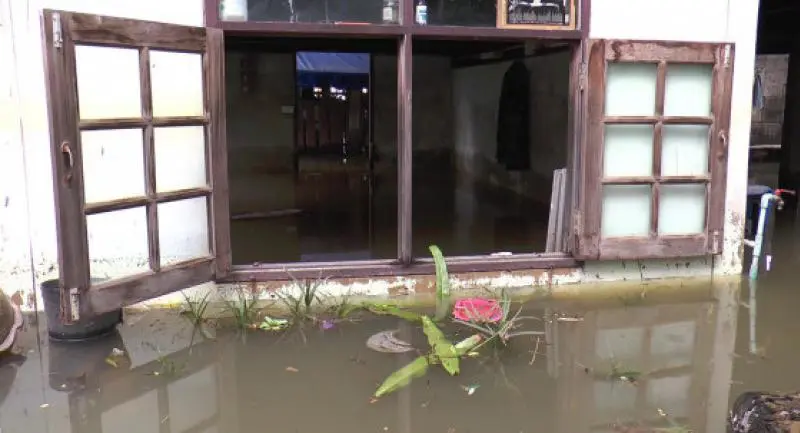


THE rate of water release from dams is being reduced as rainfall has become less intense, although areas outside the flood barriers’ coverage could still be at risk of flooding, and relevant agencies have been told to be ready to help those affected.
Agriculture and Cooperatives Minister General Chatchai Sarikulya yesterday said officials would also divert water into Thung Chao Chet, which is a water-retention area during the flood season, after the rice harvest was completed at the end of the month in a bid to save water for use during the dry season.
Chatchai said that as of yesterday Sukhothai’s Sri Satchanalai district had drained water at 105 cubic metres per second, while Nakhon Sawan’s Jiraprawat Camp station reported the water running through it at 2,014 cubic metres per second.
Chai Nat’s Chao Phraya Dam, Lop Buri’s Pasak Jolasid Dam and Ayutthaya’s Bang Sai sluice gate lowered water-release rates to slightly over 1,900 cubic metres per second, while Ayutthaya’s Rama VI Dam suspended releasing water altogether.
Chatchai said an inspection of low-lying areas outside flood-barrier coverage in Ayutthaya province yesterday noted that water had receded since October 13.
He said the water level in tambon Ban Pom, in Phra Nakhon Si Ayutthaya district, was down 0.39 of a metre, in Bang Ban district’s tambon Ban Bang Luang Dod the water was down 0.33 metre and in tambon Ban Bang Ban it had receded 0.29 metre. In Tha Rua district’s tambon Tha Rua the flooding had dropped 3.13 metres.
Chatchai said various diversion dams, such as Chao Phraya and Rama VI, would push water upstream to canals, monkey-cheek water-retention areas and irrigation-system waterways. Other facilities, such as the Pasak and Kwai Noi dams, will reduce water-release rates further.
The Department of Royal Rainmaking and Agricultural Aviation was instructed to launch rainmaking operations to fill dams in Nakhon Ratchasima, Prachuap Khiri Khan and Phetchaburi provinces and on Surat Thani’s Koh Samui and Koh Pha-ngan, he said.
